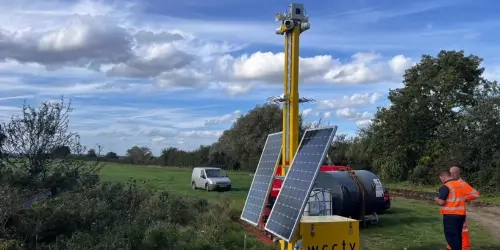
Air quality monitoring used to be about ticking boxes and recording numbers that nobody looked at until something went wrong. Today, construction sites treat air monitoring as a way to protect people from invisible hazards.
Key metrics such as particulate matter (PM), carbon dioxide (CO₂), volatile organic compounds (VOCs) and respirable crystalline silica (RCS) only matter when they clearly show what's happening on-site, giving teams time to act before conditions become dangerous.
The reality? Construction accounts for roughly 18% of the UK's total PM10 emissions, and air pollution contributes to nearly 30,000 nationwide deaths each year. Despite this, many construction firms still rely on manual checks that offer virtually zero value when decisions need to be made in real-time.
That's where smart air monitoring within construction comes in. Real-time alerts and cloud-based dashboards turn raw readings into data-driven decisions, helping teams protect workers and confidently demonstrate ESG responsibility to regulators and stakeholders.
In this guide, we explore the air quality metrics that matter, how modern monitoring systems transform sensor data into action and why integrated systems are setting the new benchmark across UK construction.
Construction's Air Quality Impact
Studies reveal that construction dust emissions can cause lung cancer, Chronic Obstructive Pulmonary Disease (COPD) and silicosis, resulting in permanent damage and premature death to at least 500 construction workers annually.
This is because construction and demolition sites release dust and other pollutants from various building activities, such as excavation and the use of diesel machinery. This impacts workers, nearby communities and the environment at large.
Knowing the main pollutants and where they come from helps highlight the real health and safety concerns:
| Pollutants | Source | Health risks |
| Respirable crystalline silica (RCS) | Cutting, grinding and drilling concrete, brick and stone. | Causes silicosis, lung cancer/disease and COPD. |
| Fine particulate matter (PM2.5, PM10) | Excavation, demolition, vehicle movements and building material handling. | Respiratory disease, cardiovascular problems and premature death. |
| Nitrogen oxide (NOx) and nitrogen dioxide (NO₂) | Diesel-powered machinery (excavators, cranes, etc.), generators and construction vehicles. | Worsens asthma, reduces lung function and can cause heart/lung disease. |
| Carbon dioxide (CO₂) | Combustion engines, generators and work vehicles. | Increased heart rate, elevated blood pressure, death and loss of consciousness. |
| Carbon monoxide (CO) | The incomplete combustion in generators or vehicles. | Chest issues, loss of consciousness, seizures, coma, brain damage and death. |
| Total/volatile organic compounds (TVOCs/VOCs) | Paints, adhesives, solvents, glues, vinyl flooring and finishing products. | Headaches, respiratory problems and long-term organ damage. |
Each of these pollutants causes short- and long-term risks to workers and creates compliance obligations under UK environmental regulations. Construction sites operating near residential areas face even stricter scrutiny, with local authorities authorised to issue stop notices when air quality violations occur.
For IT managers, getting teams to meet these regulatory compliance prerequisites requires an operational system to monitor air quality, analyse readings and alert designated team members before conditions breach legal limits.
10 Air Quality Regulations in UK Construction
Poor air quality monitoring puts people at risk and leads to violations, but it also harms ecosystems and worsens the effects of climate change. That's why those in the UK construction sector must adhere to strict regulatory frameworks designed to minimise environmental impact, such as:
-
Clean Air Act 1993: Controls smoke, airborne dust and fumes on construction and demolition sites.
-
The Control of Pollution Act 1974 (CoPA): Governs all UK construction projects regarding harmful air pollutants, noise and vibrations.
-
Control of Substances Hazardous to Health Regulations (COSHH): Requires identification of pollution sources via risk assessments and preventative control measures.
-
Air Quality Standards Regulations (AQSR) 2010: Sets legal limits for major air pollutants that impact public health, such as particulate matter (40 µg/m³ for PM10), NO₂ and CO.
-
Environment Act 2021: Major law outlining air quality management and environmental impact, with critical targets for air quality, water and waste reduction in construction.
-
Environmental Protection Act (EPA) 1990: Controls air pollution emissions, including dust and fine particulate matter that impacts nearby properties.
-
Low Emission Zone (LEZ) for Non-Road Mobile Machinery (NRMM): Controls emissions from heavy equipment (37-560kW) on construction sites across Greater London. As of 1 January 2025, all London construction sites must meet Stage IV as a minimum.
-
ESG/Net Zero commitments: Requires CO₂ tracking and emission reporting for Scope 1, 2 and 3 commercial carbon emissions.
-
Health and Safety Executive (HSE): Mandates the appropriate use of PPE equipment to ensure workers' safety.
-
Considerate Contractors Scheme: Voluntary initiative promoting best practices in UK construction, including environmental responsibility.
Cost of non-compliance
-
Forced stop notices due to non-compliance
-
Project delays and cost overruns
-
Reputational damage
-
Weaker tender bids
-
Penalties (CoPA fines reaching up to £20,000 per violation)
-
Higher insurance premiums following incidents
Read more:
Why Air Quality Monitoring Sensor Data Matters in The UK
Most construction sites collect air quality data but don't actually use it to drive decisions. Basic systems record readings and tick compliance boxes, but when dangerous conditions develop, responses are usually reactive instead of preventative.
Real-time data monitoring through advanced IoT environmental monitoring systems changes this approach. Using intelligent software and cloud-based platforms like Stellifii, air readings are analysed in real-time, trigger automated alerts and allow for quick action before problems escalate.
The metrics that matter
-
Fine particulate matter (PM1, PM2.5, PM10): Under HSE laws, sites surpassing daily average limits of 25 μg/m³ for PM2.5 face enforcement action.
-
Respirable crystalline silica (RCS): Short-term exposure above 0.1 mg/m³ (over 8 hours) violates Workplace Exposure Limit (WEL) under COSHH regulations.
-
Carbon dioxide (CO₂): WEL stipulates safe levels of CO₂ at 15,000 ppm (parts per million) for short-term exposure (over 15 minutes) and 5,000 ppm for long-term exposure (over 8 hours).
-
Nitrogen oxide (NOx): Local authorities can stop construction work until NOx emissions are controlled (1 ppm or 1.91 mg/m³).
-
Volatile organic compounds (VOCs): Enclosed or poorly ventilated areas require continuous VOC monitoring to protect worker health. Limits vary per compound.
Turning readings into action
Collecting air quality data is only the starting point. The real value comes in when that information triggers the right response, quickly and automatically.
Here are 4 examples of how current sensor data leads to practical action:
|
Scenario |
Detection |
Action/Insight |
Benefit |
|
Silica dust detection |
Air quality sensors detect RCS levels approaching 0.08 mg/m³ (nearing the 0.1 mg/m³ threshold) during concrete cutting. |
Site managers can pause work and/or deploy PPE respiratory protection gear. |
|
|
PM2.5 spike |
Real-time data readings show PM2.5 levels reaching 30 μg/m³ during demolition work (exceeding HSE's 25 μg/m³ limits). |
Project managers can instruct teams to apply water-based suppression (e.g., fog cannons) in demolition zones to weigh down fine particles before they become airborne. |
|
|
High VOCs in enclosed areas |
Indoor air quality sensors detect high VOC levels above the 1 mg/m³ threshold during painting operations. |
Site managers can instruct teams to increase ventilation and rotate workers to reduce exposure. |
|
|
ESG CO₂ tracking |
Continuous monitoring shows diesel generators contribute to 40% of daily site CO₂ emissions. |
Prompts contractors to replace fossil-fuelled equipment with greener options. |
|
Today's environmental site monitoring is setting a new standard across UK construction. When pollution levels rise, real-time monitoring identifies the construction activities responsible, giving managers the chance to act quickly to reduce risk.
Modern systems also generate timestamped logs and automated reports that meet compliance requirements (HSE, EPA, AQSR, ESG, CoPA, etc.), freeing site teams from time-consuming manual checks.
For IT leads, this operational capability means lower compliance risk and clear ROI through avoided violations and uninterrupted project delivery.
Read more:
- Uses for IoT in Construction
- Smart Analytics Insights in Construction
- The ROI of Consolidating Site Monitoring Into a Unified Platform
- GDPR, ESG and Construction: What Every Leader Needs To Know
Advanced Air Quality Monitoring Sensors Explained
Our IoT-based air quality monitoring sensors are purpose-built for UK construction sites, supporting Modbus RTU/TCP, MQTT and RS-485 interfaces for compatibility with existing monitoring platforms. Robust IP43-rated casing withstands harsh outdoor environments, including quarries, highways, civil engineering and demolition sites.
Rather than standalone devices, our sensors easily integrate with our CCTV Towers and temporary CCTV solutions, creating a unified platform that handles security and environment monitoring from a single interface.
How they work
Installation
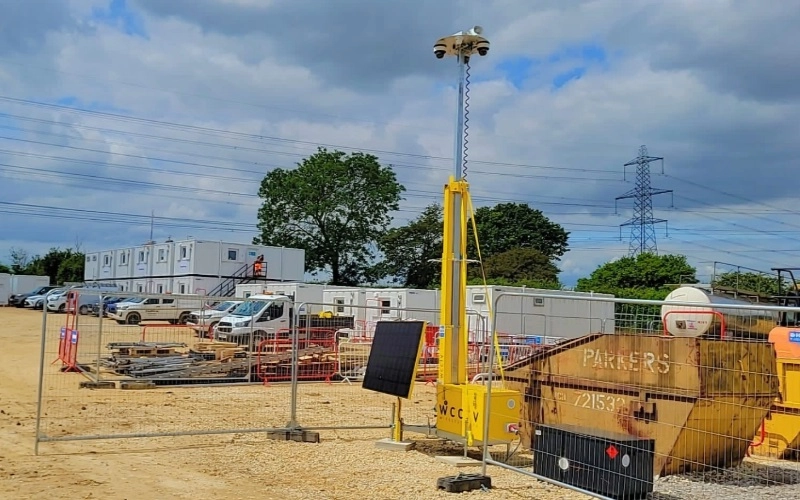
Air quality sensors mount directly onto our Rapid Deployment CCTV Towers with plug-and-play 4G/5G connectivity. They operate on the same solar/fuel cell battery technology powering the CCTV system, providing up to 20 weeks of autonomous operation.
This integration matters for IT managers because it reduces vendor sprawl and cuts the costs associated with having multiple providers to monitor air quality, weather, noise and PPE.
Configuration
Site teams configure alert thresholds based on compliance and/or site-specific requirements through the Stellifii platform. Some of these metrics can include:
-
PM2.5 levels set at 20 μg/m³ (before they exceed legal limits of 25 μg/m³)
-
RCS limits below 0.1 mg/m³
-
VOC thresholds based on compound-specific variables
-
CO₂ tracking aligned with Net Zero/ESG targets
Real-time alerts
Our fully-managed air quality management systems continuously measure:
-
Fine particulate matter (PM1, PM2.5, PM10)
-
CO₂
-
CO
-
TVOC
-
Dew point
These systems catch hourly readings and store up to 180,000 timestamped records, providing insightful metrics for long-term trend analysis and ESG reporting. Requiring no manual monitoring, site managers receive instant notifications via the app, SMS or email when air quality issues are detected.
Single cloud dashboard
All air quality monitoring data feeds into our cloud-based platform, Stellifii, along with security footage and smart detection alerts. One unified dashboard means site managers can access everything through a single login from anywhere.
This integration reduces your IT stack by:
-
Reducing vendor sprawl (one platform replaces multiple vendors/tools)
-
Simplifying cybersecurity (single AES256-encryption vs numerous networks)
-
Streamlining compliance (with exports 5X faster than legacy systems)
Integration support
Our air quality monitoring solutions work alongside other systems for complete oversight:
-
Noise monitoring sensors track ambient noise levels (30-130 dB) to comply with Section 61.
-
Weather monitoring solutions record temperature, rainfall, humidity and wind speed in real-time.
-
Smart detection systems include 24/7 PPE monitoring, intruder alerts and smoke/fire detection.
-
Mobile Keyholding Services respond to out-of-office-hour alerts.
-
Remote Monitoring Systems, linked to NSI Gold Accredited monitoring centres, respond to suspicious activity in real-time, providing complete site security peace of mind.
-
Redeployable Cameras with PTZ (Pan-Tilt-Zoom) functionality deliver live and recorded footage without the need for fixed infrastructure.
Benefits of construction air quality monitoring
-
Protects workers through early detection of hazardous conditions.
-
Minimises project delays caused by HSE investigations.
-
Shows environmental responsibility, supporting ESG reporting and sustainability goals.
-
Demonstrates regulatory compliance with automated reports.
-
Strengthens tender applications with evidence of proactive risk management.
Read more: Air Quality Monitoring: The Overlooked Cause of Project Delays
Monitor Air Quality the Smart Way
Without reliable data and real-time alerts, air quality measurements remain just numbers: hard to act on and easy to miss. Smart monitoring turns raw readings into actionable insights that protect workers, satisfy HSE inspectors and ESG compliance all in one.
By combining air data and site surveillance into a single platform, integrated monitoring systems give site teams the visibility they need to make more informed site decisions.
With over 20-years of site monitoring expertise, we offer air quality management solutions to construction companies of any size. Our systems reduce manual processes and vendor sprawl that bog down teams, meeting HSE, Net Zero and regulatory requirements in just a few clicks.
Contact our team today to discuss how our environmental monitoring systems and Stellifii can support your objectives.