
Traffic managers overseeing roadworks only have to check their emails or the council's social media accounts to experience a barrage of public protest, carrying potentially severe consequences.
Some disruption is inevitable when maintaining or upgrading roads, but if not well managed, roadwork complaints can quickly escalate into reputational harm and even legal liability. Poor planning, inadequate signage or lack of transparency can turn a necessary infrastructure project into a stressful and costly endeavour.
Our article explores the 7 most common causes of public complaints about roadworks and, crucially, how to prevent them. We’ll also cover the practical tech-enabled solutions that local authorities and contractors can implement to reduce frustration and earn public trust.
Why Roadworks Complaints Are a Growing Concern in the UK
Highway complaints in the UK are a growing concern because a combination of factors has caused an increase in roadworks across much of the country in recent years. This activity inevitably inconveniences the public, and busy, stressed commuters are quick to voice their dissatisfaction to local authorities, on social media and in other forums.
Let's briefly look at the driving forces behind public dissatisfaction with disruptive street works before discussing common causes and strategies for reducing roadworks complaints.
Increased number of roadworks
Network management data shows that road works jumped 42% from 2019 to 2023 (covering 203,000 miles in 2023 alone). Large projects and work by utility providers have driven much of this surge.
For example, Project Gigabit's broadband expansion saw a 108% increase in telecom digs. In the same period, electricity works rose by 25%, while water and gas works each accounted for an 8% rise.
Ageing infrastructure
The UK's ageing road network has made more frequent and extensive works necessary to meet modern transportation demands. Net-zero related upgrades, including charge points for electric vehicles on major A roads and other routes, are another contributing factor.
While our roads may be ageing, more people than ever rely on them. The Department for Transport forecasts a 54% growth in road usage by 2060. Against this backdrop, it's perhaps not surprising that 62% of local highway leaders anticipate a road/street work crisis by 2030 without greater industry collaboration.
Coordination failures
In England, over 200 organisations may legally excavate roads, and it's concerning that 81% of local authorities believe that poor coordination and communication between these entities is an ongoing problem.
Without careful scheduling and alignment, you end up with overlapping projects, creating more disruption and an increased sense of "chaos". Project overruns add to the frustration, with over 70% of drivers citing this as a source of aggravation.
The consequences of poor complaint management
Unmanaged complaints around roadworks send the message that you either don't care or your department is incompetent, resulting in:
-
A loss of public trust in the council and on-site contractors.
-
Political pressure from councillors and MPs needing to answer to their constituents.
-
A blow to the professional reputation of oversight managers and their teams.
-
Possible legal liability if neglecting serious complaints leads to accidents or is considered a breach of duty.
7 Common Causes of Roadworks Complaints (And How to Prevent Them)
Highway complaints in the UK tend to follow similar patterns across the country.
Let's take a closer look at 7 very common causes, together with strategies for effectively mitigating these issues.
1. Congestion and unexpected delays
Roadworks typically shut off lanes, creating holdups and congestion that can disturb a local area. If road users are unaware of delays (due to poor communication, for example), they can miss appointments and public transport connections, and vital deliveries/emergency services may run dangerously late.
Frustration at unexpected congestion quickly boils over into complaints and sharp questions about your traffic management plan (or lack thereof). The economic toll is steep too: it's estimated that delays on England’s national roads cost £3 billion every year.
Solution
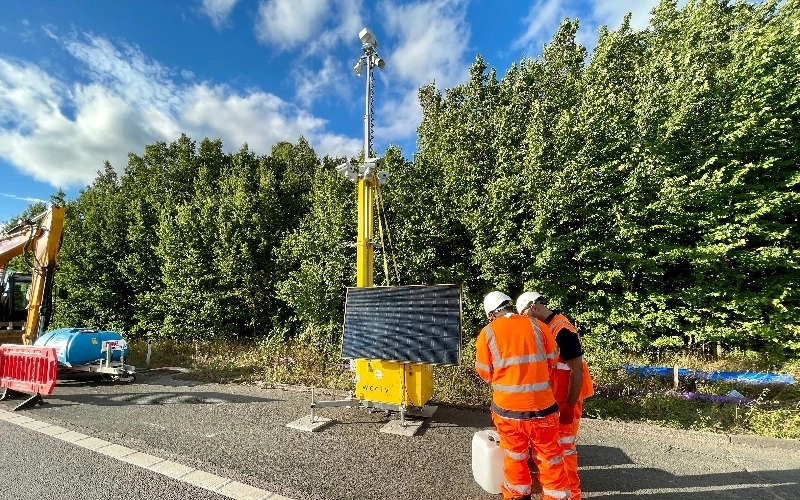
Our rapid deployment Traffic Management Towers with HD PTZ (Pan-Tilt-Zoom) cameras can monitor any location you choose. Smart software lets you tap in and view traffic footage on your phone or laptop to gain insights into any complaints surrounding bottlenecks, congestion and delays, enabling you to provide answers and take improvement actions, where possible. This can include bettering signage or providing clear communication to the public via social media.
These NDAA-compliant systems operate 24/7, day and night, allowing your team to access video feeds at any time and take steps to improve control and public safety.
2. Noise, dust and environmental complaints
Roadworks often severely impact nearby residents and businesses. Excessive noise, dust, pollutants and vibration are common sources of objection, especially on long-term projects or works taking place outside normal hours.
The public can complain about an environmental law violation to the Office for Environmental Protection (OEP) after going through the council's formal process. Complaints can also be lodged with the UK's Environmental Agency (EA), which enforces laws that protect the environment. When these bodies get involved, local authorities can expect to face investigation and possibly fines.
Solution
Precise environmental monitoring sensors can be fitted to our Traffic Management Towers, allowing work teams to track noise and air quality levels against permissible thresholds in real-time:
-
IoT-enabled Air Quality Sensors continuously monitor dust, fine particulate matter, TVOCs, carbon monoxide (CO) and CO₂ to help contractors control airborne pollutants from work zones.
-
Noise Monitoring Sensors mounted on our CCTV Towers measure ambient sound over ranges of 30-130 decibels and 20Hz to 12.5kHz. The system alerts project managers before noise levels breach thresholds or become unsafe.
-
Our Weather Monitoring Sensors provide real-time updates on wind, rainfall, humidity and temperature to help work teams plan around weather events and keep schedules on track.
Environmental monitoring systems operate continuously and retain a record of all critical data captured across every location. This proactive data-backed approach demonstrates to residents that you are actively managing the environmental impact of the work. It also helps your team address council and regulatory (EA, OEP) enquiries and ESG reporting.
Read more:
3. Unclear or inadequate diversion route signage
Roadworks necessitate route closures and diversions. Poor signage or unclear temporary markings often leave drivers uncertain about the revised route they should follow. Confusion can lead to further congestion and sometimes unpredictable and dangerous driving manoeuvres.
This issue becomes more critical at night and in adverse weather, escalating the risk of wrong turns, accidents, stalled vehicles and other safety dangers.
Solution
Designed for temporary or high-risk environments, 6-metre-tall CCTV Towers can be installed and operational in 20 minutes (for basic setups). Our Solar CCTV Towers run on solar energy and 4G/5G connectivity, requiring no fixed cabling, mains power or broadband infrastructure.
-
Solar CCTV Towers provide 24/7 visual evidence of road conditions. If a resident complains about signs, you can quickly review time-stamped footage and send an urgent message to rectify any weaknesses in the system.
-
Fully autonomous Mini CCTV Towers are an ideal solution to monitor short-term and temporary Solar and battery-powered, these compact units can be installed by one person, delivering cost-effective coverage for days or even weeks. A single employee can easily locate and reposition the Mini Tower to ensure you always have "eyes" on diversions and detours.
-
Automatic Number Plate Recognition (ANPR) as an add-on to our CCTV systems tracks vehicle movements through roadworks in real-time. If a vehicle goes through a diversion (a stop-go) and causes an accident, the ANPR system has a timestamped evidence trail to assist investigations and answer complaints and queries. ANPR data is frequently used to improve future roadwork and traffic planning.
-
When bad weather or environmental factors force temporary route closures or diversions, our Environmental Monitoring Sensors provide data-backed evidence to justify and explain these precautionary measures.
4. Works running over schedule
Road users may be prepared to endure the inconvenience of necessary roadworks if they know they'll enjoy a smoother journey on the roads the following month. However, if they're still stuck in roadwork gridlock long after the supposed completion date, their patience wears thin.
Experience and data show that missed completion dates are very common across the UK. As one example, Cambridgeshire County Council recorded 1,191 extra days of disruption due to work overruns in 2024/25.
Delays may be due to unforeseen circumstances such as extreme weather, but the reality is that prolonged traffic restrictions, road closures and temporary traffic signals create a perception of poor project management.
Solution
-
Weather and environmental sensor monitoring provide irrefutable evidence (e.g., storm dangers, a hazardous gas leak) that explain work stoppages. Armed with this information, managers can adjust work schedules around bad weather and justify deadline overruns to stakeholders and complainants.
-
Our Time Lapse Video Cameras capture high-resolution images throughout a project's duration. It provides timestamped evidence of the job's progress, with data-backed visuals to help assess where delays occurred and why. A Time Lapse solution can be added to any WCCTV Tower, depending on your requirements.
Read more:
5. Unsecured or unattended sites
Active sites have vehicles with flashing warning lights and dedicated individuals using clear signage to guide traffic, signalling drivers to be cautious.
When sites are left unattended during evenings, weekends or holidays, there is a different kind of safety risk. Recklessly positioned barriers, missing signs, poor lighting and unsecured equipment can all pose hazards for road users. Materials and equipment are also frequently the target of theft.
Solution
-
To secure assets, equipment and infrastructure, our Intrusion Detection System can be integrated with CCTV surveillance through our dedicated cloud-based platform. Intrusion detection uses AI-powered analytics to analyse live video feeds and alert designated contacts and security professionals when unauthorised individuals access the work site.
-
Our fully-managed security services include NSI Gold-Accredited monitoring partners for premium protection. This trusted 24/7 remote monitoring solution features trained operators who verify security threats and immediately initiate response actions, deterring the vast majority of intruders.
-
For another layer of intervention, you can include Mobile Keyholding and Alarm Response, where licensed professionals attend the work zone as soon as they receive a threat alert.
-
Visible security, proper lighting and clear site management help reassure the public that safety remains a priority outside working hours.
Read more:
6. Poor communication before and during roadworks
The public reasonably expects to be properly informed about the scope, duration and impact of roadworks that will affect their daily lives. Complaints arise when road users feel they haven't received adequate advance notice about the proposed project and aren't kept updated on progress.
A lack of real-time updates or conflicting information can leave affected parties unhappy about the continued disruption they are experiencing.
Solution
-
Timely and clear communications are essential to keep your community on side. Successful road network managers use multiple resources (map-based platforms, social and local media, street signs, council bulletins) to ensure affected parties are aware of current and pending roadworks.
-
Rapid deployment solar Traffic Management Towers give you excellent visibility into evolving projects, keeping your teams apprised of progress and potential problems at all times. This insight enables you to update the public about emerging issues promptly and transparently.
-
Our cloud platform creates reports at the click of the button to share with stakeholders and/or the community concerning any obstacles that have impacted the project and its progress.
Read more:
7. Safety incidents and near-misses
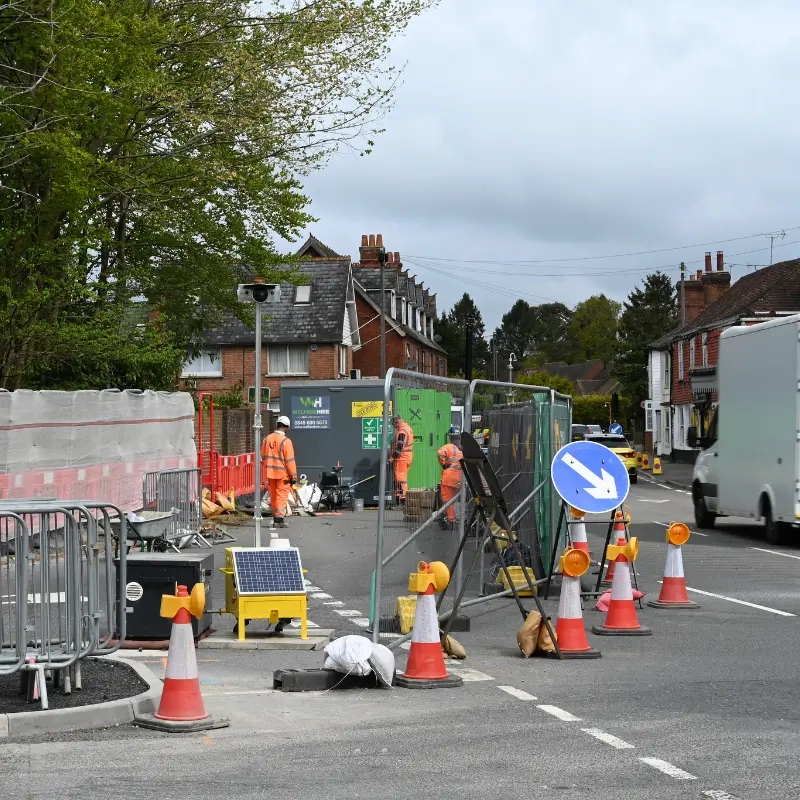
Any collision, near-miss or pedestrian safety concern linked to roadworks can spark public outcry and scrutiny. Beyond the direct consequences, such events attract negative media attention and dent trust in your professional capabilities. A serious incident usually leads to investigations and even legal action.
Solution
AI-powered smart detection systems for PPE Monitoring ensure safety protocols are enforced consistently, even in remote or high-traffic areas. By catching a near-miss or a non-compliant behaviour on camera, managers can intervene before an incident occurs, demonstrating their commitment to workforce and public safety.
Our cloud-based management platform retains detailed incident information, building a wealth of data to guide better safety decisions and reduce incidents, accidents and near-misses in the future. Managing everything from this dedicated platform, you can review high-definition video feeds, environmental monitoring data and smart detection alerts in a single dashboard, wherever you are.
Get Ahead of Roadworks Complaints with 24/7 Intelligent Monitoring
While public complaints about roadworks are inevitable, they can be effectively and responsibly handled with greater network visibility. Highway professionals are increasingly adopting intelligent, mobile monitoring of infrastructure projects to gain effective control of roadworks and community complaints.
These real-time monitoring, smart detection and environmental tracking tools help local authorities and contractors reduce frustration, foster public trust and deliver projects on time. Proactive complaint management substantially reduces political pressure and legal complications and protects you and the council's reputation.
To get ahead of roadworks complaints, contact our team today to discover how smart CCTV solutions support essential improvement and maintenance works on the nation's roads.

