Highways and traffic managers deliver a complex and essential service, one that road users and local communities expect to run smoothly at all times. However, on any given day, numerous unpredictable variables (weather, driver behaviour, unplanned roadworks, traffic light failures) can disrupt operations. When something goes wrong, councillors and the community expect a quick fix and answers.
To manage these challenges confidently, you need deep, intelligent insights into your road network. Without knowing exactly what is happening on the ground, it's nearly impossible to keep the system on track. It's also difficult to address complaints or demonstrate accountability when councillors and residents demand answers.
Why is maintaining effective oversight of a road network so difficult, especially when you rely on physical checks and manual processes?
In this article, we cover and explain 9 barriers to road network visibility and highlight how modern technology can overcome them and deliver the coverage you need to succeed.
Why Road Network Visibility Matters
Highway network visibility is crucial for operating a safe road system and for reporting to stakeholders and regulators about road safety and user experience.
Here's why it matters:
-
Rising public and political expectations: Councillors and your community, including rural residents, demand transparency about roadworks and network conditions. When you lack reliable data and up-to-date reports, you struggle to explain why congestion occurred, why accidents weren't prevented, how critical incidents were handled and how the council's budgets were spent.
-
Safety obligations: The Highways Act 1980 sets out legal responsibilities for road safety and construction that local authorities must follow, including:
Section 41 (The Duty to Maintain) requires roads to be free from dangers like potholes, ice, snow or obstructions that could endanger traffic. This responsibility includes proactive inspections and timely repairs.
Section 58: If a highway authority is sued for damages, they must prove they took reasonable care to ensure the roadway was not dangerous for traffic. Real-time road safety monitoring helps guide maintenance efforts and reasonable responses to hazards, protecting the authority from liability.
-
Operational efficiency: Effective motorway visibility enables faster, better-informed decisions on roadworks and dangers, enabling more proactive network management.
-
Traffic incursions: Vehicles mistakenly entering closed lanes, restricted areas or work zones pose an ongoing risk that requires strong traffic management visibility.
The cost of weak network and traffic visibility
Here are some of the costly real-world consequences of weak network oversight.
-
Financial costs: Poor maintenance and network traffic management on unmonitored roads can cause vehicle damage, accidents and delays. As an indication of financial impact, it's estimated that delays on England’s national roads cost around £3 billion per year.
-
Safety impact: When you're not aware of dangerous conditions, accidents are far more likely. The Chartered Institution of Highways and Transportation (CIHT) cited 24,000 collisions at priority intersections, concluding that a better understanding of the causes would improve overall road safety.
-
Legal liabilities: Failing to meet your duty of care under Section 41 can result in lawsuits and compensation payouts.
-
Reputational damage: Continuous complaints from residents and road users reflect a lack of public trust in your professional abilities. When councillors demand answers (with evidence) about network issues, weak traffic data leaves you unprepared and exposed, hurting your reputation.
-
Operational strain and stress: Stretched teams with limited monitoring tools are always reacting to events, rather than managing them. This can create an endless cycle of more accidents, complaints and stress.
9 Barriers to Effective Network Visibility (And How To Solve Them)
Below, we discuss 9 barriers to road system visibility, and provide network monitoring solutions that help to address these limitations.
1. Rural coverage gaps
Large stretches of the UK’s road network remain unmonitored, particularly in rural and semi-rural regions. While fixed camera installations are common in urban centres, rural areas don't receive the same level of investment, due to:
-
Financial viability: The cost of installing and maintaining permanent CCTV setups across low-traffic rural roads is often not justifiable.
-
Electricity grid limitations: Some rural sites are not connected to the national grid, making traditional surveillance systems difficult to implement and sustain.
-
Logistical challenges: Remote locations present terrain and accessibility obstacles.
Coverage gaps in these areas mean incidents go undetected, leaving drivers vulnerable and communities underserved. This lack of motorway visibility puts the responsible managers on the back foot, scrambling to give answers when councillors and residents demand them.
Solution
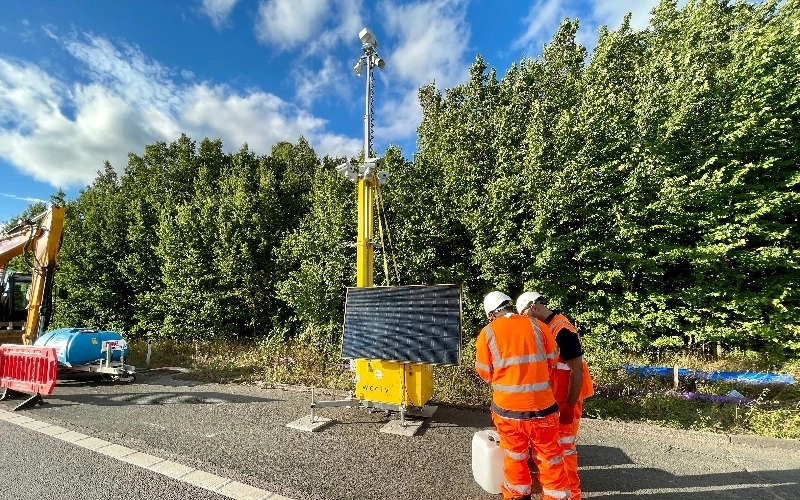
Rapid deployment Solar CCTV Towers provide reliable 24/7 monitoring of locations without fixed infrastructure. Standing up to 6 metres tall and equipped with high-definition PTZ (Pan-Tilt-Zoom) cameras, our Solar CCTV Towers can be installed within an hour to give you eyes in any remote location.
Requiring no fixed cabling and operating through solar power and 4G/5G connectivity, it is a flexible and fully autonomous solution for areas without mains electricity or stable Wi-Fi.
Read more:
2. Budget constraints
Budget constraints are one of the main factors blocking investment in network detection and monitoring solutions for a number of reasons:
-
Competing priorities: Funding must be allocated across many competing services, including road maintenance, public transport and community services.
-
Rising costs: Inflation and higher contractor rates increase infrastructure project costs and place pressure on available funds.
-
Annual funding cycles: Budget allocations are reviewed annually, and if the council's finances are tight, less urgent services are usually cut first.
When spending on road/traffic monitoring is deprioritised, it leaves gaps in coverage and compromises the department's ability to manage the network proactively and effectively.
Solution
We offer temporary CCTV cameras on flexible rental terms, giving you a cost-effective way to expand your surveillance network exactly where and when you need it, without long-term contracts or stretching your security budget.
Read more:
3. Fragmented reporting
A clear, big-picture view of activities is vital for making the best decisions about your network. However, creating and maintaining clarity is difficult given the speed and volume of everyday data coming in from diverse sources, such as:
-
Traffic control teams
-
Contractors on roadworks
-
Public complaints
-
Utility providers
-
Traffic sensor/ANPR systems
-
Emergency services,
This information is typically siloed, spread across separate platforms, emails, spreadsheets and third-party systems with no real-time integration. Without automation tools, staff spend valuable time piecing together relevant information. Sometimes they're too busy to do this, and critical insights fall through the gaps.
Solution
Centralised management through our cloud-based platform allows you to review high-definition video feeds, environmental monitoring information and incident data in a single dashboard, wherever they are. Immediate alerts and actionable insights to your phones or laptops help turn reactive reporting into proactive network control.
4. Weather visibility challenges
Adverse weather not only impacts drivers' visibility but also your ability to see what's happening on your roads. Fog, heavy rain and snow create additional risks and challenges:
-
Higher probability of accidents and breakdowns
-
Road worker safety risks
-
Traffic incursions
-
Greater disruption and confusion
-
Delayed response to emergencies
Basic camera systems are usually inadequate to show events clearly, and physical checks are nearly impossible in extreme conditions.
Solutions
Our 6-metre-tall Traffic Management Towers with infrared (IR) night vision cameras, remote monitoring and in-built AI analytics give you complete visibility across your network in all lighting and environmental conditions.
Add-on Weather Monitoring Sensors are environmental tracking tools that deliver real-time updates on wind, rainfall, humidity and temperature to help you plan around bad weather and limit disruptions.
Local authorities can also assist roadwork contractors to manage their environmental compliance through IoT devices and network visibility tools:
-
IoT-based Noise Monitoring Sensors measure work zone sound levels (over ranges of 30-130 dB and 20Hz to 12.5kHz) and alert managers before noise volumes become unsafe.
-
Air Quality Sensors continuously monitor dust, fine particulate matter, CO₂, TVOCs and carbon monoxide (CO) to help contractors control airborne pollutants during roadworks.
Read more:
5. Reactive management of roadworks
The highways team that doesn't proactively manage inconvenience caused by roadworks in real-time can expect ongoing complaints throughout the project.
Besides traffic disruption, congestion and delays, visibility issues here include:
-
Short-term duration: Since most roadworks are short-term by nature, a permanent monitoring system seldom makes economic sense.
-
Poor contractor oversight: Limited visibility into work activities and project progress makes it harder to verify that contractors are performing the job to the agreed standards and in adherence with Section 278 and other compliance requirements.
Strong, real-time monitoring of active work zones and intelligent traffic flow logs helps you to reduce disruptions and keep a closer eye on compliance and quality standards.
Solution
Mobile CCTV Towers are well-suited to cover dynamic roadworks, keeping your teams apprised of progress, compliance and potential problems at all times.
You can extend visibility to cover network security risks, protecting crews and assets:
- As an add-on to our CCTV solutions, Intrusion Detection Systems use AI-powered analytics to analyse live footage and alert supervisors when unauthorised individuals enter restricted areas.
Our fully-managed security service is backed by NSI Gold-Accredited remote CCTV monitoring, where trained professionals verify threats within seconds and initiate various response actions.
- PPE Detection and Monitoring is a smart detection system that instantly flags and alerts safety teams if crews are not wearing the required protective gear, strengthening compliance.
6. Overstretched operational teams
In many local authorities, road management teams must juggle a growing list of responsibilities. On top of that, modern consumers expect their issues to be addressed near-instantly. The strain is felt everywhere and compounded by:
-
Increased compliance and community relations: Teams must often manage safety, compliance and public relations alongside their daily workloads.
-
Staff shortages: Recruitment and budget challenges leave fewer people handling larger workloads, leading to errors, missed priorities, increased stress and even burnout.
-
Reactive work modes: When managers and staff are constantly reacting to events, they don't have time to develop plans, strategies and systems that improve service delivery.
Overstretched teams rarely have the capacity to prevent network problems proactively. Instead, they find themselves desperately firefighting issues as they arise.
Solution
CCTV systems with AI-enabled intelligence keep teams fully updated on network activities without hours of physical inspections. Managing everything from our cloud-based platform allows staff to work smarter, not harder, improving operational efficiencies.
Read more:
7. Slow deployment of traditional infrastructure
Traditional road monitoring systems (e.g., fixed CCTV setups, permanent traffic sensors, wired communication networks) can take months or even years to get up and running. The approval and implementation process is lengthy for several reasons:
-
Planning permissions: Planning approvals can incur unexpected delays, get bogged down in committee meetings or require back-and-forth interactions to address questions.
-
Complex procurement: Strict tender processes and detailed supplier contracts can cause further delays.
-
Contractor performance issues: Contractors and subcontractors may not meet their contractual deadlines, compromising delivery.
In the lag between identifying the need and implementing monitoring, thousands of incidents and emerging issues may be missed, costing lives and millions of pounds.
Solution
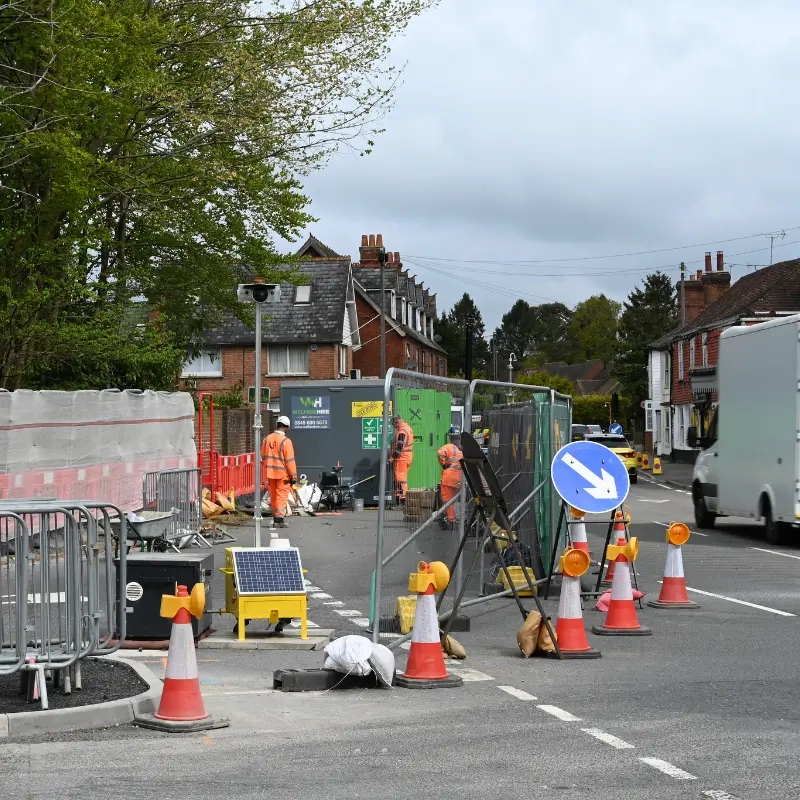
Our Mini Towers can be set up where they're needed, when they're needed, without delay. This speed and flexibility go a long way to overcoming traditionally slow processes. These compact units are designed for single-person deployment, meaning you can easily reposition them around locations without our help.
8. No real-time visibility
Traditional monitoring, such as physical visits to check on PPE compliance or inspect contractors’ work or infrastructure, struggles to keep pace with the demands of a busy network:
- Slow and time-intensive: Staff must travel to locations, which may take hours out of their busy schedule, and their reports may only be finalised the next day.
- Strain on the team: The absence of one or more members conducting unplanned spot checks places additional strain on the team, causing a ripple effect of delays.
On-the-ground inspections provide reassurance and may be necessary, but should always raise the question: Is remote, real-time monitoring more effective and efficient?
Solution
Live CCTV monitoring, combined with an effective response strategy, empowers you to react to network events and track contractors' performance and compliance, remotely and in real-time. Live tracking introduces a level of control that helps shift away from continuous firefighting.
9. Poor data
In our data-driven age, consistent and continuous information can be an organisation’s most valuable asset. By contrast, inconsistent data collection can't be relied on for a few reasons:
-
Misleading insights: Weak network data can present an inaccurate view of road and traffic conditions or contractor performance.
-
Poor decision-making: Managers may make important decisions based on unreliable, incomplete information, risking the council's money, resources and reputation.
-
Accountability gaps: Without objective data-backed evidence, defending decisions and motivating initiatives in council meetings is an uphill battle.
-
Compliance reporting takes longer and may lack crucial information required to satisfy regulators or complaining community members.
The bottom line: You may think that some information is better than none, but half a picture exposes you to dangerous blind spots and knowledge gaps.
Solution
By capturing data consistently, your information becomes more insightful (revealing patterns, trends) and valuable (informing quality decisions). Our dedicated cloud platform secures and organises all network monitoring information, providing you with the complete picture in central dashboards.
The NDAA-compliant system is highly user-friendly and doesn't require any direct support from your IT team. The platform is end-to-end AES-256-encrypted to protect your data against increasing cyberattacks (50% of UK businesses have experienced a cyber breach recently). Securely encrypted traffic and files are nearly impossible to read and exploit.
Gain Better Road Network Visibility with WCCTV Today
Overstretched teams, limited budgets, slow infrastructure deployment and coverage gaps all contribute to weak network oversight that directly impacts your community and has serious social and financial fallout.
Limited visibility translates into poor network performance: Higher costs from poor traffic flows, preventable accidents, weak security efforts and tense engagements with councillors and road users demanding answers.
Smart, flexible monitoring in a secure cloud environment is a proven solution to these challenges. Advanced real-time CCTV surveillance gives you eyes across your network wherever you need them. Strong real-time visibility empowers you to manage your road system and public safety proactively, winning the trust and confidence of the council and your community.
To explore our market-leading traffic and highways monitoring solutions, contact us today.