Construction is facing a crisis that's costing lives. The sector has the highest suicide rate of any other industry, with an estimated 7,000 construction workers having taken their own lives in the past decade.
This is a complex problem with deep roots, and no single person or department can solve it alone. But health and safety leaders can influence one area that matters enormously: the connection between mental health and site safety.
For too long, mental health has been treated separately from site safety. But in reality, it directly contributes to the errors, lapses and risk-taking behaviours that lead to incidents. Fatigue slows reaction times, stress leads to shortcuts, and depression reduces situational awareness.
For HSE leaders, understanding the link between mental health and site safety is the first step to preventing incidents and protecting workers.
Construction Mental Health Statistics: Overview
Every year, roughly 700 construction workers die by suicide, making mental health conditions one of the sector's most urgent health and safety risks.
Here are a few shocking statistics every HSE construction leader needs to know:
-
UK construction's suicide rate is nearly 3X higher than the national average across other industries.
-
28% of construction workers said they've had suicidal thoughts at least once over the past year.
-
65% of workers stated that a lack of psychological safety contributes to physical workplace risks.
-
8 out of 10 workers said mental health and wellbeing “are intrinsically linked to safety at work”.
-
90% of construction workers have experienced fatigue in the last 12 months.
-
65% of workers say poor communication contributes to higher stress and health issues.
-
Nearly 1 million workers suffered from work-related stress, depression or anxiety in 2024/25.
-
Mental health issues made up 52% of all work-related ill health in Great Britain.
-
1 million working days are lost due to work-related stress, depression or anxiety (2024/25).
These figures paint a harsh reality within the construction industry, but they also represent a workforce HSE managers are responsible for protecting. Under the Health and Safety at Work Act (HASAWA) 1974, employers have a duty to protect the health, safety and welfare of their team, so far as is "reasonably practicable", and this includes mental health, too.
Why Construction Workers Are More Prone to Mental Health Conditions
Below, we take a quick look at why construction environments create "the perfect storm" of factors that cause or worsen mental health problems for workers:
-
Physically demanding work: Long hours of manual labour, exposure to the elements and the physical toll of repetitive tasks contribute to exhaustion, burnout and chronic pain.
-
Tight deadlines: Project pressures create constant time stress. Workers feel compelled to rush, cut corners or skip breaks "to get the job done". Working under these conditions can lead to burnout and increased fatigue.
-
Job insecurity and irregular hours: Contract-based work means unpredictable income and/or working odd hours, which can lead to financial stress.
-
Poor work-life balance: Early starts, long commutes and weekend work disrupt family time and social connections. Time away from loved ones can weigh heavily on a construction worker's mental health.
-
Existing mental health problems: Workers may already have an existing mental health condition that this type of industry can worsen. Without support systems, manageable issues can quickly escalate into something more serious.
-
Mental ill health stigma: Many construction workers, especially men, believe that expressing emotion or asking for help is a sign of weakness. This "macho culture" leads to isolation, preventing workers from seeking support until problems spiral out of control.
Linking Mental Health Issues to Site Safety in the Construction Industry
Mental health challenges directly impact the cognitive functions workers need to stay safe. When someone is fatigued, stressed or anxious, their ability to concentrate and assess risk is compromised. On a busy construction site, that impairment can be the difference between a near-miss and a fatality.
| Mental health factor | Behavioural impact | Site safety risks |
| Fatigue/poor sleep | Slower reaction time; reduced alertness |
|
| Stress/anxiety | Distraction; rushing; multi-tasking; corner-cutting |
|
| Depression | Disengagement; lack of motivation |
|
| Suicidal ideation | Risk-taking behaviour; disregard for personal safety |
|
The relationship works both ways. Workplace injuries can trigger or worsen mental health challenges, creating a cycle where one incident leads to psychological distress, which then increases the likelihood of another. Breaking this cycle means addressing mental health as a core safety issue, not an afterthought.
How to identify mental health issues in the workplace
While symptoms may vary from person to person, here are some red flags to keep an eye out for:
| Warning signs | Description |
| Changes in mood or behaviour |
|
| Decline in work performance |
|
| Physical health symptoms |
|
| Risk-taking or unsafe behaviour |
|
| Verbal cues |
|
Why Workers' Mental Health is an HSE Issue
Health and safety managers have a legal duty to protect employee mental health, and failing to do so carries the same weight as neglecting physical hazards on site.
Here are a few regulations around workplace health and safety for the construction industry:
-
Health and Safety at Work Act 1974: Employers have a duty to look after their people, not just physically but mentally as well. In practice, this means taking reasonable steps to prevent harm caused by work-related stress, unmanageable workloads and harmful behaviours such as bullying or harassment.
-
Equality Act 2010: This law treats long-term mental health conditions as a disability, and employers must allow workers to keep working without more stress. A proposed mental health strategy could include adjusting responsibilities, changing working hours or offering remote/hybrid work.
-
Management of Health and Safety at Work Regulations 1999: Construction companies must conduct "suitable and sufficient" risk assessments for all construction projects, which include taking mental health risks into account alongside physical hazards.
-
HSE Management Standards for Work-Related Stress: HSE guidance to assess the 6 stressors of construction environments: demands, control, support, relationships, role and change.
-
Construction (Design and Management) CDM Regulations 2015: Regulation 8 requires clients, designers and contractors to eliminate foreseeable risks (including mental health impacts like fatigue from poor planning) during project design and execution.
Read more: The Modern HSE Playbook for UK Safety Leaders
5 Actions for Health and Safety Leaders
Mental health problems may feel outside health and safety leaders' "usual" scope of work, but as we've covered in this article, workers' well-being is a real safety risk that impacts overall site safety.
Here's where you can start:
Action #1: Normalise the conversation
The biggest barrier to mental health support is stigma. Workers don't speak up because they fear being seen as "weak" or a liability. Breaking that silence starts at the top, with leadership leading open conversations:
-
Raise mental health awareness in toolbox talks alongside physical safety topics.
-
Share mental health resources, helplines and support group information. Mental Health First Aid (MHFA) programs give employees the right learning tools and the support they need.
-
Use appropriate language: "mental health condition" vs. "mental health problem".
-
Develop a robust mental health strategy to show workers you're serious about their wellbeing.
-
Make it clear that asking for help is a sign of strength, not weakness.
Action #2: Train site managers to spot early warning signs
On-site project teams interact with workers daily, which puts them in the best position to notice if something has changed with a colleague.
-
Provide mental health awareness training for all supervisors and project leads.
-
Teach teams about mental ill health red flags: behavioural changes, withdrawal, disregard of safety policies/protocols, etc.
-
Equip them with simple conversation starters (e.g., "You haven't seemed yourself lately, is everything okay?")
-
Consider 1-on-1 worker/management meetings more often.
Top tip: Mates In Mind and non-profit organisations like the Lighthouse Club offer free resources specifically for the construction industry.
Action #3: Implement no-blame reporting
Workers won't report near-misses, safety concerns or mental health challenges if they fear punishment or ridicule. A no-blame environment and strong safety culture do the opposite.
As an HSE leader, consider the following:
-
Treat site safety concerns as learning opportunities, not discipline triggers.
-
Offer anonymous reporting if possible.
-
Promptly respond to reported cases so workers can see that speaking up leads to action.
-
Reward/celebrate reporting as a positive safety behaviour.
Read more: Why Safety Culture is the Most Valuable Asset on a Construction Site
Action #4: Reduce stressors within your control
Not all stressors can be "fixed", but many are. Here are a few things HSE leaders should consider:
-
Review shift patterns and working hours (chronic overload drives burnout).
-
Ensure clear communication about roles, responsibilities and expectations.
-
Reduce manual admin burdens where possible (digital tools are a worthwhile investment).
-
Monitor site conditions that add unnecessary stress: noise, temperature, remote locations, etc.
-
Push back against unrealistic deadlines that force workers to cut corners.
Action #5: Monitor environmental conditions
Some mental health risks are environmental. Excessive noise, poor air quality and temperature extremes can all contribute to fatigue and cognitive impairment.
-
Monitor occupational noise levels closely to ensure compliance with the Control of Noise at Work Regulations 2005 (87 dB(A) threshold).
-
Track air quality (dust, fumes, etc.) that can affect both physical and mental health.
-
Consider weather conditions that increase stress health: extreme heat, poor visibility.
-
Ensure adequate rest breaks throughout the day to reduce fatigue.
Supporting Mental Health with Smart Monitoring Solutions
While technology can't solve mental health challenges, it can help reduce the conditions that contribute to them. For health and safety managers already stretched thin (with too few staff and too little budget), smart monitoring systems offer a practical solution:
-
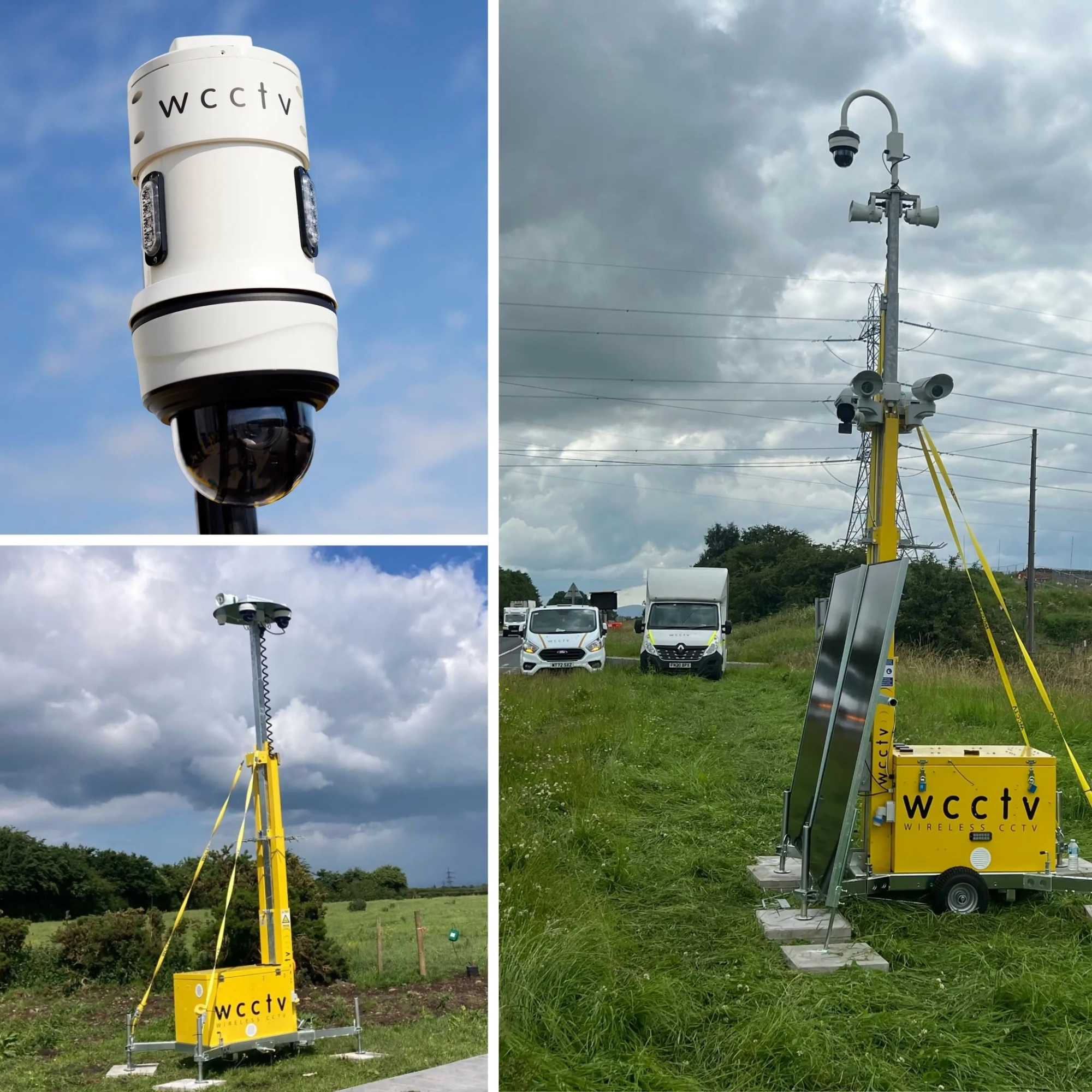
Continuous monitoring: Rapid Deployment CCTV Towers and Temporary CCTV solutions equipped with PTZ (Pan-Tilt-Zoom) cameras monitor building sites both day and night. This means every working zone is checked regularly, and adherence to safety laws can be verified without constant manual oversight.
-
Risky behaviour detection: AI-powered smart detection systems can identify unsafe actions in real-time. PPE monitoring flags compliance issues automatically, smoke/fire detection triggers the alarm for on-site fire risks, while intrusion alerts help keep workers safe 24/7.
-
Reduced admin burden: Cloud-based platforms like Stellifii consolidate all site data into a single dashboard, allowing teams to see everything that happens on-site from one place. Integrated systems generate audit-ready reports up to 5X faster than manual legacy-based systems, freeing teams from operational and audit stress.
-
Fuss-free audits: Smart monitoring systems automatically timestamp every on-site incident, reducing the need for manual spot checks, paper-heavy processes and the stress that comes with audit readiness. In just a few clicks, site teams can fulfil compliance obligations while remaining cool, calm and collected throughout the entire process.
-
Fewer manual checks: Automatic Number Plate Recognition (ANPR) eliminates manual patrols (with long working hours) entirely. By removing the need for security guards stationed at site access points, HSE managers can reduce fatigue-related risks and improve overall operational efficiency.
-
Environmental monitoring: Smart sensor software tracks air quality (CO₂, particulate matter, VOCs), noise levels (30-130 dB) and weather conditions (temperature, rainfall, wind speed) in real-time. When thresholds are reached, automated alerts trigger action before problems escalate while capturing up to 180,000 logs for trend analysis and compliance purposes (ESG, HSE, etc.)
-
Reduce "firefighting mode": When compliance is automated and monitoring is continuous, HSE teams spend less time reacting to problems and more time on prevention.
Better Support Construction Workers Today
Mental health and site safety are closely linked, and on modern construction sites, they can't be managed in isolation. Poor occupational health, whether caused by fatigue or stress, increases the likelihood of errors, lapses in judgement and risk-taking behaviours that lead to on-site accidents.
For health and safety officers, addressing mental health at work starts with raising awareness, providing the appropriate support and reducing stressors wherever possible. Construction companies that embed mental health into their workplace culture don't just meet their duty of care but also see fewer incidents, lower sickness absence and a workforce that feels valued and supported.
With over 20-years of experience in construction monitoring, we provide fully-managed smart surveillance systems that help protect both safety and well-being through real-time visibility, automated compliance and 24/7 oversight.