No matter the industry, most site or building managers and owners will now likely be faced with the expectation of monitoring site conditions due to the environmental and public safety risks related to the overproduction of dust, gas, noise and vibration levels.
However, other additional benefits of monitoring conditions like a minimised risk of complaints and reducing project disruption has led to a growth in interest on using sensors to both monitor and prevent the costly consequences non-compliance can create.
As demand increases, we explore what environmental monitoring sensors are, the different types available and what industries can benefit from them.
What is An Environmental Monitoring Sensor?
Environmental monitoring sensors are devices used to gather data regarding various environmental factors like air quality, weather and noise across a designated location.
From dust particles and CO2 to heavy rain and loud machinery use, these sensors monitor and instantly alert managers and keyholders of near-exceeded thresholds to provide them with the opportunity to react and prevent any non-compliance or damage.
With every sensor, their main goals are to monitor, gather data, alert and report environmental readings that can be used to take informed, data-backed decisions to better real-world outcomes.
What are the Benefits of Environmental Monitoring Sensors?
Environmental monitoring sensors are becoming central to many industries, particularly construction due to the real-time insights they can provide on site conditions. With regulations increasing, non-compliance is more costly than ever before, as well as the dangers high levels bring to worker safety.
They help to understand and maintain the health, safety and integrity of both natural features and infrastructure within a specified location.
By providing real-time data on the monitored environmental condition, sensors can benefit in the following ways:
-
Detect issues early - Advanced sensors will allow you to preset threshold limits on site condition levels, ensuring they are personalised to your needs and avoid triggers being sent after the fact of limits being exceeded. This early detection offers early intervention, avoiding fines and other penalties.
-
Improve environmental and public safety - The overproduction of gas, particles, noise and vibration can all impact environmental and public safety. Sensors can monitor this and help you ensure conditions are maintained within safety thresholds.
-
Enhance environmental processes and policies - With the encouragement of Net Zero, many organisations have created their own environmental policies and set goals they wish to achieve as a business. Environmental sensors provide the crucial data to understand the current environmental output and support in bettering policies, processes, and initiatives across all phases.
-
Refine decision-making - Real-time data from sensors provide valuable insight into site conditions and allow you to cater your response in the moment and for the future to ensure you remain both on track and within safety limits for business and worker safety.
-
Maintain positive community relationships - Exceeded environmental limits can lead to complaints from local residents which can damage relationships with your business. Sensors help keep conditions within safe levels and minimise the risk of complaints.
-
Promote proactive maintenance - Environmental conditions fluctuate and this makes maintaining them challenging, but through the use of sensors, the real-time data promotes proactive maintenance. If production increases, you can see it straight away and respond before limits are exceeded.
-
Keep projects on schedule - Varying environmental conditions can impact project statuses, and quite often, delay them. For construction in particular, this is costly to an organisation’s finances and reputation. In general, delays can have a knock-on effect like slowing down businesses from opening, creating a block to individuals moving and placing a hold on services becoming available when stated.
Environmental standards, data protection and health and safety are tightening restrictions and holding those accountable for non-compliance. This places firms, especially those in high-risk industries at risk of fines and other financially destroying consequences.
However, as much as the benefits are important to know, it’s crucial to also face the realities of non-compliance such as the type of financial penalties, the type of worker injuries that can be sustained and potential long-term brand damage.
The Dangers of Environmental Non-Compliance
The benefits of environmental monitoring solutions are often only felt if you are utilising them effectively, and to do this you need to understand the true dangers of non-compliance and why it needs to be prioritised.
Dangers vary from industry to industry and from site to site, however, there are some general concerns that every site owner and manager needs to be aware of.
Initially, spot checks are appealing due to the reduced costs and process familiarity, but they are likely placing you at high risk for compliance breaches. Hence the need for AI-driven environmental monitoring solutions.
Financial Penalties
Both the HSE and Environmental Agency (EA) have tightened their regulations and increased enforcement meaning that organisations must keep eyes on conditions or risk facing financial penalties.
In 2024, there were 168 prosecution cases, 98 of which resulted in fines totalling £3.8 million by the Environmental Agency alone.
A few exceeded noise levels here, and a few days with excessive dust may appear minor, however, the EA can issue unlimited fines for serious offences, with the aim of holding those accountable for polluting the environment.
Financial penalties and can be quick to add up. For complex industries like construction and critical infrastructure, they’re at high risks of fines, and can even face multiple over a singular project.
Related Articles: The Role of Environmental Monitoring in Meeting CDM 2015 Requirements
Short- and Long-Term Worker Illnesses
Environmental factors like poor quality have been linked to several short- and long-term illnesses such as respiratory issues and cancer. Due to these risks, organisations are facing scrutiny to protect workers from the dangers and liability claims that can come alongside this.
In general, air pollution was linked to 30,000 UK deaths in 2025, and for industries like construction and transport, which are the top two contributors to emissions in the UK, this only increases those risks.
For construction, air quality will often fluctuate due to the varied materials and machinery used that aggravate dangerous particulate matter, Co2, TVOCs and other gases into the air which is then subsequently breathed in by employees.
However, even for lower risk industries, the danger still stands and monitoring is vital to maintaining safe standards for workers.
It’s important to centralise worker safety not only for employees’ health, but to protect your business from liability claims in relation to illnesses and from reputational damage that can be caused by publicised poor worker health, both by the media and local community.
Brand Damage
From poor air quality causing worker illnesses and excessive noise impacting local communities to harsh weather conditions leading to worker injuries, and even fatalities, all of these can damage business reputation.
The direct financial impact is not the only concern for business, indirect costs can be just as financially damaging for a business, if not more than them.
One incident or regulatory enforcement action can create a stir, and this can negatively impact your business and its reputation. Multiple incidents, whether that be at one location or over various ones are more noticeable and display a pattern of issues, leading to more devastating impacts.
Work Stoppages for Projects
More specific to construction projects, compliance breaches relating to environmental issues can cause a wealth of problems, ranging from financial damage to operational disruption.
Most firms will be aware of the financial penalties and fines provided by local authorities, health and safety and environmental standards, however, some regulators also have the power to suspend or stop work based on violations.
These knock projects completely off schedule, leading to delayed outcomes and subsequent knock-on effects due to this, and in worst case scenarios shut them down for weeks and months until action is taken.
This can damage your relationship with clients and stakeholders, and also impact the success of future tenders as it implies elements of neglect from a construction firm, and how this impacts an overall project.
Related Article: Why Integrated Monitoring Wins More Construction Tenders
What Are Different Types of Environmental Monitoring Sensors?
There are various environmental monitoring sensors aimed at tracking the key factors likely to impact business, worker and community safety. These sensors all monitor different elements, however, are all designed to track data in real-time, gather that information and automate reporting for this.
Below we’ve broken down the four main environmental monitoring sensors, what they do and what industries are likely to benefit most from the use of them:
Air Quality Sensor
Designed to track a range of air quality concerns, these sensors detect key pollutants such as fine particulate matter (PM1, PM2.5, PM10), CO₂, TVOC, carbon monoxide, humidity, temperature and dew point.
The overproduction of any of these matters pose dangers to workers, the general public and local environment, with local authorities and the environmental agency placing limits on them to prevent such risks.
Air quality sensors help simplify monitoring of multiple air quality concerns in one place, providing oversight on trends and patterns that occur during certain times and/or activities. This data can then be used to adjust work or maintenance to predict and prevent non-compliance.
What Industries Would Benefit From This?
-
Industrial Facilities
-
Commercial Buildings
-
Schools and Universities
-
Public Transport Hubs
For example, a commercial building construction site is likely to involve heavy machinery and vibration that can increase particulate matter in the air and increase risks to workers and the surrounding area.
To combat the risk of airborne illnesses, air quality sensors monitor levels in real-time, allowing site managers to adjust machinery use or pause work until air quality levels reach safe limits again.
Related Articles: Air Quality Monitoring Within Construction: Turning Sensor Data into Actionable Insights
Weather Monitoring Sensor
Weather monitoring sensors predict, track and log weather data in real-time. They tend to provide the capability to automate reporting that can then be provided to clients, stakeholders and throughout the business to help understand the impact of such a climate.
Generally, they track several key weather conditions:
-
Humidity
-
Temperature
-
Wind speed and direction
-
Rainfall
-
UV levels
-
Solar radiation
-
Dew points
Designed to monitor hot and cold weather changes, the aim is to provide real-time insight into the daily conditions faced, allowing maintenance plans to be adjusted to avoid any knock-on impacts from this.
Unlike other sensors, weather cannot be changed to suit your business needs, but being aware of oncoming weather allows organisations to adjust any maintenance schedules or take additional steps to protect staff from unnecessary risk.
What Industries Would Benefit From This?
-
Construction Sites
-
Farming & Agriculture
-
Hospitals & Healthcare
-
Wind & Solar Farms
-
Transportation & Logistics
For example, certain construction activities like the use of cranes involve safe weather conditions, with heavy wind and rain increasing the risks posed to worker safety.
Weather monitoring sensors help to provide predictive information and real-time data, so that managers can then make informed decisions to pause that activity or postpone it to another day when weather is expected to improve.
Read More: Weather Monitoring Tools That Keep Construction Projects on Track
Noise Monitoring Sensor
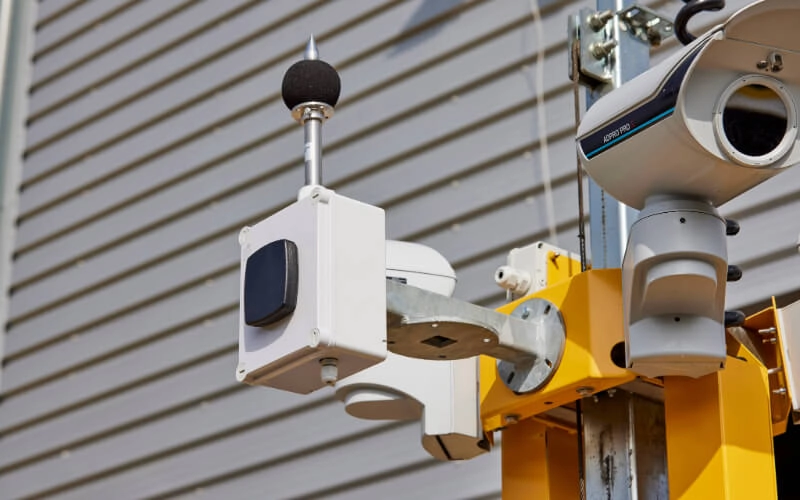
Mostly designed for construction sites, noise monitoring sensors help keep track of noise level, triggering alerts when thresholds are close to being exceeded. This is a vital tool for many industries due to the regulatory limits in place.
Excessive noise can lead to fines, penalties, environmental damage and hearing issues for both employees and local residents/visitors in the surrounding area.
The most common issue surrounding noise stems from neighbourhood complaints as these can quickly escalate to the local authority getting involved. This can result in fines, damaged relationships and even work suspensions for construction projects.
High noise levels are also linked to wildlife disruption, negatively impacting land and animal life. Due to increased expectations in environmental safety, organisations are being held accountable by regulators and the public as to how they impact local wildlife, however, noise sensors are considered successful measures to prevent this disturbance.
What Industries Would Benefit From This?
-
Residential Construction Sites
-
Demolition Sites
-
Quarries
-
Excavation Sites
-
Industrial & Civil Engineering Sites
For example, you may have a construction project based in an urban location with multiple occupied offices based nearby.
Noise monitoring sensors can be used to benefit your construction site in various ways here. From providing oversight on daily noise levels and ensuring you remain within the safety limits to providing evidence when formal complaints have been made to avoid fines.
Read More: Noise Monitoring Compliance: Futureproofing UK Construction Sites
Vibration Monitoring
Excessive vibration levels can be extremely damaging to any nearby structures, leading to neighbourhood complaints, environmental damage, nearby building destruction, project delays and costly liability claims and investigations.
Vibration monitoring sensors detect and measure ground movement to check whether vibration is staying within limits. If close to the threshold of non-compliance, the sensor will trigger an alert for a security team or manager to intervene and prevent this.
The main goal being to provide early intervention capabilities to managers and business owners, allowing them to implement preventative measures prior to any breach, and before there’s any knock-on consequences.
What Industries Would Benefit From This?
-
Piling Operations
-
Demolition Projects
-
Excavation Work
-
Urban Construction Sites
-
Sensitive Infrastructure Protection
For example, during demolition projects, there is a high likelihood for increased vibration levels that could impact nearby buildings.
Through the use of vibration monitoring sensors, they can monitor these levels and provide you with real-time oversight to help prevent damage to any surrounding buildings.
Keep Your Site Secure and Environmentally Safe with WCCTV
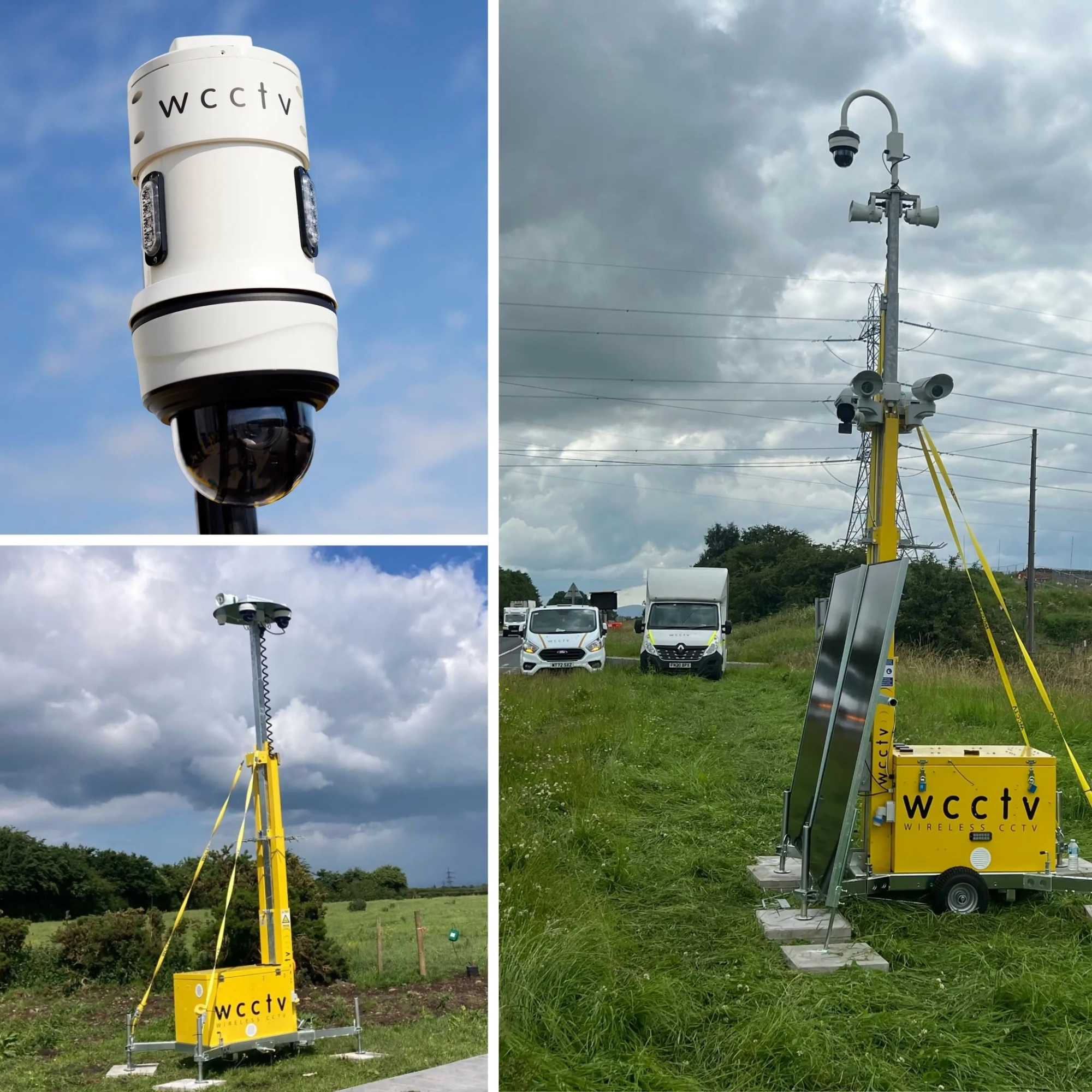
Save on the suppliers and bolt-on our market-leading CCTV Towers with one of our environmental monitoring sensors.
Whether its noise, air quality, weather or all of the above, our offerings are designed for sensitive and high-risk locations which allow you to gain real-time insight into your site, building or property’s conditions to ensure you upkeep both environmental and public safety.
With live alerts and threshold warnings, you can pre-set noise levels, dust limits or air quality parameters that if exceeded will send an instant notification, in which you can react appropriately before they escalate.
Backed by our fully-managed security services, you will also have remote access to live monitor and review recorded footage to assess the conditions visually too, if relevant. This can be completed on any device at any location.
All our environmental monitoring sensors generate reports to support Section 61 compliance, ESG reporting and local authority updates. This keeps your teams, clients and partners informed with clear, accurate data.
Interested in bolting on one of our environmental monitoring sensors to your WCCTV security solution or upgrading your full surveillance system with us? Get in touch today to book a free consultation.