Traditional monitoring methods like periodic spot checks and paper-heavy processes often mean that by the time health and safety officers receive construction project data, it's already outdated.
When an incident occurs, like a worker being injured or an environmental breach triggering an investigation by the Health and Safety Executive (HSE), safety managers are left piecing together what went wrong long after the incident, forcing them to react to problems rather than prevent them.
As HSE regulations tighten and building sites become more complex, safety managers need peace of mind knowing that safety protocols are being followed, without being physically present on-site.
This is where artificial intelligence (AI) is transforming the construction industry. Instead of waiting days or weeks for incident reports, AI-powered detection systems provide real-time alerts and early warnings the moment risks arise.
This article explains how using AI-detection data for early intervention on construction sites works, what data is collected and how HSE leaders can use these insights to prevent incidents rather than just respond to them.
3 Reasons Why Early Intervention Matters in the Construction Industry
Catching problems early makes all the difference between a safe shift and a serious incident.
Here's why early intervention matters in the construction industry:
1. Improved safety performance
Every intervention that happens before an incident prevents harm to workers. AI-detection spots unsafe behaviours and emerging environmental risks in real-time, allowing safety teams to address issues before they escalate.
Whether staff are working without hearing protection during demolition work or strong winds exceed the safe threshold for crane operations, AI-driven alerts ensure corrective action when it matters most. In fact, sites using continuous AI monitoring report incident reductions of up to 40-50%.
Read more: How Smart Monitoring Systems Enhance Construction Site Safety
2. Faster response
Traditional safety monitoring relies on sporadic inspections and manual reporting. By the time information reaches decision-makers, construction workers may already have been exposed to danger.
AI technologies completely change how risks are managed. Instead of reactive responses after the fact, safety teams receive instant alerts as soon as a risk is found. For instance, when a PPE violation occurs, project managers know within minutes, not days later, allowing for corrective action.
Compounding this, the UK construction sector has a fatal injury rate 4.8X higher than the all-industry average. This highlights the importance of rapid response, especially in high-risk environments where rapid response times can mean the difference between a near miss and a serious accident.
Read more: Reducing Construction Site Incident Rates Through Real-Time Monitoring
3. Cost control
Mishaps in construction safety are expensive: compensation claims, HSE non-compliance penalties, project delays, budget overruns and insurance premium increases. Not to mention the reputational damage for health and safety officers when site incident rates increase.
Early intervention helps put a stop to this. Construction sites implementing AI in their workflows typically experience fewer incidents, [lower insurance fees] and compensation claims, less rework and fewer project shutdowns.
Read more: How Smart Site Monitoring Protects Margins in Construction
How AI Systems Work on Construction Sites
Artificial intelligence (AI)-powered systems combine a variety of technologies and software that work together to identify hazards, predict risks and monitor conditions in real-time, such as:
-
Machine Learning (ML)
-
Deep Learning (DL)
-
Computer Vision (CV)
-
Natural Language Processing (NLP)
-
Internet of Things (IoT)
Here's how they work in practice:
-
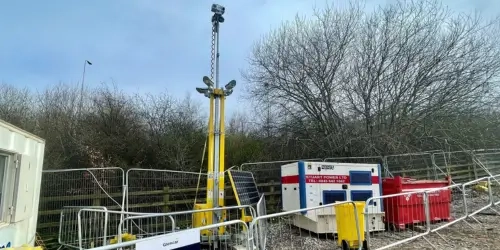
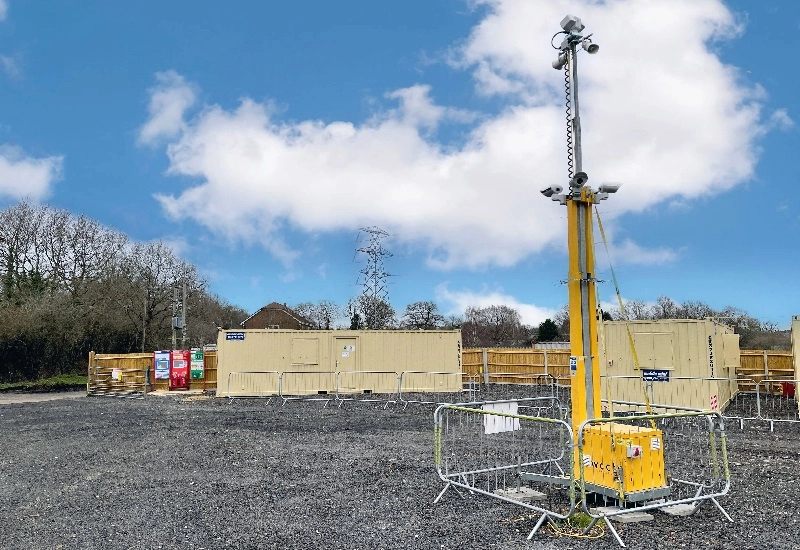
Data capture: CCTV Tower/Temporary CCTV cameras, IoT sensors and connected devices collect site data 24/7, using advanced PTZ (Pan-Tilt-Zoom) night vision With a near-360° field of view, they capture everything that happens on-site, from surveillance footage to access control.
-
Analysis: AI algorithms process site data instantly. Computer vision identifies PPE violations, unsafe behaviours and security threats the moment they occur. Machine learning spots patterns (including historical data), predicts risks and filters false alarms from genuine safety/security threats.
-
Instant alerts: When AI systems detect safety risks (or cameras are triggered), site managers receive an instant notification. This level of security transforms reactive responses into proactive risk management.
-
Rapid response: Early intervention through professional remote monitoring services means trained operators at NSI Gold Accredited centres initiate various responses on your behalf to deter the incident in real-time. Actions may include issuing live audio voice-down challenges, dispatching mobile keyholding teams or contacting emergency services where needed.
-
Documentation: Every detection event is automatically timestamped and logged, creating a clear audit trail for compliance, insurance claims and internal reviews. Smart systems, with cloud-based integrations like Stellifii, store data in AES256-encrypted dashboards and generate reports up to 5X faster than legacy systems.
Additionally, construction AI tools integrate with various fully-managed, add-on features that provide comprehensive insights into site-wide activity. This broader scope enables faster, better-informed intervention across multiple risk areas, including:
Read more: How Artificial Intelligence is Revolutionising CCTV Tower Monitoring
Types of data collected
Construction AI tools capture multiple streams of real-time data, providing comprehensive visibility across site activity. These data inputs enable faster, evidence-based decision-making and support early intervention across key risk areas:
-
Surveillance: PTZ cameras and AI-video analytics analyse camera feeds, alert site teams when something's wrong as soon as it happens and timestamp every incident for compliance purposes.
-
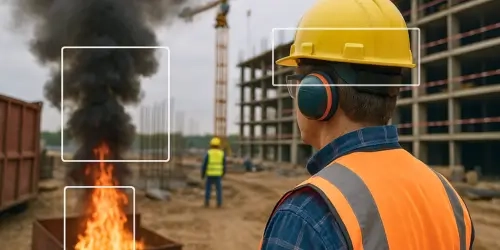
Smart detection: Provide early warnings for PPE violations, intrusions and smoke/fire
-
Environmental hazards: IoT sensor data delivers live atmospheric metrics for air quality (fine particulate matter, CO₂, VOCs), noise levels (30-130 dB) and weather (temperature, humidity, rainfall, wind speed) in real-time.
-
Access control: ANPR uses Optical Character Recognition (OCR) technology to read vehicle registration plates from video or still images, creating a digital trail of all entry/exits.
-
Progress tracking: Time Lapse Video condenses days/weeks of work into short video clips.
-
Incident verification: Body Cameras give clear evidence from a worker's perspective.
AI-detection in action
AI in construction is best positioned as a support tool that strengthens prevention rather than replacing human judgment. When integrating AI into safety management strategies, project teams strengthen oversight, support faster decision-making and reduce reliance on constant site presence.
UK construction sites that have embedded AI site monitoring are already seeing measurable results:
-
47% drop in PPE violations within six months of implementing AI detection systems.
-
28% of contractors report that AI-driven predictive analytics improves safety outcomes.
-
AI-detection systems can reduce rework by nearly 20%.
-
36% drop in site safety incidents, with 52% better hazard identification before events occur.
-
35% overall incident reduction via computer vision monitoring on UK sites.
-
Around 50% of Building Information Modelling (BIM) tasks can be automated with AI adoption.
-
40-60% fewer safety issues on AI-powered sites compared to traditionally monitored ones.
Browse our datasheets, brochures and case studies to keep up to date with the latest news and insight from our security industry experts.
Early Intervention Done Right
Waiting for incident reports isn't safety management; it's damage control.
AI-detection data gives HSE leaders real-time visibility into emerging hazards, enabling intervention before harm occurs. Instead of documenting incidents after the fact, teams can use real-time data to act quickly to prevent them.
With continuous monitoring, real-time alerts and automated compliance monitoring built in, AI systems give construction teams more control across every working zone. This level of intelligence improves hazard identification and safety performance in half the time compared to traditional methods.
With 6 regional hubs and more than 2 decades of wireless monitoring expertise, we provide state-of-the-art AI-detection solutions that help construction companies intervene earlier and protect their workforce from day one.
Contact our experts to discuss how our AI-powered construction site safety solutions can support your next project.