Non-compliance with the Construction Design and Management (CDM) Regulations 2015 costs UK construction companies thousands in fines every year. A Bristol contractor was penalised £27,000 in 2019 for noise breaches, while another major construction company was fined £700,000 in 2021 following a workplace fatality.
These penalties show just how seriously the Health and Safety Executive (HSE) takes the enforcement of their standards across the UK.
But beyond the financial hit, non-compliance can also lead to project delays and HSE investigations, and even taint your professional reputation among clients and project stakeholders.
The tricky part? CDM 2015 doesn't just require you to manage health and safety matters; it expects you to prove it.
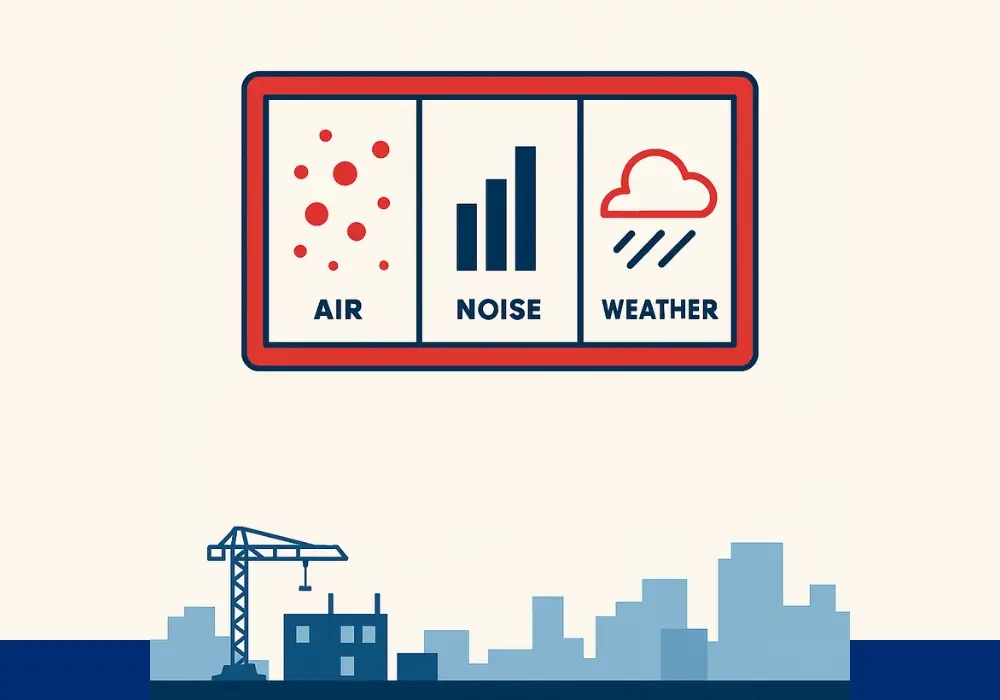
This is where cloud-based environmental monitoring solutions are truly making their mark. Air quality sensors, along with noise and weather monitors, create an audit trail that shows compliance at every construction phase, providing real-time data on what happened onsite, the timing of the events, and the steps taken to reduce risks.
In this article, we explain the UK's CDM 2015 regulations, the role of environmental monitoring in meeting these requirements and how smart software and monitoring solutions keep you compliant.
Understanding CDM 2015 Regulations in UK Construction and Why It Matters
CDM 2015 is governed by the Health and Safety Executive (HSE) and applies to all building projects in the UK. These are legal requirements. Every construction project must identify hazards, assess risks and have control measures in place throughout the entire design, planning and construction process.
Here's a quick breakdown:
| CDM 2015 regulations | Who it applies to | Regulation requirements |
| Regulation 4: Client duties | Project clients |
|
| Regulation 8: Designer duties | Architects, designers, engineers | Designers must have the necessary skills, knowledge, experience and organisational capability to carry out their role safely and effectively. |
| Regulations 12 and 13: Principal contractor duties | Lead project designer (i.e., appoint a lead contractor when there is more than one contractor) |
|
| Regulation 15: Duties of contractors | All contractors and subcontractors |
|
Why CDM regulations matter
Ensuring compliance protects you from fines, but it also:
-
Protects everyone involved in construction projects, including workers, designers, clients and surrounding communities.
-
Improves project management by defining everyone's roles and responsibilities.
-
Ensures you meet regulatory requirements, preventing penalties or legal action that derail timelines.
-
Prevents costly delays caused by HSE investigations or stop notices.
-
Strengthens your reputation with clients/stakeholders who expect proper health and safety management.
9 Environmental Regulations in the UK's Construction Industry You Need to Know
Environmental monitoring isn't separate from CDM compliance; it's part of it.
Did you know that the UK construction sector accounts for around 25% of the country's total greenhouse gas emissions? This alone makes environmental controls a priority to align with Net Zero goals.
Here are 9 environmental regulations that work side-by-side with CDM regulations to create safer, more sustainable construction sites:
-
The Control of Pollution Act 1974 (CoPA): Governs noise, vibration and air pollution for all demolition and construction projects. Sections 60 and 61 of the Act instruct contractors to give local authorities at least 28 days' notice before starting any building work that might cause noise and outline the "Best Practical Means (BPM)" methods to reduce foreseeable risks.
-
Environment Act 2021: Enforces environmental protections and sets legally binding targets for air quality, water, biodiversity and waste reduction in the construction sector.
-
Environmental Protection Act (EPA) 1990: Controls all residential, commercial and industrial waste management in England, Scotland and Wales. Also, under Section 80, councils can issue Noise Abatement Notices when construction noise (above 87 dB(A)) becomes a "statutory nuisance".
-
"Part L" Building Regulations/Approved Document L: Compliance frameworks to make construction works more sustainable, aiming to reduce carbon emissions for new and refurbished buildings by 31%. Contractors must prove that materials and methods meet Part L standards.
-
Town and Country Planning (Environmental Impact Assessment) Regulations 2017: Requires environmental impact assessments for certain project types that directly influence construction planning and design.
-
British Standard BS 5228-1:2009 + A1:2014: Guides noise and vibration controls on construction and open sites in the UK.
-
Clean Air Act 1993: Controls emissions of smoke, dust and fumes caused by construction activities, as well as chimney heights under Section 14.
-
Control of Substances Hazardous to Health Regulations (COSHH): Requires those in construction to identify, assess and control harmful/hazardous substances on-site, such as construction dust and chemical exposure, to maintain health and safety compliance.
-
The Industrial Decarbonisation Strategy: Government framework pushing greener construction practices that align with Net Zero targets through emission control and monitoring.
Why environmental monitoring matters
-
Less chance of CDM/HSE compliance violations
-
Improves operational efficiency with fewer project delays
-
Strengthens reputation with clients, stakeholders and project teams
-
Supports sustainability and ESG goals
-
Better risk management regarding worker safety
-
Fewer complaints from the surrounding communities
Read more:
How Environmental Monitoring Supports CDM 2015 Regulations
Regulations around emissions and environmental impact are tighter than ever before. Environmental monitoring is the best way to meet several key duties under CDM 2015 because it provides the data you need to demonstrate proper risk management, compliance and due diligence all in one place.
Regulation 13 of CDM requires principal contractors to "plan, manage and monitor the construction phase and coordinate matters relating to health and safety". Regulation 15 requires all contractors to identify onsite "risks and the control measures put in place".
Real-time environmental monitoring makes both possible.
3 types of environmental monitoring tools
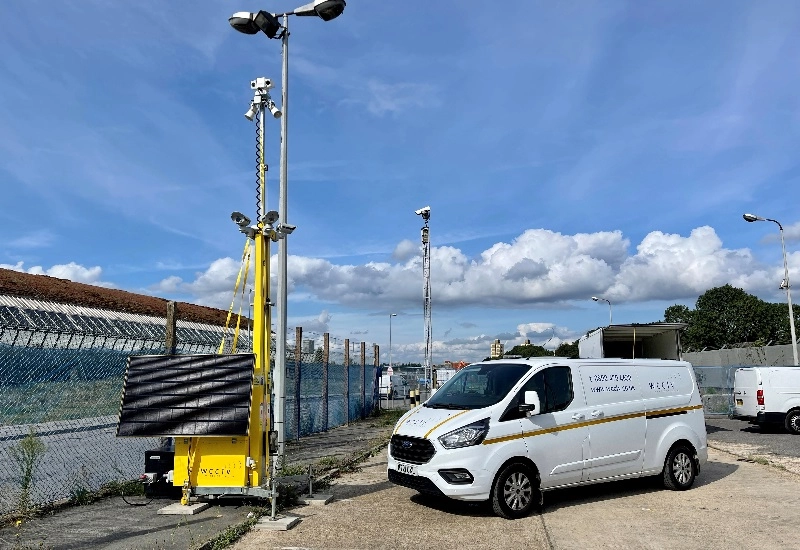
Our environmental monitoring solutions integrate smoothly with temporary CCTV systems to tell you exactly what's happening across all your construction projects in real-time.
1. Air quality monitoring
Air quality sensors track fine particulate matter (PM1, PM2.5, PM10), CO₂ levels, volatile organic compounds (VOCs), carbon monoxide, humidity and other air-borne pollutants in real-time. These smart devices capture thousands of hourly data points and store up to 180,000 time-stamped records for trend analysis and compliance reporting through our cloud-based platform, Stellifii.
Air quality measurements support CDM regulations by:
-
Detecting hazardous dust levels before they harm workers (aligning with Regulation 13 standards).
-
Providing evidence of "Best Practical Means (BPM)" controls when construction work is postponed/delayed due to unsafe conditions.
-
Triggering instant alerts when pre-set limits exceed Section 61 thresholds, allowing for quick corrective action.
-
Creating clear audit-ready documentation for HSE inspections, insurance claims and internal reviews.
2. Noise monitoring
Noise monitoring sensors monitor, manage and report on-site sound levels. Using intelligent software, they help you meet regulatory requirements (CDM, Section 61, BS 5228-1), protect surrounding communities and demonstrate regulatory compliance with accessible data and automated reports.
Here's how they work:
-
Records exact ambient noise levels (30-130 dB) using a condenser microphone.
-
Monitors both low- and high-frequency site activity (20Hz to 12.5kHz) in real-time.
-
Provides time-stamped evidence logs at set intervals throughout project phases.
-
Supports construction, demolition, quarry, highway and civil engineering projects.
-
Alerts site managers when noise thresholds are breached, preventing violations.
-
Automatically compiles compliance reports needed for audits and inspections.
3. Weather monitoring
Weather monitoring sensors provide live data on key atmospheric conditions directly from your site. These intelligent tools track wind speed (0–110mph), rainfall (hourly), humidity (10-99%) and temperature (-40°C to +60°C), giving site managers valuable insights into what's happening and why.
For example, if work stopped on Monday due to weather disruptions, site managers can use Stellifii to access weather data and easily explain to stakeholders that wind speeds made crane operations unsafe.
Weather monitoring readings directly support CDM regulations by:
-
Justifying work stoppages when conditions (heavy rain, dust levels, slope stability) become unsafe.
-
Protecting construction workers from heat stress and extreme temperatures.
-
Monitoring conditions that can impact concrete pours, crane operations and worker safety.
-
Providing evidence for delay claims, stakeholder enquiries or insurance disputes.
-
Simplifying compliance admin with automated, time-stamped reports that align with UK standards.
Read more:
-
Weather Monitoring Tools That Keep Construction Projects on Track
-
Noise Monitoring Compliance: Futureproofing UK Construction Sites
How to Prove Compliance with CDM 2015 and Environmental Monitoring Requirements
Manual monitoring methods like spreadsheets and clipboard rounds create compliance gaps. When HSE inspectors arrive, they want uninterrupted records that show exactly what happened and when, not inconsistent spot checks spaced weeks apart. If you can't provide verifiable data quickly, you look more reactive than in control, often causing directors to question your capabilities.
Modern surveillance systems solve this problem:
CCTV systems with integrated monitoring
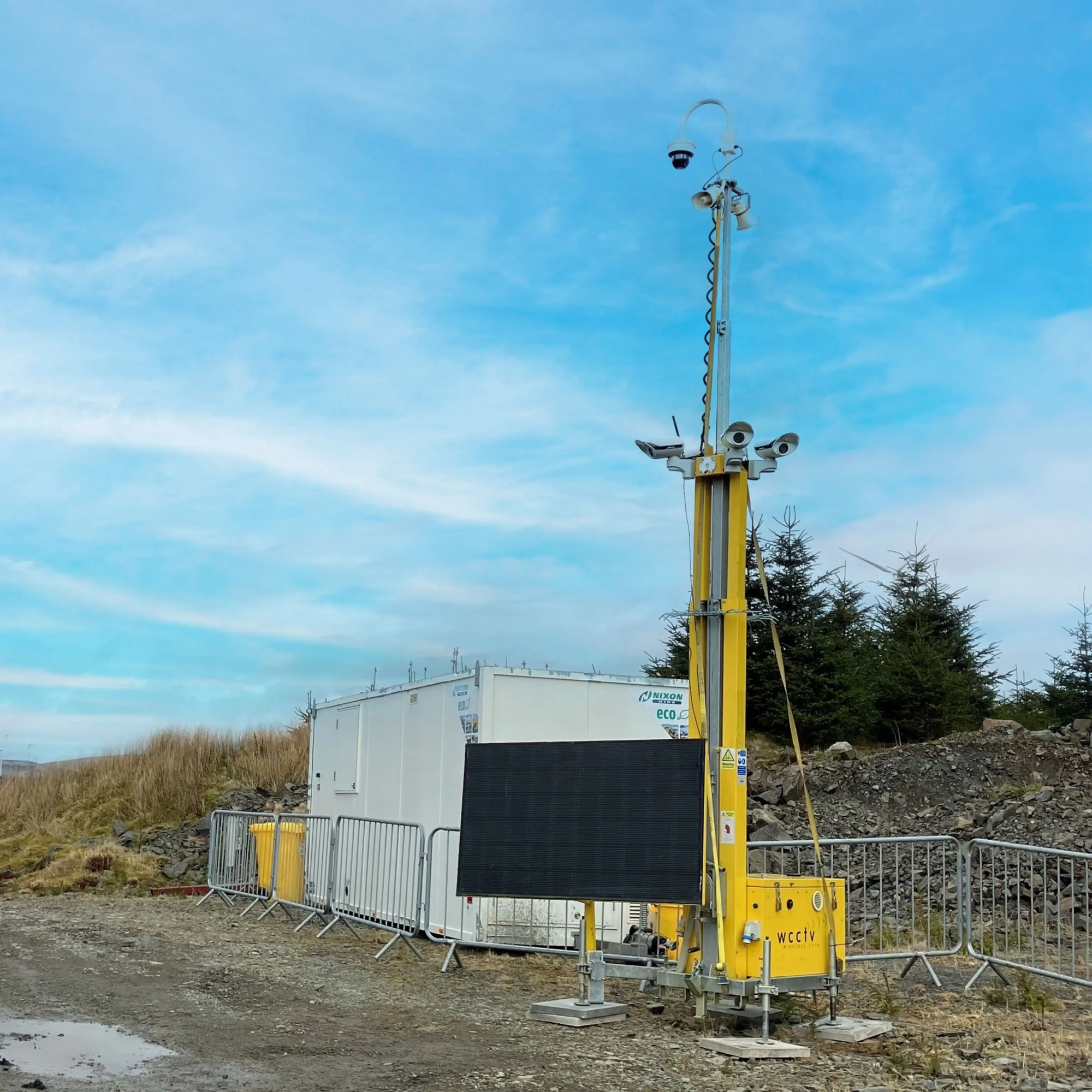
Our CCTV Towers, standing up to 6 metres tall with near-360° visibility, integrate seamlessly with environmental monitoring solutions. They not only protect your construction site from theft, unauthorised access and vandalism but also provide complete oversight of all environmental conditions:
-
Visual records of site activity alongside environmental data.
-
Time-stamped footage showing when conditions changed and how project teams responded.
-
Smart detection systems detect PPE violations, unsafe weather conditions and fire/smoke hazards.
-
Remote monitoring via 24/7 NSI Gold Accredited monitoring centres with remote access from any device.
AI-video analytics
AI-video analytics use advanced algorithms and machine learning models trained on historical site footage to analyse surveillance feeds in real-time. They effectively "teach" CCTV cameras how to interpret what they see on video feeds, distinguishing genuine threats from false alarms with near pinpoint accuracy.
This means they can tell the difference between someone scaling a perimeter fence and motion caused by strong winds, and can also identify when workers aren't wearing the correct PPE gear in predefined zones. This level of intelligence far exceeds traditional monitoring methods and enables faster, more reliable safety and security responses.
Cloud-based compliance reporting
Our Stellifii cloud-based platform combines security, environmental monitoring, system diagnostics and reporting in one easy-to-use interface. Instead of manually compiling compliance reports, you get:
-
Automated data exports up to 5X faster than legacy systems.
-
GDPR-compliant storage meeting UK data protection requirements.
-
Customised dashboards showing real-time site conditions across multiple sites.
-
Instant access to live and recorded footage in just a few clicks.
-
Consolidated reporting that satisfies both CDM 2015 and environmental regulations.
The best part about Stellifii? Real-time weather, noise and air quality data lets you justify delays with hard evidence, so you stay credible with directors and clients from day one.
Read more: Unifying Security and Site Monitoring: The New Standard for UK Contractors
The risk of non-compliance
Here's a quick overview of what CDM 2015 and environmental violations actually cost:
| Impact | Examples and consequences |
| Financial |
|
| Operational |
|
| Reputational |
|
Read more: 7 Compliance Pitfalls Costing Construction Firms Millions
Smarter Environmental Monitoring and CDM Compliance Starts Here
The role of environmental monitoring in meeting CDM 2015 requirements ultimately depends on your ability to demonstrate effective risk management. Continuously monitoring air quality, noise, and weather with automated records provides HSE inspectors with the "hard numbers" that demonstrate your due diligence; facts that are difficult to dispute.
Without it, you risk regulatory fines and reputational damage that may take years to repair.
With 6 regional hubs and over 20-years in wireless monitoring, we provide fully-managed environment monitoring solutions integrated with surveillance systems designed specifically for UK construction.
Protect your construction site and reputation the smart way: the WCCTV way. Reach out to our monitoring experts to discuss how Stellifii can help you meet CDM 2015 requirements with minimal effort.