Personal protective equipment (PPE) keeps workers safe and construction companies compliant with Health and Safety Executive (HSE) regulations. Without it, penalties, increased worker injuries and reputational damage are inevitable.
The problem is, providing PPE isn't the same as getting workers to actually wear it.
Traditional monitoring methods like periodic walkabouts and clipboard checks are inconsistent. By only providing visibility here and there, health and safety managers don't know what happens between inspections. These issues compound on large or multi-site construction projects, leading to blind spots where accidents are most likely to occur.
Smart PPE detection systems change this. Using near-360° PTZ cameras that continuously scan building sites and AI-based video analytics that filter out false alarms, these systems automate safety checks, flag breaches and timestamp every incident for compliance purposes, with minimal human input.
If you're a health and safety manager who wants to understand the benefits of PPE detection in construction, this guide covers everything you need to know and then some.
Why Traditional PPE Methods Don't Work for Modern Construction
Manual safety management has been the default for years. Site managers walk around, check that workers have the proper PPE and issue verbal warnings when they don't. This system worked, to a point.
Modern construction sites have outgrown these traditional methods:
-
Inconsistent enforcement: Different supervisors enforce rules differently. Some are strict, while others let things slide. Workers quickly learn who's watching and adjust their behaviour accordingly, but this inconsistency undermines safety culture and safety regulations.
-
Limited coverage: Site supervisors can only be in one place at a time. Large construction sites across complex projects create gaps where violations go unnoticed. The bigger the project, the bigger the blind spots.
-
Reactive, not proactive: By the time safety gear breaches are noticed on a walkabout, the worker/s may have been non-compliant for hours. Manual inspections only catch the fault "in the moment" and provide very little evidence as to what happened beforehand.
-
Confrontation/conflict: Face-to-face enforcement creates tension between managers and staff. Workers feel singled out, especially if they see colleagues get away with the same violations. Safety managers are seen as "the bad guys" rather than safety being seen as everyone's responsibility.
-
Documentation gaps: Verbal warnings leave no audit trail, and whatever happens between inspections isn't even recorded. When HSE inspectors ask for evidence of PPE enforcement, paper checklists and memory aren't enough.
-
Non-compliance risk: Inconsistent enforcement and regulatory compliance gaps expose contractors to substantial penalties (some reaching millions of pounds for major breaches). Failure to comply with HSE safety protocols and reporting requirements can also cause project delays and reputational damage.
Read more:
Why a Strong Safety Culture Matters for the Construction Industry
Safety culture isn't about general workplace signage and ticking compliance boxes for the sake of it. It's about whether safety is genuinely embedded in how people work every day, in every zone, regardless of whether someone is watching or not.
On construction sites with a strong safety culture, workers look out for each other. They wear safety gear because they understand why it matters, not because they're afraid someone's monitoring PPE compliance. They report hazards rather than ignore them and trust that workplace safety rules apply to everyone, from new hires to experienced project managers.
Weak safety culture, on the other hand, looks very different. Construction workers take shortcuts when supervisors turn their backs. PPE isn't worn because "nothing has happened before". Near-misses go unreported, and when incidents do occur, everyone points fingers.
And the results speak for themselves. Sites with a stronger culture tend to see fewer incidents, lower insurance premiums and better tender success. Clients evaluate site safety records when awarding contracts, and a history of violations or poor risk management raises instant red flags.
For health and safety leaders, making safety culture visible is tough. You can't manage what you can't measure, nor can you demonstrate due diligence to regulators without evidence that PPE monitoring was consistently done.
This is where advanced PPE detection technology gives you a competitive edge.
Read more:
-
How to Create a Strong Safety Culture at Your Construction Site
-
Why Safety Culture is a Valuable Asset on a Construction Site
How Smart PPE Detection Systems Make Safety Culture Visible Across Every Construction Site
Traditional PPE checks often leave gaps in safety oversight, creating compliance blind spots that increase the risk of HSE violations and on-site incidents. Smart detection systems with PPE monitoring technology transform standard "safety culture" into measurable data, giving safety management site-wide visibility and control.
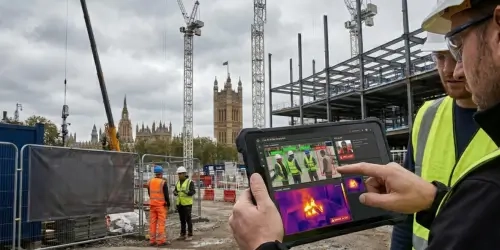
Simply put, smart detection systems use AI-powered computer vision and machine learning algorithms to automatically identify workers missing the required protective gear. Instead of waiting for a foreman's spot check, the system runs 24/7 in the background to monitor compliance continually and ensure worker safety.
Here's how they work:
-
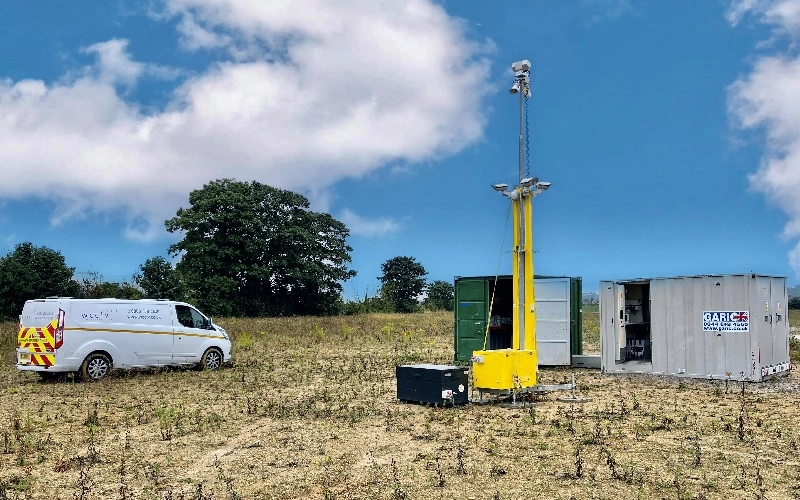
Near-360° infrared (IR) cameras: Pan-Tilt-Zoom (PTZ) cameras connected to Rapid Deployment CCTV Towers/Temporary CCTV solutions provide ongoing surveillance of high-risk zones both day and night. Panning horizontally and vertically with 40X optic zoom, they eliminate blind spots supervisors can't physically reach, even in low light or adverse weather conditions.
-
AI-video analytics: Smart software, trained on historical data, recognises the specific PPE needed on-site (e.g., hard hats, high-vis vests, safety glasses). With near-pinpoint accuracy, AI PPE detection flags safety violations in record time, timestamping every incident for a clear audit trail.
-
Real-time alerts: Site supervisors receive instant alerts when a safety breach is detected. When connected to remote monitoring services at NSI Gold Accredited centres, trained professionals verify the situation and initiate various response actions on your behalf (e.g., issuing voice-down challenges or dispatching mobile keyholding teams).
-
Timestamped records: Every automated PPE detection event is logged with location- and time-specific details alongside corresponding video footage. Safety audit documentation becomes easier with this level of sophistication, freeing up safety officers from hours of manual work.
-
Integration support: Advanced PPE detection systems support other add-on integrations such as IoT environmental monitoring (air quality, noise, weather), intrusion detection, early smoke/fire identification and ANPR access control devices, giving project managers a complete "bird's eye view" of site activity.
-
Cloud consolidation: Stellifii, our cloud-based platform, consolidates all site data in one place. Health and safety managers can review violations, track trends and generate compliance reports in a few clicks, from any device.
Smart PPE detection systems make safety culture visible and measurable when intelligent monitoring, instant response and centralised reporting are combined. This proactive approach turns reactive safety management into complete workplace safety control.
Read more:
-
PPE Detection in Action: Keeping Construction Projects Compliant with HSE
-
AI-Powered Risk Detection: Smoke, Fire and PPE Compliance in Construction
7 Advantages of PPE Detection in Construction
Here's what automated PPE detection delivers for UK construction firms:
-
Enforcement without conflict: Automated detection removes the "human factor" from enforcement. Rules apply equally to everyone: same safety standards, same consequences. Workers can't argue they were singled out when the system treats all PPE violations the same way.
-
Fewer injuries: Personal protective equipment is there to protect workers. Hard hats prevent head injuries, high-visibility clothing prevents stuck-by incidents and respiratory gear reduces exposure to dust and fumes. When personal protective equipment is worn consistently, it significantly lowers the likelihood of long-term health problems, serious injuries and fatal accidents on site.
-
Less legal exposure: Lower incident rates typically mean fewer compensation claims and legal disputes from injured workers. Accurate PPE detection ensures workers are safe and the correct safety gear is worn in high-risk environments.
-
Reduced downtime: With real-time compliance monitoring in place, sites experience fewer safety incidents and disruptions. When safety is prioritised and consistently enforced, projects are far less likely to face delays caused by accidents or unexpected regulatory inspections.
-
24/7 visibility: Real-time monitoring and remote access give safety teams peace of mind knowing workers are monitored 24/7. AI-powered PPE detection systems become safety managers' "eyes and ears" on-site, allowing them to take corrective measures from afar.
-
Easy safety compliance: Ongoing monitoring and timestamped audit trails demonstrate stronger due diligence than verbal warnings. Real-time PPE detection logs show monitoring was consistent, violations were detected and corrective action was taken. With centralised site data stored in Stellifii, regulatory compliance reports generate 5X faster than legacy systems.
-
Lower operational costs: Sites with strong construction safety standards experience fewer incidents, which reduces their overall risk profile and can lead to more favourable insurance premiums. Savings increase further when you factor in reduced downtime, fewer compensation claims and lower legal expenses.
Read more:
-
Reducing Construction Site Incident Rates Through Real-Time Monitoring
-
The ROI of Consolidating Site Monitoring Into a Unified Platform
Build Stronger Safety Cultures with PPE Detection Today
PPE detection shouldn't depend on which supervisor is watching or how busy the site gets. It should be consistent across every zone, every shift and every project.
Smart PPE detection systems make that possible. Automated monitoring catches violations as they happen, real-time alerts enable immediate intervention and timestamped logs demonstrate the proactive risk management that HSE regulators expect.
With over 20-years of wireless monitoring experience, we provide fully-managed PPE detection systems that easily integrate with our CCTV surveillance solutions for construction businesses of any size.
Ready to make safety culture visible across every construction site? Contact our team to discuss how our smart PPE systems can help.