The construction industry remains one of the most dangerous sectors in the UK. According to the Health and Safety Executive (HSE), 35 workers lost their lives in work-related incidents between 2024 and 2025, with over half of those fatalities resulting from falls from height.
Every construction manager knows these risks. But for IT leaders, those numbers hit differently because they highlight gaps in the very systems they're responsible for maintaining.
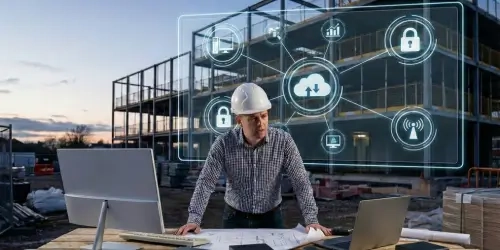
Workplace safety isn't just about preventing accidents. It requires all connected systems, from on-site sensors to cloud-based CCTV, to work seamlessly together so that workers, data and project timelines are protected.
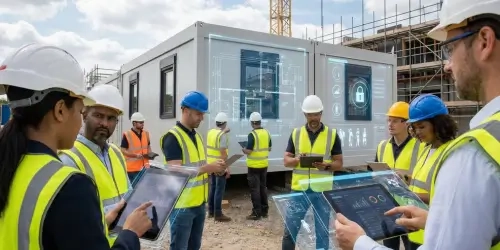
That's where Internet of Things (IoT) sensors make a real difference. By linking safety and cloud-based platforms, IT managers gain real-time visibility across safety, environmental conditions and system health from a single dashboard.
If you're in construction IT and want to know more about how IoT devices improve both safety and IT overview on construction sites, this article is for you.
Understanding Construction Hazards
Before we dive into how IoT devices improve construction safety, let's quickly explain what makes construction sites so inherently dangerous:
-
Physical environment dangers: Uneven terrain, temporary scaffolding and cluttered work zones create slips, trips and fall hazards. Overhead power lines pose electrocution risks, hot works may lead to fires and poor ventilation increases the risk of dust/fume inhalation.
-
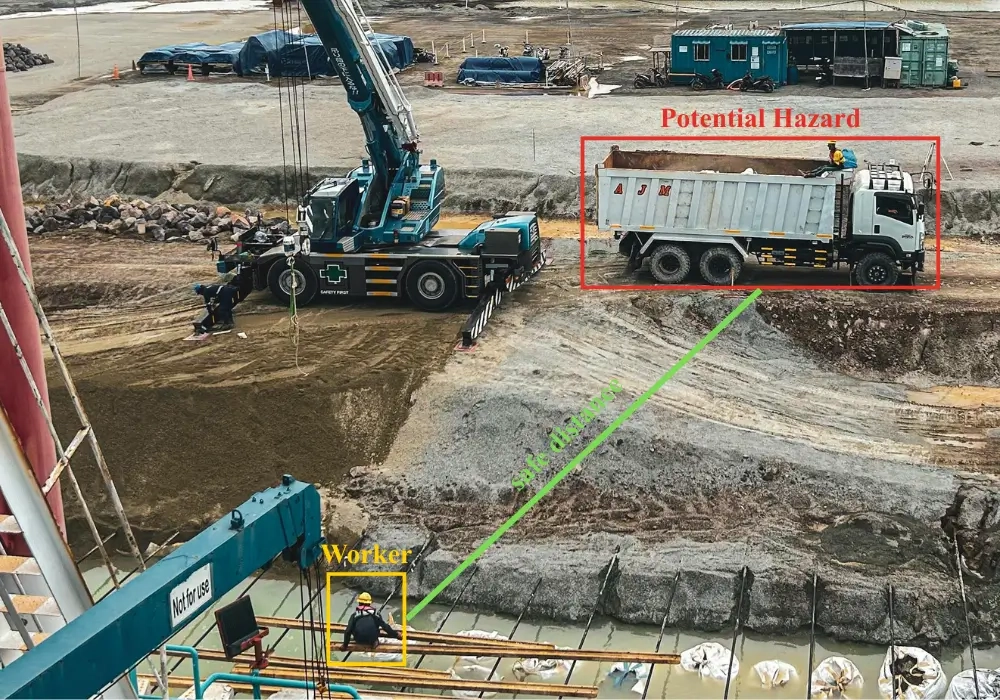
Heavy machinery and equipment handling: Heavy vehicles such as excavators operate in close proximity to workers. Power tools can generate hand-arm vibrations (HAVs), while construction noise levels frequently exceeding safe limits (85 dB(A)) can impair hearing.
-
Project delivery pressure: Tight budgets and timelines pressure teams to finish work quickly, often leading to safety shortcuts and fatigue-related accidents.
Unfortunately, traditional monitoring systems such as periodic spot checks and manual reports can no longer keep pace with the modern construction industry. This is because safety issues often happen between spot inspections, meaning hazards can go unnoticed for hours or even days. This gap creates the exact vulnerabilities where injuries, near misses and even fatalities can occur.
Read more: A Complete Guide to Construction Site Safety and Security
Workplace Safety Stats and Facts: UK Construction
Construction sites are one of the most hazardous sectors globally. Workers are regularly exposed to risks such as falls from heights, excessive noise, electrocution and exposure to toxic chemicals and fumes, hazards that many in the construction industry consider "as part of a day's work".
Here are a few shocking statistics for context, based on the latest HSE data:
-
Around 79,000 workers suffered from work-related ill health over 3 years (2022-2025).
-
Roughly 19% of reported work-related ill health cases were linked to mental health issues, including stress, depression and anxiety.
-
35 fatalities were recorded between 2024/25, with 53% resulting from falls from heights.
-
About 50,000 workers sustained a non-fatal workplace injury between 2022 and 2025.
-
Approximately 5,000 workers currently live with a work-related breathing or lung problem caused by occupational exposure to dust and fumes.
-
The total economic cost of workplace injury and work-related ill health in the construction sector is estimated at £1.4 billion, based on 2023/24 prices.
Common construction hazards
| Cause | Percentage of non-fatal injuries (%) |
| Falls from heights | 33% |
| Slips, trips or falls on the same level | 30% |
| Struck by a falling/moving object | 13% |
| Injured by lifting or similar | 7% |
Site safety facts: HSE regulations
To ensure worker safety, the HSE sets clear guidelines and regulatory compliance requirements for contractors to follow:
| Regulation | Compliance requirement |
| Health and Safety at Work Act (HASAWA) 1974 |
|
| Construction (Design and Management) CDM Regulations 2015 |
|
| Working at Height Regulations 2005 |
|
| Control of Substances Hazardous to Health Regulations (COSHH) |
|
| Personal Protective Equipment at Work Regulations (PPER) 1992 |
|
Read more:
IoT Technology vs Traditional Construction Methods
As mentioned earlier, traditional safety monitoring methods are no longer sufficient for the realities of modern construction. They rely on periodic checks and manual processes that offer little visibility into what's really happening on site and often only flag issues after something has gone wrong.
Contrastingly, IoT-based solutions provide continuous monitoring, predictive maintenance and automated compliance as standard. Acting as a project team's "eyes and ears" on site, they help catch incidents before they escalate into serious problems while timestamping every incident for compliance purposes.
Here's a quick side-by-side comparison:
| Area | Downside to traditional methods | Upside of IoT solutions |
| Hazard detection | Manual inspections lead to delayed response times and missed risks. | Real-time, continuous monitoring with instant alerts can reduce accidents by 20-50%. |
| Data management | Manual data entry/consolidation is prone to human error, inconsistent and creates data silos. | Cloud dashboards with searchable timelines improve operational efficiency by up to 40%. |
| Predictive maintenance | Physical inspections result in reactive responses and delayed equipment repairs/maintenance. | Real-time data analysis powered by artificial intelligence (AI) reduces downtime by 25-30%. |
| Environmental monitoring | Visual inspections/ periodic audits offer no real-time value, increasing the risk of non-compliance. | Work-related illnesses drop by 15% through real-time monitoring and live air quality analysis. |
| Compliance | Legacy system-based reporting is reactive and causes high audit stress. | Cloud systems generate and export reports 5X faster than legacy systems |
Read more:
How IoT Technology Improves Construction Site Safety and IT Oversight
Internet of Things (IoT) refers to physical devices embedded with smart sensors and software that collect and transmit data without human intervention. IoT in construction includes everything from environmental monitors that track particulate matter to smart detection systems that pinpoint PPE violations in real-time.
These devices connect to cloud-based platforms via secure 4G/5G networks. They timestamp site activity at set intervals and create digital paper trails that can be used for ESG reporting, insurance claims and regulatory compliance audits.
Let's explore how IoT systems actually enhance safety, mitigate risks and make IT oversight easier than ever before.
How IoT improves site safety
-
Worker safety: On smart construction sites, IoT tracks whether staff are wearing required gear in hazardous areas. Smart detection systems with PPE monitoring identify missing protective gear (hard hats, hi-vis vests, safety harnesses, etc.) and instantly flag those violations to project managers for corrective action.
-
Poor air quality: Advanced air quality monitoring sensors capture thousands of hourly data readings for CO₂, fine particulate matter (PM1, PM2, PM10), VOCS and dust emissions. This level of automation can help site managers enhance safety practices and pinpoint exactly which site activity (drilling, excavation, demolition, etc.) exposes workers to the highest risk.
-
Excessive noise: Noise monitors measure a wide range of ambient sound (30-130 dB) and frequency (20Hz to 12.5kHz) levels to protect workers against excessive noise. They fully comply with Section 61 standards and automatically notify construction firms the moment noise exceeds the 85 dB(A) threshold.
-
Adverse weather: Through predictive analytics, smart IoT-based weather monitoring sensors help site teams better manage resource allocation. For instance, if wind speeds make crane operations unsafe, schedules can be shifted or postponed to ensure the safety of everyone on-site.
-
Fire hazards: Intelligent smoke and fire detection systems identify the earliest signs of fire hazards long before basic fire alarms even react. Using artificial intelligence and machine learning, systems can distinguish genuine threats from false alarms caused by flickering light, dust or steam. It's the most reliable way to safeguard people, property and operations.
-
Site safety: Intrusion detection systems use AI-powered video analytics to detect unauthorised access and monitor defined zones in real-time. By reducing reliance on manned patrols, automated site surveillance helps prevent theft and trespassing while maintaining more secure sites.
Together, these IoT systems not only keep workers safe and prove compliance due diligence, but they also improve operational efficiency across all construction site operations by proactively managing risks and keeping project delays to a minimum.
Read more:
How IoT enhances IT overview
Site teams manually logging reports for surveillance and equipment diagnostics no longer work when construction companies run projects across multiple sites.
Nowadays, IT managers are required to support teams through sophisticated systems that offer real-time visibility, especially across remote/hybrid operations.
IoT isn't just about safety; it's about visibility, compliance and proof of ROI, with connected devices setting the new industry benchmark. Through real-time monitoring, AI-video analytics and automated compliance, IoT systems give IT teams centralised oversight of:
-
Surveillance and sensor connectivity via a single dashboard
-
System health diagnostics (i.e., predictive maintenance)
-
Predictive analytics that identify patterns
-
Automated compliance reports for CDM, HSE, ESG and GDPR
-
Proven ROI through fewer delays and violations
This consolidation has profound benefits for IT leads and site teams alike:
-
Reduced admin overload
-
Less vendor sprawl
-
More control and oversight
-
Enables faster decision-making
-
Robust data security with fewer cybersecurity risks
Read more:
-
The ROI of Consolidating Site Monitoring Into a Unified Platform
-
Why Construction Site Cybersecurity and Safety Monitoring Go Hand in Hand
IoT Solutions for Construction
Modern IoT platforms integrate multiple technologies into a centralised platform that simplifies your IT stack and improves safety across the board.
-
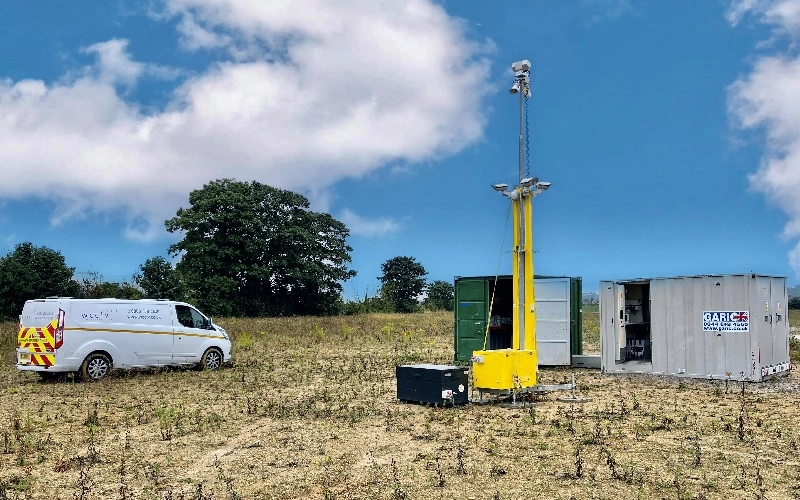
Smart site surveillance: Rapid Deployment CCTV Towers and Temporary CCTV solutions provide near-360° visual coverage. Standing up to 6 metres tall and equipped with AI-video analytics, PTZ cameras and AES256 encryption, they provide near-perfect visibility with 40X optical zoom at distances of up to 200 metres, so every part of the site stays visible.
-
Live remote monitoring: 24/7 monitoring through NSI Gold Accredited monitoring facilities takes site security and safety to the next level. When systems identify threats, trained operators assess situations in real-time and issue live audio voice-down challenges, dispatch mobile keyholding teams or contact emergency services where needed.
-
Environmental sensors: Track live atmospheric metrics for air quality, noise and weather. They provide advanced analytics and actionable insights when conditions make operations unsafe, and store up to 180,000 timestamped records for trend analysis.
-
Smart detection systems: Using AI-video analytics and sophisticated software, these systems give construction professionals a competitive edge. They monitor building sites for missing PPE, fire hazards and unauthorised access in real-time, improving safety management significantly.
-
Access control: Add-on integrations such as Automatic Number Plate Recognition (ANPR) track vehicle movements, creating timestamped audit trails for every entry and exit. For sites with high-value materials, this provides both asset protection and safety insight all in one.
-
Cloud consolidation: Stellifii, our cloud-based platform, consolidates all site data into one secure dashboard. This eliminates vendor sprawl while costing up to 88% less than traditional monitoring methods. Because Stellifii is accessible with a single login, cybersecurity risks are drastically reduced.
Read more: Uses for IoT in Construction
3 Implementation challenges (and how to tackle them)
-
Cost deterrent: Smaller construction companies sometimes hesitate over the initial expense of IoT equipment, but you don't have to take an "all or nothing" approach. Scalable options like mobile CCTV allow firms to start small and expand as needs grow.
-
Integration complexity: Many sites still rely on legacy systems that don't "talk" to each other. That's where cloud-ready platforms like Stellifii come in, pulling multiple data streams into one interface. Pairing this with fully-managed services takes technical strain off internal teams, making IT management simpler.
-
Workforce adaptation: IoT adoption only works when the people using it trust it. New processes and compliance standards can be a big shift for teams, so clear communication and hands-on training are essential. When teams understand that IoT systems are there to protect them (not micromanage), adoption becomes much smoother.
Improve Site Safety with WCCTV's IoT Devices
In construction, visibility is everything. Miss one alert or lose a data feed, and things can quickly go wrong.
That's where IoT technology changes everything, connecting cameras, sensors and cloud solutions into one trusted platform. IoT integration bridges the gap between fragmented legacy systems and unified site management, transforming raw data into action.
Through real-time remote monitoring, predictive maintenance and automated compliance checks, our advanced IoT applications help those in construction build safer, more compliant sites from the ground up.
Contact our experts and take control of site safety and IT overview the smart way today.