The UK is notorious for its unpredictable weather that can quickly disrupt construction schedules. But one challenge continues to be overlooked: the need for proper weather monitoring that provides project managers with real-time data to make informed decisions and justify delays to clients and stakeholders.
With weather disruptions contributing to around 98% of major construction projects slipping behind schedule and 70% of construction firms experiencing weather-related delays this past year alone, it's clear the construction industry needs a more reliable way to minimise delays and protect project timelines.
This is where smart weather monitoring systems make a real difference. By using proactive, site-specific weather measurement, managers can keep projects moving forward during adverse weather with minimal effort.
In this article, we'll go over how inclement weather affects the UK's construction industry, share 5 practical ways to keep construction projects on track and explain how WCCTV's advanced weather monitoring sensors can help reduce safety risks and ensure compliance all in one.
How Extreme Weather Events Affect Construction
Exceptionally adverse weather conditions create challenges for all construction projects, causing [delays] and putting workers' safety at risk. In fact, about 22% of construction managers say extreme heat, heavy rainfall and flooding are among the sector's biggest risks.
-
Unsafe working conditions: Torrential rain and frosty conditions cause slip hazards on wet and icy surfaces. High winds disrupt craft operations and scaffolding, increasing the risk of construction worker injuries. Extreme heat can trigger heat illness or heat stroke among outdoor workers, while freezing temperatures can reduce dexterity during prolonged outdoor work.
-
Delayed project timelines: Prolonged rain can lead to soil erosion that delays earthworks and foundations. Strong winds halt crane operations, such as steel erection and cladding installation, and temperature fluctuations postpone painting jobs.
-
Material damage and supply chain disruptions: Bad weather doesn't just delay projects; it also damages building materials and affects project schedules. Humidity affects concrete curing, exposed timber can warp and metal can corrode faster in heavy rain. The supply chain is also affected by flooded access roads and supplier shutdowns.
-
Non-compliance and legal risks: Working during adverse weather conditions exposes construction companies to many threats: compensation claims for worker injuries, liability risks, CDM/HSE violations, higher insurance premiums and potential prosecution for repeat failures.
-
Reputational damage: On top of all this, poorly managed weather conditions can harm your professional reputation with clients and project stakeholders, making it harder to secure future construction bids and maintain relationships with clients who expect reliable project delivery.
Read more: Rethinking Construction Compliance Through Smart Monitoring Systems
UK regulations for weather conditions and workers' safety
In the UK, construction employers are expected to adhere to weather-related safety protocols and comply with regulatory frameworks that require proper risk management to protect the lives of everyone on-site.
| Regulation | Description | Non-compliance risk |
| Construction (Design and Management) CDM 2015 | Principal contractors must plan, manage and monitor all working zones to protect worker welfare. |
|
| Health and Safety at Work Act (HASAWA) 1974 | Employers must take "reasonably practicable" steps to protect construction workers from foreseeable weather risks. |
|
| Personal Protective Equipment at Work Regulations (PPER) 1992 | Employers must provide free PPE equipment to all construction workers. |
|
| The Health and Safety Executive (HSE) | HSE governs CDM, HASAWA, PPER and COSHH to ensure worker protection in inclement weather and enforce compliance. |
|
Read more:
-
The Role of Environmental Monitoring in Meeting CDM 2015 Requirements
-
The Modern HSE Playbook for UK Safety Leaders
5 Ways to Keep Construction Projects Moving Forward During Adverse Weather Conditions
To keep construction projects moving during adverse environmental conditions, managers need a proactive weather management plan.
-
Smart weather monitoring and planning: Real-time weather insights from IoT-based environmental sensors help managers make more informed decisions about construction operations. Intelligent weather stations continuously track site conditions, storing up to 180,000 timestamped logs for trend analysis and review.
-
Site preparation and planning: Historical weather data helps teams prepare site activities and schedule weather-sensitive activities (e.g., concrete pours) to keep timelines on track.
-
Equipment maintenance and storage: Regular maintenance keeps equipment operating safely in bad weather conditions (e.g., vehicle tyre threads), and proper storage protects assets/equipment from damage and corrosion.
-
Workforce/risk management: Proper shelter, heating/cooling facilities, weather-appropriate breaks and work stoppages (when necessary) ensure worker welfare during extreme temperatures. This proactive approach keeps risk low while complying with regulatory frameworks, preventing liability claims and injuries.
-
Audit documentation: Continuous monitoring logs with timestamped weather records provide verifiable evidence for insurance claims, delay justifications and HSE inspections.
Read more: Weather Monitoring Tools That Keep Construction Projects on Track
How Intelligent Weather Monitoring Sensors Work
Smart weather monitoring sensors help you measure adverse climatic conditions that could directly impact construction safety, equipment performance and project schedules. Rather than relying on traditional methods (like physical foot patrols and manual reporting), smart weather sensors handle the monitoring work for you in a fraction of the time.
Here's how they work in action:
1. Live weather tracking
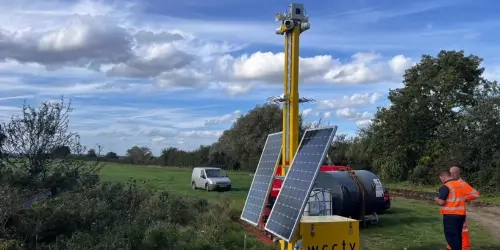
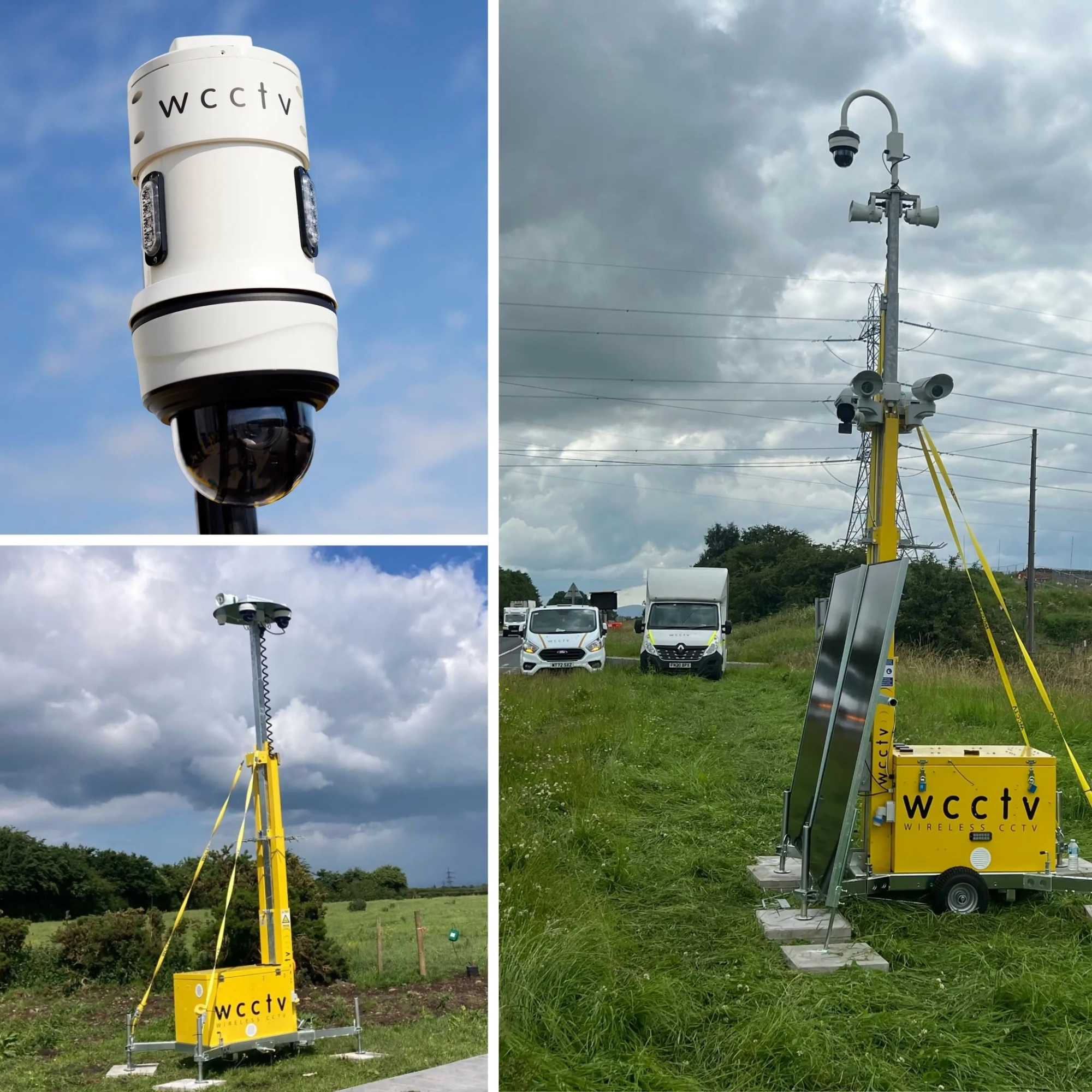
As add-ons to our CCTV Towers and temporary CCTV solutions, solar-powered weather stations measure climatic data in real-time with wireless transmission of up to 100 metres. These stations track:
-
Fluctuating temperatures (from -40°C to 60+°C)
-
Humidity (10-99%)
-
Wind speed (0–110mph)
-
Rainfall (hourly)
-
Dew point
Site managers can access live site data, review historical weather data and set weather-specific alerts for immediate on-site action at any time, from any device. Using sophisticated software, PTZ (Pan-Tilt-Zoom) night vision cameras, remote monitoring and AI-video analytics, they continuously monitor working zones, flagging unsafe conditions that could indicate weather-related risks and delays.
2. Automated alerts
Weather sensors automatically trigger alerts when weather patterns approach predefined safety thresholds:
-
High wind speed alerts when approaching crane operation limits (38 mph for tower cranes; 20-25 mph for mobile cranes)
-
Hot weather warnings for extreme heat (above 30°C)
-
Freezing temperature notifications
-
Heavy rains that could cause flooding
-
Humidity alerts affecting moisture-sensitive activities
NSI Gold monitoring professionals oversee your building site remotely to verify incoming alerts. Once verified, they can initiate various on-site actions, such as live audio voice-down challenges to warn workers about dangerous wind speeds so high-risk activities can be stopped. Managers also receive timestamped alerts via our mobile app, allowing for rapid response wherever you are.
3. Stellifii
All weather data feeds into Stellifii, our cloud-based monitoring platform. Here, project managers can see everything that's happening on-site, from weather-related risks to security breaches, through a single unified dashboard in real-time.
When you're challenged about why work stopped, you can instantly pull up weather reports confirming unsafe working conditions to prove your due diligence. With timestamped weather logs covering the entire project lifecycle, Stellifii makes it easy to resolve disputes, satisfy stakeholder queries and demonstrate regulatory compliance all in one.
This smarter approach to weather monitoring cuts admin time in half, keeps projects moving, reduces the risk of costly violations and strengthens accountability across the board from day one.
Read more: Unifying Security and Site Monitoring: The New Standard for UK Contractors
4. Supports other integrations
Our fully-managed weather monitoring services work alongside other smart integrations, giving you complete oversight across security, environmental conditions and fire hazards:
-
Air quality monitoring sensors track fine particulate matter (PM1, PM2.5, PM10), CO₂ and other harmful gases that could put workers' lives at risk.
-
Noise monitoring sensors monitor construction noise across a wide decibel (30-130 dB) and frequency (20Hz to 12.5kHz) range, ensuring the appropriate [PPE] is in use during relevant construction activities like demolition work.
-
Intrusion detection continuously watches sites for unauthorised access.
-
Smoke and fire detection alerts teams to the earliest signs of smoke or flames.
-
ANPR technology tracks all vehicles entering/exiting working zones, including during adverse weather conditions.
4 Benefits of Advanced Weather Monitoring
Let's take a closer look at why smarter weather monitoring benefits the construction industry:
-
Workplace protection: In a nutshell, real-time weather data prevents workers from being exposed to hazardous conditions. By suspending work before wind speeds exceed thresholds, temperatures reach high-risk levels or icy conditions create slip hazards, managers can significantly reduce injury rates and minimise the risk of compensation events and insurance claims.
-
Schedule optimisation: Accurate, live weather insights allow managers to reschedule weather-sensitive tasks and reallocate resources when conditions worsen. For instance, if outdoor work becomes unsafe, teams can switch to inside work, preventing downtime and wasted money.
-
Cost and risk reduction: Smarter weather monitoring reduces vendor sprawl and the costs that accompany managing multiple platforms. Our weather tracking solutions can reduce monitoring costs up to 88%, while proactive risk management can also potentially lower insurance premiums.
-
Ensures compliance: Continuous monitoring logs (with timestamped records) keep you audit-ready at all times, helping you meet various ESG and regulatory obligations.
Who benefits the most from weather monitoring?
-
Construction firms
-
Demolition contractors
-
Highway projects and civil engineering teams
-
Quarries and excavation sites
Reduce Weather-Related Delays with WCCTV
Unpredictable UK weather can derail even the best-planned construction project. But with a smarter approach to monitoring conditions, you can stay one step ahead of disruption rather than becoming another statistic.
Backed with over 20-years of monitoring expertise, we provide real-time, site-specific weather intelligence across your entire building site. From scheduling crane operations to reviewing storm impact and verifying working conditions, our IoT-based weather solutions and Stellifii platform give you the confidence to make safer, faster decisions.
Reach out to our team today and discuss how our advanced weather sensors can help you keep projects moving forward without delay.