UK construction sites face constant pressure to maintain safe, compliant work sites while keeping projects on schedule. But one issue continues to be overlooked: air quality monitoring.
In the UK alone, roughly 12,000 deaths each year are linked to occupational respiratory diseases. Without continuous monitoring, CO₂, TVOCs and other harmful gases can go undetected, creating silent but serious risks for workers across your site. When left unchecked, poor air quality can also trigger project delays, enforcement action, reputational damage and costly fines.
In this article, we'll explain why air quality monitoring matters for the construction industry, how monitoring inefficiencies can delay schedules and how WCCTV's advanced air quality monitoring sensors help keep workers safe, support compliance and protect project timelines from day one.
5 Reasons Why Air Quality Monitoring Matters in UK Construction
Here, we take a closer look at 5 reasons why monitoring air quality is important in the UK:
1. Protect workers' health
Every day, construction workers are exposed to harmful airborne pollutants that can lead to long-term health risks. For instance, Respirable Crystalline Silica (RCS) dust from cutting, grinding and drilling operations penetrates deep into the lungs, where it can cause silicosis, lung cancer and Chronic Obstructive Pulmonary Disease (COPD).
According to the Health and Safety Executive (HSE), more than 500 construction workers are estimated to die annually from lung diseases caused by silica dust.
Under the Control of Substances Hazardous to Health (COSHH) Regulations, construction managers must identify, assess and control exposure to toxic substances in the workplace. This means carrying out COSHH and fire risk assessments and supplying workers with the appropriate PPE.
Environmental monitoring solutions continuously measure fine particulate matter and other toxic airborne pollutants in real-time. When high levels of air pollution are detected, site managers are notified instantly, allowing for immediate corrective action.
2. Maintains trust with local communities
Residents, schools and nearby businesses are all directly affected by construction dust and fumes. A single complaint can trigger stop notices, CDM 2015/HSE inspections and unexpected downtime, all of which can delay schedules and damage your relationship with the community. These issues can also lead stakeholders to question your project management skills.
Real-time air quality monitoring shows you're taking proactive steps to minimise environmental impact on the surrounding communities. Timestamped air quality data provides verifiable evidence when questioned about quality control and the "Best Practical Means (BPM)" methods used to reduce foreseeable risks.
3. Ensures regulatory compliance
The construction sector must comply with numerous regulations that control air quality, worker safety and environmental protection. Here's a quick overview:
| UK regulation | Description | Monitoring need |
| CDM 2015 (Regulation 13) | Controls exposure to construction dust and harmful substances. | PM1, PM2, PM10 with timestamped records. |
| Health and Safety Executive (HSE) | Enforces PPE and workplace risk assessments. | PPE detection, fire/smoke monitoring and environmental tracking to ensure workers' safety. |
| Clean Air Act 1993 | Controls smoke, dust and fumes caused by building works. | Particulate matter and air pollution control measurements. |
| Environment Act 2021 | Adheres to binding targets for air quality, water and waste reduction in construction. | Continuous, real-time environmental monitoring for air quality and weather with clear audit trails. |
| The Control of Pollution Act 1974 (CoPA) | Governs air pollutants, noise and vibration for all UK construction projects. | Real-time air quality and noise data logs for all construction phases. |
| ESG/Net Zero commitments | Reduce commercial emissions and adopt greener practices. | CO₂ tracking; emission reporting for Scope 1, 2 and 3 carbon emissions. |
HSE inspectors and local authorities can request air quality data at any time. Without continuous monitoring logs, you're left scrambling to demonstrate compliance without precise concrete figures. Advanced IoT-based air quality sensors capture up to 180,000 timestamped records automatically, creating clear audit trails to satisfy regulatory obligations.
Read more: Uses for IoT in Construction
4. Improves operational efficiency
Poor air quality halts projects in several ways:
-
HSE inspections: Uncontrolled dust and/or gas emissions initiate inspections that stop work until findings are confirmed.
-
Worker health complaints: When site conditions cause respiratory symptoms, employees may refuse to work until the environment is safe, while also triggering HSE/CDM investigations.
-
Local authority enforcement: Regulatory compliance violations can result in forced closures of building sites, leading to contractual penalties and project delays.
-
Community complaints: Dust and noise pollution can cause neighbours to file statutory nuisance complaints with local authorities, leading to project delays until issues are addressed.
Real-time air quality monitoring addresses these issues head-on by identifying potential problems before they escalate. Automated alerts inform site managers when levels near pre-defined thresholds, allowing for quick corrective action that keeps projects on track.
5. Supports sustainability and ESG goals
Modern construction sites are governed by some of the strictest environmental regulations in the world and must demonstrate environmental responsibility through ESG (Environmental, Social, and Governance) reporting and Net Zero commitments.
Did you know that UK building works are responsible for roughly 18% of PM10 emissions, with London contributing more than 30%? To align with Net Zero targets by 2050, the sector requires clear visibility of Scope 1, 2 and 3 emissions. Without continuous monitoring, contractors cannot accurately measure their environmental impact or track progress towards sustainability targets.
Automated, timestamped monitoring from advanced air quality monitoring provides transparent evidence of environmental management, strengthening your reputation with stakeholders, surrounding communities and government initiatives.
Read more: Everything You Need to Know About Net Zero Construction Sites
The Cost of Poor Air Quality Monitoring
Earlier this year (2025), a London construction company was fined £63,000 and ordered to pay £25,622 in additional costs after pleading guilty to Health and Safety at Work Act 1974 (HSWA) violations because it failed to control silica dust risks and protect workers from wood-dust exposure.
Apart from these financial penalties, poor air quality monitoring also exposes UK contractors to a wide range of operational and reputational risks:
| Impact | Consequence |
| Operational |
|
| Financial |
|
| Reputational |
|
Read more:
Who Should Consider Air Quality Monitoring
Any operation where dust, fumes and/or harmful gases could affect workers'/public welfare, nearby communities or the surrounding environment should have air quality monitoring controls in place:
-
Construction sites need to monitor dust from excavation, concrete mixing and demolition with real-time monitoring to ensure worker safety and prevent community complaints.
-
Demolition projects should track air pollutants (e.g., silica dust, particulate matter) that travel far beyond your work zone boundaries, protecting surrounding communities.
-
Civil engineering projects need to have real-time visibility and quality assurance over air quality and changing environmental conditions across sites.
-
Highways and roadworks must demonstrate proactive dust control that supports Section 61 compliance during highway builds and roadworks near residential areas.
-
Quarries and extraction sites should manage air pollution and dust emissions during operations, even in the most remote locations.
-
Local authorities and environmental agencies should use air quality monitoring for public health management and tracking urban air quality trends across entire regions.
Download our site monitoring brochure to learn how our solutions can support your next project.
How Air Quality Monitoring Sensors Work
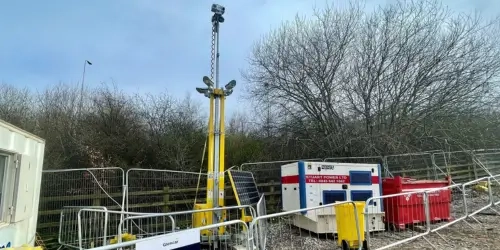
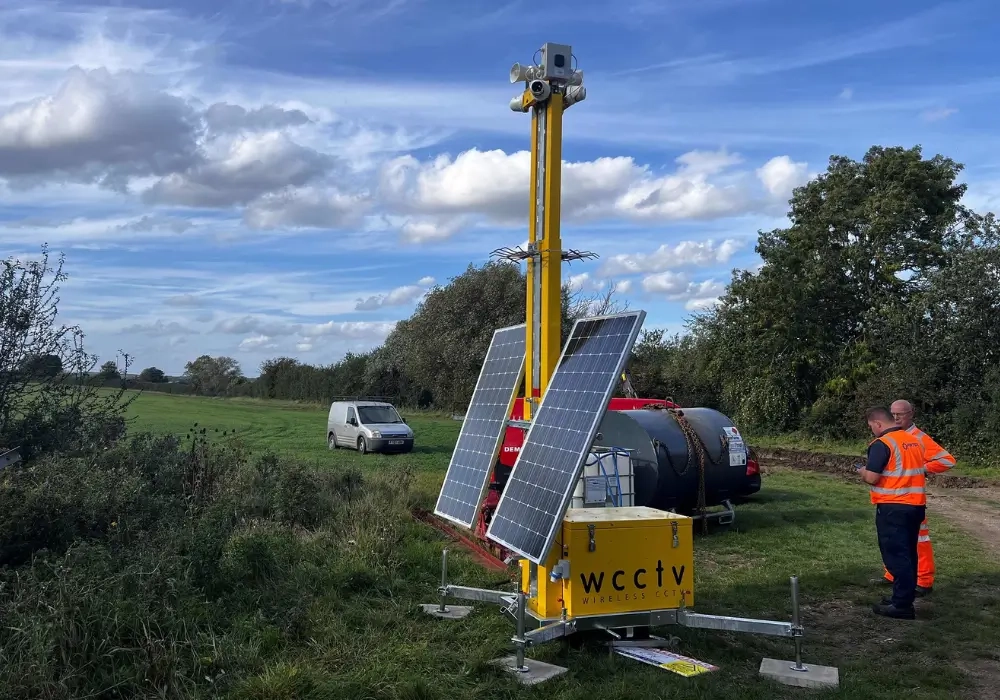
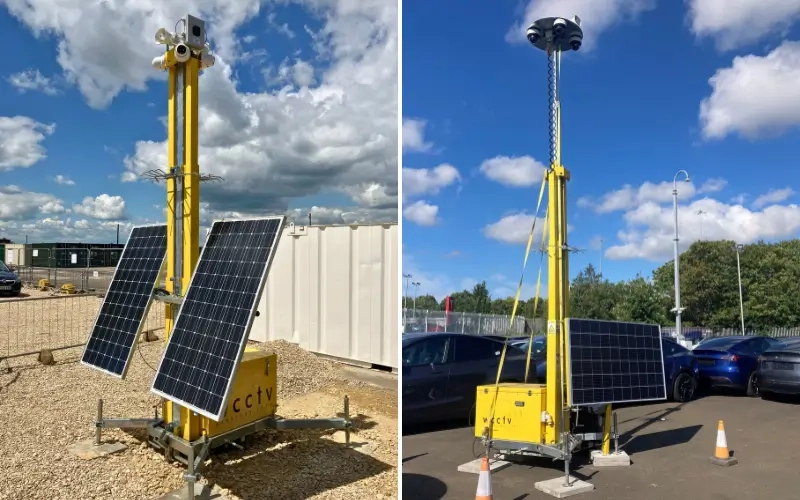
Air quality monitoring helps you measure and manage harmful pollutants and gases that could impact health, safety and environmental compliance. Unlike standalone systems, smart air quality sensors integrate seamlessly with CCTV Towers, creating one point for security and environmental monitoring systems from a single unit that helps prevent project delays and eliminates vendor sprawl.
Our Air Quality Sensors function as add-ons to our fully-managed CCTV Towers and Temporary CCTV systems, providing you with valuable insights across all working zones. This integration means no separate power sources or permanent infrastructure, as the play-and-plug sensors are powered by the same solar and fuel cell battery systems powering our CCTV equipment.
So, how do they work? Our monitoring sensors track a wide range of air quality data, such as:
-
Fine particulate matter (PM1, PM2, PM10): Airborne pollutants found in construction dust that can cause respiratory diseases.
-
Total Volatile Organic Compounds (TVOCs): Toxics found in paints, solvents and other building materials that can cause long-term health risks.
-
Carbon dioxide (CO₂): A greenhouse gas (GHG) affecting climate change and global warming.
-
Carbon monoxide (CO): Pollutants formed due to the incomplete combustion in generators or vehicles that can lead to poisoning in confined spaces.
-
Nitrogen dioxide (NO₂): Toxic gas from diesel/gasoline engines in heavy machinery (excavators, cranes, etc.).
-
Methane (CH₄): An odourless gas found underground that can be released during excavation or demolition works.
They also track temperature, humidity and dew point in real-time, storing up to 180,000 timestamped records for trend analysis and compliance reporting.
All real-time data feeds directly into Stellifii, our cloud-based monitoring platform, where site managers access live readings, historical data and automated alerts from any device. Using advanced software and linked to remote monitoring services, the sensors notify you automatically when air quality thresholds approach critical levels.
Read more: What are Environmental Monitoring systems?
Monitoring sites a step further
If you want reliable results, not just for air quality but across every key metric on your building site, a range of smart integrations can take your monitoring to the next level:
-
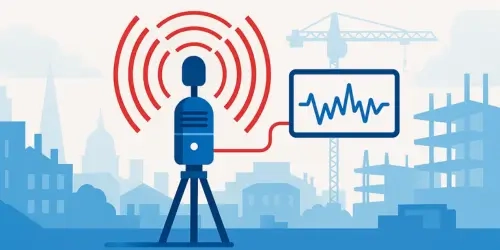
Noise monitoring sensors measure sound levels (30-130 dB) to ensure compliance with Section 61 requirements, keeping workers safe and preventing community complaints.
-
Weather monitoring sensors track temperature (-40°C to +60°C), wind speed (0-110 mph), rainfall (hourly) and humidity (10-99%) in real-time so you can make informed decisions about planned works and resource allocation.
-
Smart detection systems for PPE monitoring, intrusion detection and smoke/fire detection help keep projects on schedule by reducing unnecessary health and safety stoppages, preventing costly downtime caused by theft or vandalism and protecting workers from toxic smoke and gas exposure.
-
Automatic Number Plate Recognition (ANPR) logs every vehicle entering/exiting construction work zones, preventing unauthorised access which can cause project delays.
Read more:
-
Noise Monitoring Compliance: Futureproofing UK Construction Sites
-
Weather Monitoring Tools That Keep Construction Projects on Track
Monitor Air Quality the Smart Way
In the UK, poor air quality management can delay construction projects, put workers' health at risk and taint your reputation with stakeholders. When HSE inspectors arrive unannounced, they want to see continuous monitoring logs throughout the duration of every building project, not spot checks conducted weeks apart.
Failure to produce air monitoring reports can delay timelines while inspectors verify findings and may result in contractual penalties and cost overruns when projects aren't delivered on schedule. On top of this, you also risk non-compliance penalties of £20,000 per incident.
With 6 regional hubs and over 20-years of experience in wireless monitoring, we understand just how essential air quality oversight is in the UK. That's why we provide environmental monitoring solutions integrated with our CCTV Towers and cloud-based reporting platform to construction firms of every size.
Don't let poor air quality management derail your next project. Contact our monitoring experts to learn how our air quality sensors and Stellifii platform can help today.