With 40% of construction businesses experiencing a cyberattack in the last year, IT safety has become a top priority.
For construction IT managers, this troubling statistic emphasises how infrastructure choices can directly affect data protection, system uptime and business continuity.
The question facing many construction IT leaders isn't whether to invest in robust safety and monitoring platforms, but which deployment best supports secure operations: cloud-based systems like WCCTV's Stellifii platform or on-premise software?
Each approach offers distinct trade-offs around security, scalability, cost and operational resilience. This article breaks down those differences to help tech leaders make more informed construction IT cybersecurity decisions.
Why Construction IT Cybersecurity Matters in the UK
The construction sector is one of the most targeted industries for cyberattacks, driven by complex supply chains and increasing reliance on digital tools and systems.
The consequences of poor cybersecurity extend well beyond data loss, with attacks disrupting schedules and damaging professional reputations.
Here are a few shocking construction cybersecurity stats for context:
-
The UK construction industry is the third most financially impacted sector by cyber risks
-
Small construction firms lose over £115 million to cyber incidents each year
-
Over 7,000 construction companies are in financial distress due to digital threats
-
1 in 5 construction businesses identified cyber risks in the last 12 months
-
Construction supply chains show the highest online risk for cyber attacks
-
Cybercrime has risen by more than 90% in the past year
-
Ransomware attacks increased by nearly 50% between 2022/23
Many of these evolving threats occur due to weak entry points in your IT systems, such as:
-
Disconnected legacy systems: Outdated software with unpatched vulnerabilities, default passwords and limited cybersecurity measures create easy access points into IT systems.
-
Construction supply chains: Multiple subcontractors, often requiring temporary access to digital systems, create significant security risks. Weak or poorly secured digital infrastructure within suppliers' computer systems can expose valuable data, providing attackers with gateways they can easily exploit.
-
Basic surveillance setups: Traditional CCTV systems without end-to-end encryption allow hackers to access your company's data and broader IT systems through compromised cameras.
-
Access control units: Standalone access control systems with weak credentials create gateways to sensitive data, potentially leading to data loss and/or ransomware attacks.
-
IoT-based technology: Connected sensors without proper security configuration create numerous entry points that hackers exploit.
Here's an overview of the consequences of poor IT safety:
|
Consequence |
Impact |
|
Operational downtime |
Project delays; missed deadlines |
|
Lost data |
Permanent loss of sensitive data: project plans, confidential information, clients' information, design files, compliance records, etc. |
|
Financial losses |
Project overruns; non-compliance penalties; ransom payments (average median loss £19,000+ per incident) |
|
Regulatory fines |
GDPR violations; ICO penalties up to £17.5 million or 4% annual turnover |
|
Supply chain disruption |
Access control blocked; payment systems compromised |
|
Reputational damage |
Lost client/stakeholder trust; fewer tender opportunities |
|
Legal issues |
Data breach claims; ICO violations; contractual disputes |
Why IT safety matters
Having proper IT cybersecurity benefits the construction industry in the following ways:
-
Keeps projects on track: Preventing cyberattacks avoids operational downtime that derails project timelines and triggers contractual penalties.
-
Prevents compliance breaches: Robust site safety ensures GDPR compliance, avoiding ICO penalties and regulatory investigations.
-
Protects against legal action: Strong online security protocols demonstrate due diligence to regulators and clients.
-
Maintains client trust: Proper IT safety practices protect digital assets and strengthen tender bids as clients increasingly expect integrated monitoring with advanced cybersecurity in modern construction.
Read more: Why Construction Site Cybersecurity and Safety Monitoring Go Hand in Hand
Types of Construction Cybercrime and Ways to Mitigate Online Risk
Understanding specific cyber threats helps IT managers evaluate which digital infrastructure approach best addresses security gaps online:
-
Ransomware attacks: Attackers encrypt critical project data with malware and demand payment for decryption keys. Construction companies are especially vulnerable, as tight deadlines and escalating cost overruns make prolonged downtime financially unviable, creating a high-pressure, no-win situation.
-
Phishing attacks and BEC scams: Both phishing and Business Email Compromise (BEC) scams rely on social engineering and weak security controls to infiltrate systems. Fraudulent emails impersonating clients, HSE inspectors or contractors trick employees into revealing sensitive information or approving payments. A single attack can cost construction firms millions.
-
Data theft: Cybercriminals steal sensitive information (blueprints, bids, financial information, Building Information Modelling (BIMs)) for extortion or resale to competitors unless you pay up.
-
Supply chain threats: Complex, interconnected systems and reliance on third-party suppliers are a critical concern in the construction industry. A single compromised supplier can enable a ransomware attack, with consequences so severe that recovery can take months or even years, and fully rebuilding affected systems may be impossible.
4 Ways to minimise cyber threats
Understanding the importance of construction IT cybersecurity isn't enough on its own. Preventing online risk takes conscious effort to improve safety across the board.
These 4 measures can help IT leads do just that:
-
Safety training and proactive safety culture: Regular online safety training, phishing simulations and awareness programs teach everyone onsite, from managers to workers, how to spot hacker tricks. This builds a "safety-first mindset" where staff report suspicious activity without judgment.
-
Network and access controls: All project management platforms should be protected by strong passwords, AES256 encryption and firewalls. This is particularly important in construction environments, where a single compromised device (like a CCTV camera or weather sensor) provides hackers with a gateway to broader systems.
-
Vendor and incident management: This involves checking suppliers' security before sharing data (project plans, bank details, personal information, etc.). It also includes implementing preventive measures in case of emergencies, such as keeping files offline for incident/compliance reporting.
-
Ongoing risk assessments and cybersecurity technology: Regular cybersecurity audits identify blind spots and vulnerabilities before attackers exploit them. Antivirus, anti-malware, intrusion detection and data-encryption software should be in force for ultimate online protection.
With these proactive safety measures in place, construction companies are better positioned to evaluate whether cloud-based or on-premise systems can deliver secure, scalable IT operations.
Read more:
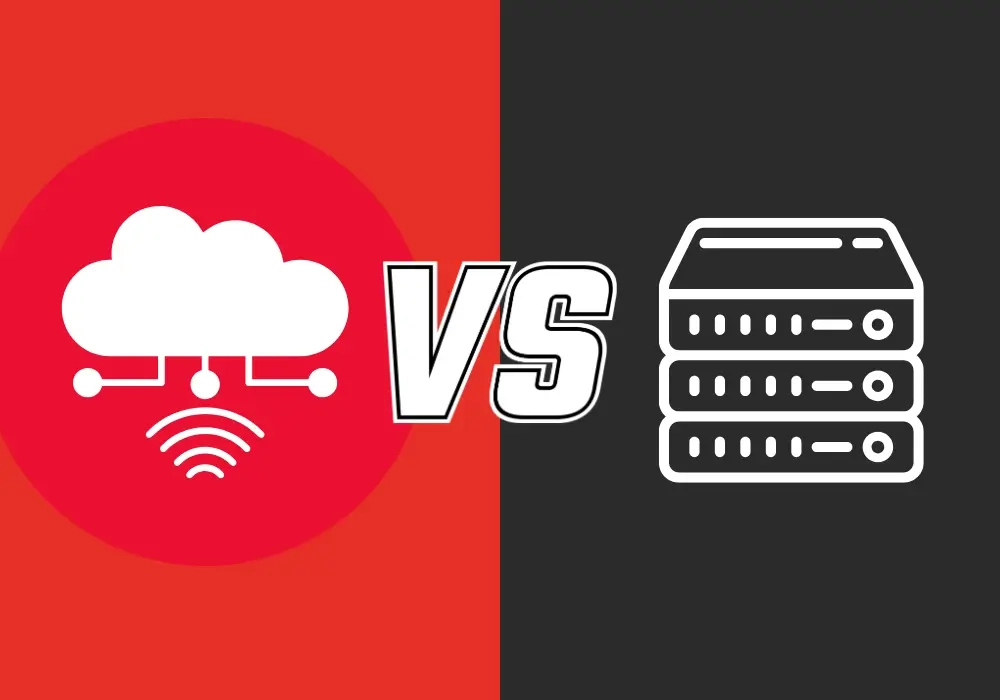
Comparing Cloud-Based Platforms vs. On-Premise Software
Let's take a closer look at how cloud-based platforms and on-premise safety management software measure up:
| Feature | Cloud solutions (Stellifii) | On-premise solutions |
| Security |
|
|
| Maintenance |
|
|
| Compliance |
|
|
| Scalability |
|
|
| Cost |
|
|
Read more:
Cloud Platforms: Explained
Cloud-based monitoring platforms, like Stellifii, offer clear benefits, especially for remote/hybrid teams.
Below, we break down how these systems work and why they're so valuable for construction companies:
Functionality
Stellifii stores data and runs applications on remote servers via secure 4G/5G networks. All construction site data (environmental monitoring, CCTV surveillance, AI analytics, ANPR access control, etc.) feeds into an easy-to-access dashboard, with no need for multiple vendors or on-site servers.
Connected IoT-based devices capture everything that happens on-site, from noise monitoring to perimeter surveillance, and send it directly "to the cloud". Using artificial intelligence (AI), Stellifii's software processes and analyses the information for smart detection (PPE, smoke/fire, intruders) and sends instant alerts to site teams for corrective action.
What's more, every incident (including near-miss incidents) is automatically logged with a precise timestamp and compiled into compliance-ready reports. This eliminates manual data entry and reduces the risk of human error.
By centralising everything in one place, project managers and IT leads can run diagnostics, generate reports and/or remotely control PTZ cameras without physical site visits. This approach helps eliminate fragmented data silos and vendor sprawl across projects.
In practical terms, construction IT managers in Birmingham can monitor London sites in real-time through secure, fully-managed web dashboards accessible from any device.
Benefits
-
Reduced cyber risk: Stellifii comes with end-to-end AES256 encryption, NDAA-compliant components and secure data handling built in as standard.
-
Predictable costs: Flexible rentals eliminate high upfront expenses, while consolidating monitoring reduces the need for multiple vendors.
-
Automated compliance: Through Stellifii, all site data and incidents are automatically timestamped and logged, ensuring construction teams are always audit-ready at the click of a button.
-
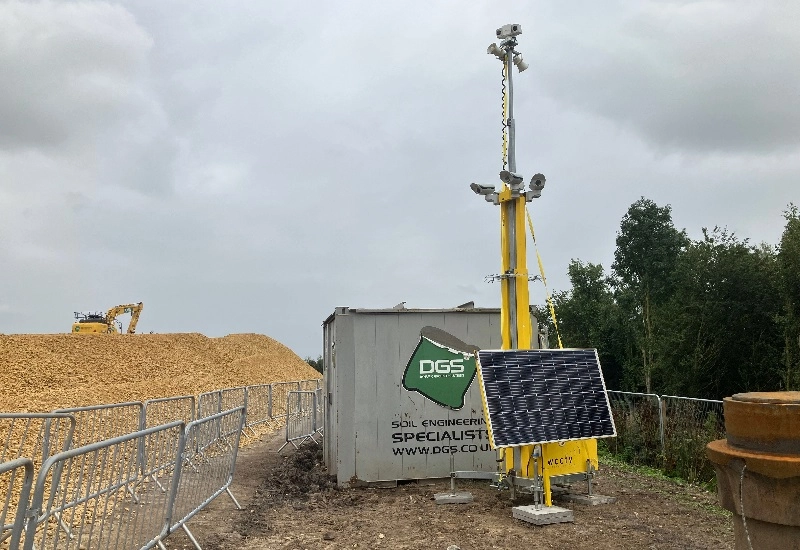
Rapid deployment: Cloud-based CCTV Towers, Temporary CCTV solutions and Redeployable Cameras can be running within 20-minutes without fixed infrastructure, Wi-Fi or complex IT setup.
-
Multi-site visibility: Unified dashboards like Stellifii deliver complete oversight across all working sites, consolidating CCTV, environmental performance and compliance reporting into a single interface.
-
Professional remote monitoring: 24/7 remote monitoring through NSI Gold Accredited monitoring centres provides instant incident response (live voice-down challenges, mobile keyholding dispatch) compared to delayed responses of on-site systems.
Read more: The Growing Expectation of Tech-Enabled Compliance in Construction
On-Site Software: Explained
On-premise software is closely tied to many of the legacy problems construction IT managers face today, including vendor sprawl, fragmented data and an increased risk of cyber threats.
Below, we explain how these systems work and why they often fall short in modern construction:
Functionality
On-site software typically runs on locally installed systems at a site office or headquarters, rather than relying on 4G/5G connections as cloud systems. Generally, construction companies need to buy or license software and load it onto site servers via local Wi-Fi/LAN. Updates and backups are performed manually via USB or scheduled IT visits.
Additionally, on-premise software collects site data in isolated silos, without systems "talking" to each other. This then forces IT managers and construction teams to log into multiple platforms for CCTV footage and environmental data just to get a clearer picture of what's happening on-site, while making expansion (scalability) costly and nearly impossible.
Drawbacks
-
Security gaps: Multiple vendor logins and inconsistent security protocols create numerous gaps for attackers to exploit. On-site software is vulnerable to unpatched flaws in IoT/BIM data integrations.
-
Ongoing maintenance: Construction IT teams must manually manage system updates and hardware failures. This expertise and time come with higher costs that eat into IT budgets.
-
Vendor sprawl: Without unified cloud platforms, construction companies accumulate multiple on-premises systems (one for CCTV, another for PPE detection and a third for intruder alerts). This creates fragmented data silos that are hard to manage and maintain.
-
Limited remote access: On-premise systems struggle to support remote/hybrid working models as accessing site data requires VPN connections or physical presence.
-
Compliance issues: Manual data exports from disjointed systems create more compliance gaps than they close. When HSE inspectors arrive unannounced, scrambling through multiple systems isn't a professional response.
-
High cost: Apart from the high upfront hardware investment, construction companies typically spend 60-80% of their IT budgets to keep existing on-site software and legacy applications running.
Read more: Managing Vendor Sprawl on your Construction Site: Why Consolidated Monitoring Matters
Shifting from On-site Software to Cloud-Based Platforms in Construction
Those in construction IT need a structured approach when shifting from on-premise software to cloud-based platforms. Here are 5 steps you can take to make this process as smooth as possible:
-
Audit current infrastructure: Document all existing on-premise systems, their functions and annual costs (maintenance, licensing fees, cyber insurance, etc.). Identify which systems create the most cybersecurity vulnerability or administrative burden.
-
Compare total costs: Compare on-premise costs against cloud subscription fees across your project’s timeframe. Be sure to include hidden costs like vendor sprawl management and operational downtime/delays in your calculations.
-
Prioritise migration phases: Start with systems nearing hardware replacement cycles or when subscriptions are coming to an end. Instead of taking an "all or nothing" approach, start small by rolling out cloud systems at one of your sites first, then expand.
-
Select cloud providers: Base your decisions on UK regulation familiarity, construction industry experience, cybersecurity credentials (NSI Gold, AES256 encryption), integration capabilities and local support infrastructure.
-
Employee training and migration completion: Comprehensive training ensures teams leverage cloud platform capabilities rather than replicating old on-premise workflows. Monitor cloud performance and conduct audits often to ensure you get the most value.
Read more: Choosing a Monitoring Partner That Understands UK Construction
Construction IT Safety Done Right
As cyber threats continue to rise across the construction industry, safety decisions can no longer be treated as purely technical choices. Whether opting for cloud-based platforms or maintaining on-premise systems, IT leaders must carefully weigh up the trade-offs between security, scalability and operational resilience.
With 6 regional hubs and over 20-years experience in wireless monitoring, we provide fully-managed cloud-based digital technologies to construction companies of any size.
If you're interested to learn more about how Stellifii can help strengthen your cyber posture and support modern ways of working, speak to our experts today.