Many UK construction firms now operate with teams split across sites, different offices and remote locations. While remote or hybrid working arrangements offer flexibility, they also make it harder to maintain consistent safety oversight, stay on top of regulations and track task completion efficiently.
Traditional safety management methods, such as manual data entry and email communications, once served their purpose, but now struggle to meet the demands of the modern construction world. These outdated approaches often result in delayed incident reporting, inconsistent environmental monitoring and limited visibility into what's actually happening on-site.
These gaps can be costly, ranging from HSE enforcement action and hefty penalties to serious workplace injuries or fatalities, which is why the sector calls for effective safety management, particularly when teams are working remotely.
The solution? Advanced technological infrastructure that enables real-time monitoring, data-driven risk assessment and seamless communication across all teams and locations.
This article outlines how the right digital setup reduces admin pressure for safety teams while ensuring reliable, audit-ready safety management across dispersed construction projects.
The Reality of Hybrid and Remote Work in Construction
There's no denying that the move to hybrid and remote work has changed how construction projects are delivered. Projects are moving faster, regulatory expectations are higher and clients/stakeholders are demanding greater transparency and accountability.
While flexible working can improve work-life balance and support employees' mental health, it also creates new challenges for safety management, including:
-
Fragmented safety oversight: When safety managers work remotely or split time between multiple sites, safety violations could go undetected for hours, potentially leading to HSE enforcement action.
-
Disconnected teams: Site workers, remote safety managers and hybrid compliance officers often use different communication channels, for example, incident reporting in one spreadsheet and environmental monitoring in another. This fragmentation in hybrid work models can lead to crucial safety information being lost along the way.
-
Tech limitations: Many building organisations rely on legacy systems that don't support remote access. This means safety managers working from home can't review CCTV footage or check air quality readings in real-time, unless they visit each location physically.
-
Compliance gaps: Without automated monitoring systems, project managers can't demonstrate due diligence when HSE inspectors arrive unannounced.
-
Data collection delays: Manual safety reporting relies on teams logging incidents and then relaying that information to managers working remotely. The process has a high risk of human error, particularly if incidents are logged late or not recorded at all. Even a single delay can compromise response times and increase the severity of penalties.
Read more: The True Cost of Manual Reporting in Construction
Legal responsibilities for remote and hybrid workplaces
UK construction companies operating remote or hybrid models must still adhere to regulatory obligations just the same as traditional setups. But the complexity around demonstrating continuous oversight is a challenge when teams are scattered across different sites, offices and remote locations.
| Regulation | Description | Failure to comply |
| Construction (Design and Management) CDM 2015 | Principal contractors must "plan, manage and monitor" all construction work to ensure worker welfare, regardless of location, and ensure hybrid working teams receive adequate training to maintain safe working setups. |
|
| The Health and Safety at Work Act (HASAWA) 1974 | Construction employers must take "reasonably practicable" steps to ensure the safety of everyone on-site, including carrying out risk assessments and implementing measures to reduce risks in both office and on-site working environments. |
|
| Environment Act 2021 and the Clean Air Act 1993 | Site managers must protect workers/surrounding communities from air pollution through dust control, emission and waste management, even while working remotely. |
|
| ESG/Net Zero obligations | The construction industry must track, log and report Scope 1, 2 and 3 emissions to align with 2050 targets. |
|
This is where IT managers can integrate infrastructure to support hybrid working arrangements.
The Role IT Plays in UK Construction
In the UK construction sector, IT managers play an important role in facilitating effective safety management, particularly in remote and hybrid working environments.
Through smart site management systems, centralised data collection and automated workflows, IT teams make it possible to maintain real-time visibility, improve operational efficiency and meet regulatory obligations across the board, no matter where teams are based.
In practice, this means a safety manager working from home can respond to a PPE violation at Site A, review environmental readings from Site B and export compliance reports for Site C, all from a single dashboard on their laptop or mobile.
How IT managers support remote workers
By designing secure, integrated safety systems, IT managers support remote workers in the following ways:
- Secure remote access using end-to-end AES256 encryption and NDAA-compliant components allows managers and construction teams to access live site data from anywhere.
- Unified cloud platforms consolidate all safety data (security footage, environmental monitoring, PPE compliance logs, etc.) into a single dashboard accessible from any device.
- 24/7 remote monitoring gives teams real-time visibility across all construction operations.
- Real-time alerts notify construction professionals immediately when abnormal or unsafe activity is detected.
- Audit-ready reports are generated automatically, with exports up to 5X faster than legacy systems.
Read more: How Smart Detection Data Improves Risk Management in Construction
5 Smart Technologies IT Managers Should Use in The Construction Industry
These 5 technologies handle a lot of the work for IT managers by automating monitoring, streamlining data collection and ensuring complete 24/7 oversight:
1. AI-powered smart detection systems
IT managers supporting teams with remote and hybrid setups find that AI-powered smart detection systems make life easier by providing continuous oversight without the need for being on-site.
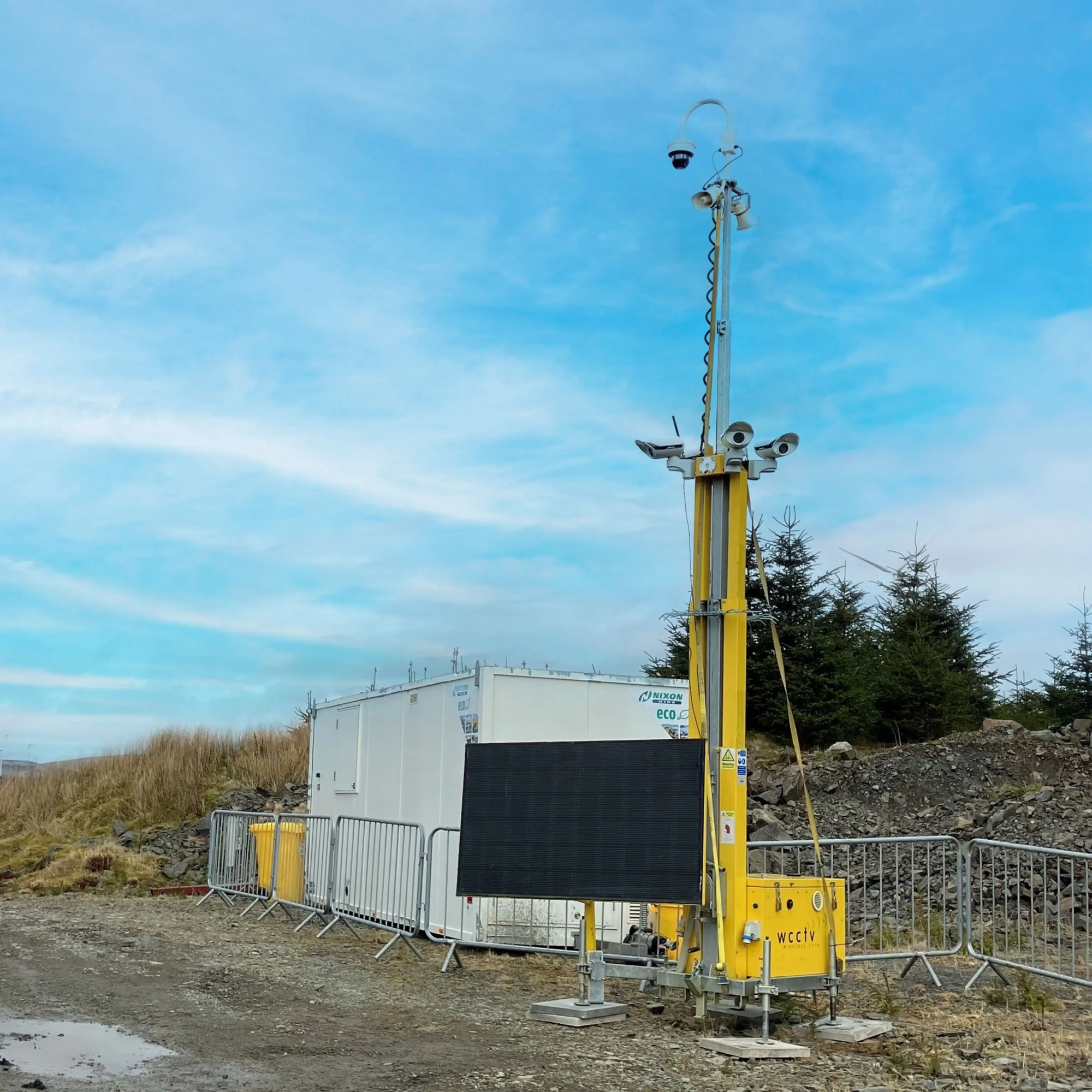
Equipped with high-definition PTZ (Pan-Tilt-Zoom), night vision cameras and advanced AI-video analytics, they monitor building sites both day and night. By analysing live CCTV Tower feeds, they can detect intruders/unauthorised access, identify workers entering high-risk areas without the required PPE and even spot the faintest smoke trail with near pinpoint accuracy.
Modern security systems have software so sophisticated that they can differentiate genuine safety threats from harmless motion caused by weather or debris. This smarter approach is particularly beneficial in hybrid work models as it drastically reduces false alarms and the need for manual site checks when alarms are triggered.
Read more: How Artificial Intelligence (AI) is Revolutionising CCTV Tower Monitoring
2. Remote monitoring
When surveillance cameras detect a real threat, live data is automatically sent to NSI Gold monitoring centres for verification. Here, trained security personnel assess the situation in real-time, notify site management teams and initiate various responses to maintain workplace safety, including:
-
Live audio voice-down challenges
-
Blue strobe light activation
-
Dispatch of mobile keyholding and alarm response teams
-
Notifying emergency services if/when needed
For those with flexible working arrangements, remote monitoring provides the oversight you need without requiring permanent on-site security or frequent site visits. Professional-grade remote monitoring becomes IT and safety managers' "eyes and ears" on-site, supporting safe operations across multiple sites from a central location.
Read more: Why Should Construction Sites Use NSI Gold Accredited Security?
3. IoT-based environmental monitoring
Hybrid working arrangements benefit from smart environmental monitoring in several ways:
-
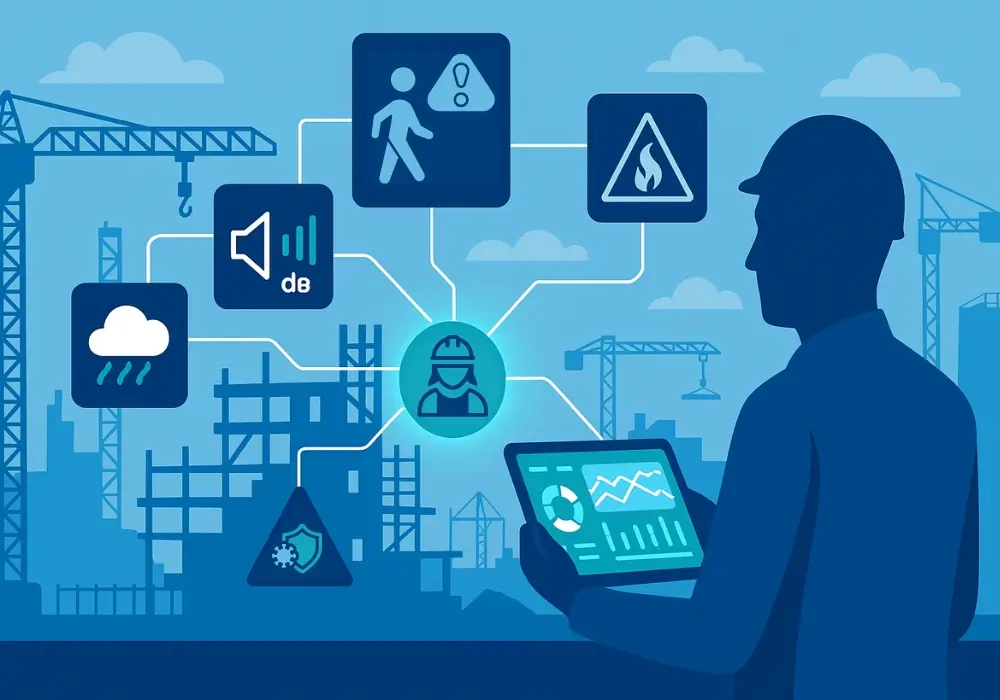
Air quality sensors track fine particulate matter (PM1, PM2.5, PM10), CO₂ and other harmful gas emissions remotely, without managers having to step foot onsite. The sensors trigger instant alerts when poor air quality poses risks to workers, stalls progress and/or breaches the Control of Pollution Act 1974 (CoPA) limits and automatically logs every event for health and safety purposes.
-
Noise monitoring sensors continuously monitor construction noise (30-130 dB) to support Section 61 compliance. By monitoring sound levels remotely, remote employees can see readings in real-time and implement corrective actions without regular check-ins.
-
Weather monitoring sensors provide real-time data on wind speed (0-110mph), rainfall (hourly), humidity (10-99%) and temperature (-40°C to +60°C). For teams working in remote/hybrid models, this information supports informed decisions on operations and resource allocation, helping to reduce rework and delays and protect project timelines.
Read more: The Role of Environmental Monitoring in Meeting CDM 2015 Requirements
4. Smart integrations
Construction safety management works best when different systems connect seamlessly to deliver analytical insights, such as:
-
Automatic Number Plate Recognition (ANPR): Allows managers to see who exactly gained access to working zones. ANPR technology tracks (and timestamps) all vehicles entering/exiting construction sites without having to regularly review hours of CCTV footage manually.
-
Time Lapse Video: Documents project progress, identifies safety issues and provides stakeholders with real-time updates without in-person collaboration.
-
Redeployable Cameras: Can be installed in minutes, relocated when priorities change and accessed remotely for full visibility and control from anywhere.
Read more: Smart Analytics Insights in Construction
5. Cloud-based monitoring platforms
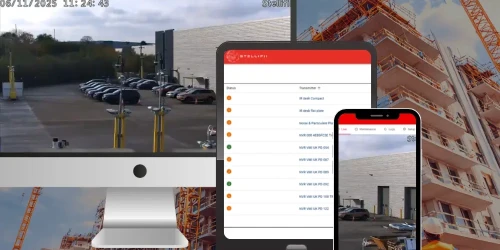
Cloud platforms, like Stellifii, merge all safety site monitoring data into a single interface accessible via a web browser or mobile app. Safety managers can view live CCTV feeds, environmental readings, PPE compliance alerts and incident logs all in one place, without the need for physical site visits.
Data is transmitted securely to Stellifii via 4G/5G networks, giving remote and hybrid working teams access to the most up-to-date information. The best part? All security, safety, compliance and monitoring are managed in one secure platform, eliminating the need to switch systems or providers.
Read more: How Cloud-Based Tools Are Changing Construction Admin
6 Ways Technology Benefits the Construction Industry
Let's take a closer look at how IT-enabled safety monitoring benefits construction firms with remote and hybrid workers:
-
Reduces vendor sprawl: Managing 5 separate platforms for CCTV, site monitoring and PPE compliance complicates operations unnecessarily. Integrated temporary security solutions with cloud platforms like Stellifii consolidate all safety data into a single dashboard, eliminating vendor sprawl and sparing managers the administrative burden of managing multiple providers.
-
Full visibility and control: Fully-managed remote monitoring services provide 24/7 visibility regardless of where safety managers are. Through Stellifii, all construction professionals can access live surveillance feeds, real-time environmental data and generate compliance reports at the click of a button.
-
Audit and compliance readiness: Continuous site monitoring logs are what HSE inspectors expect. Failure to comply can lead to project delays and costly fines. Integrated monitoring systems make this task easy by proving your due diligence without human intervention, with exports 5X faster than legacy systems.
-
Actionable insights: Live monitoring of all building activities allows managers to intervene early before minor issues escalate into project-stopping problems. For instance, if air quality sensors detect high levels of silica dust on your London site, automated alerts warn managers in real-time so they can take the necessary steps to prevent exposure, even if they're working remotely from Manchester.
-
Supports sustainability goals: IoT-based environmental monitoring supports Net Zero and ESG obligations by providing continuous data on air quality, noise levels and weather remotely. This not only ensures compliance but also boosts productivity as managers no longer need to perform in-person inspections and manually log reports.
-
Cost savings: Centralising site safety, security and monitoring data into a single dashboard significantly reduces operational overheads. Unified monitoring can cut costs by up to 88% compared to traditional methods, with some construction companies even experiencing lower insurance premiums for this level of proactive risk management.
Read more:

Support Hybrid and Remote Construction Safety Management the Smart Way
Managing construction safety across remote and hybrid working environments can be challenging, but it doesn't have to be when you have WCCTV on your side.
With 6 regional hubs and over 20-years of remote monitoring expertise, we provide cloud-based safety management platforms that keep projects moving regardless of your working hours or remote/hybrid model. From PPE detection to environmental tracking, our fully-managed solutions give IT and safety managers the confidence to maintain audit-ready compliance across all locations.
Contact our team to discuss how our integrated solutions and Stellifii platform can reduce admin pressure while supporting workplace safety in the UK's construction industry.