Ever dealt with late-night compliance issues because construction noise data wasn't logged properly? Or perhaps managing multiple vendors is quietly eating into your IT budget?
With the UK tightening environmental standards and ESG expectations rising, site teams require systems that continuously collect and verify data, then automatically report it. This means no legacy systems or manual walkabouts; just real-time visibility at the click of a button.
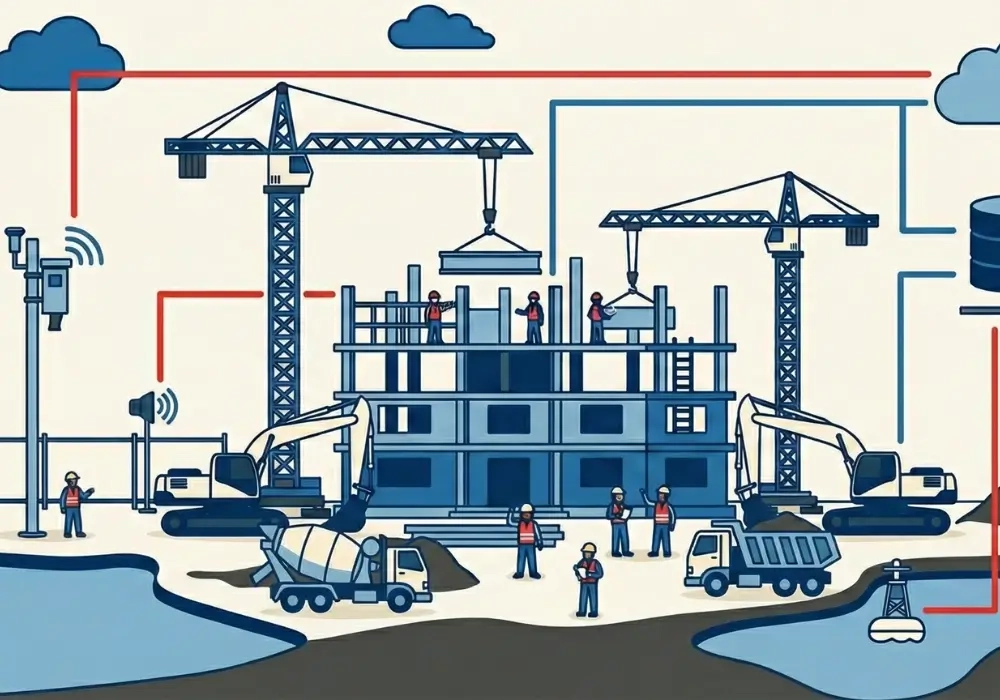
This is possible by integrating environmental monitoring sensors on construction sites, where a single platform handles air quality, noise, weather conditions and security in real-time.
If you're interested in how integrated systems can simplify your IT stack while adhering to regulatory standards, this guide explains what matters, what to look for and how WCCTV's IoT-based environmental monitoring solutions are built specifically for construction companies that can't afford to take any risks.
Why Environmental Monitoring Matters in UK Construction
Put plainly, environmental monitoring for UK contractors isn't optional.
When project managers are responsible for protecting workers from hazardous dust and providing real-time environmental data to show their due diligence to regulators, the stakes couldn't be higher.
One missed reading or delayed report can lead to compliance breaches, costly fines or compensation claims from workers exposed to unsafe conditions.
But when you're managing IT systems across multiple sites, manual tracking creates data silos and compliance gaps. What your team needs is a system that identifies patterns early and automates reporting so no one has to spend hours processing data at the end of every shift.
Here are just 3 reasons why construction site monitoring systems matter in the UK:
1. Ensured regulatory compliance
The UK construction industry operates under some of the strictest environmental parameters. Falling short of any requirement can bring heavy fines, project delays and uncomfortable conversations about the team's performance.
Here's what you're up against and how monitoring environmental conditions can help:
| Regulation | Requirements | How monitoring helps |
| CDM 2015 (Regulation 13 and 15) | Construction professionals must plan, manage and monitor all construction activities/phases, including environmental risk. | Continuous monitoring and automated data collection prove you're tracking dust, noise and site conditions throughout project lifecycles to mitigate risks. |
| Control of Pollution Act (CoPA) 1974 | Governs noise, air quality and vibration control on demolition and construction sites. Contractors must outline the "Best Practical Means (BPM)" methods to reduce foreseeable risks. | Real-time data collection across various environmental parameters (noise, air, dust, etc.) prevents Section 61 breaches. |
| Environmental Protection Act (EPA) 1990 | Controls all residential, commercial and industrial waste management in England, Scotland and Wales, as well as "statutory nuisance" noise. | Advanced noise monitoring sensors send instant alerts when construction noise nears the 87 dB(A) threshold, preventing Noise Abatement Notices. |
| Clean Air Act 1993 | Prohibits burning construction materials ("dark smoke") on building and demolition sites. | Air quality and smart detection systems detect smoke, particulate matter and emissions before violations occur. |
| Environment Act 2021 | Sets legal targets for air quality, biodiversity, water and waste management for the UK's construction sector. | Continuous monitoring provides evidence of environmental impact management across all building phases. |
| Net Zero | Requires continuous Scope 1, 2 and 3 emission tracking for ESG purposes. | Environmental monitoring sensors continuously monitor site conditions in real-time, generating audit-ready reports automatically. |
2. Improved site safety
When air quality drops or conditions take a turn for the worse, advanced sensors equipped with artificial intelligence (AI) and machine learning trigger instant alerts, allowing project managers to act before issues escalate.
For example, managers are notified as soon as wind speeds exceed safe thresholds. This makes it possible to pause or reschedule crane lifts or other weather-sensitive construction activities, reducing risk and helping keep everybody safe on-site.
Apart from worker safety, smart monitoring systems also help prevent property damage. Excavation and demolition work can generate vibrations that compromise the structural integrity of nearby buildings. Real-time site monitoring flags abnormal levels early, giving construction teams the chance to intervene before cracks appear, preventing injuries, costly repairs and/or legal disputes.
3. Real-time data collection
Traditional environmental monitoring involves manual checks and periodic foot patrols where someone walks the site, records readings and then emails a spreadsheet at the end of the week. The problem with this method is that it doesn't provide any real-time value, and any issues detected have most likely already caused damage.
Advanced monitoring systems collect information on all environmental factors, storing up to 180,000 timestamped records for trend analysis while supporting evidence-based reporting across any location. This means project managers aren't finding problems days or weeks later; they're seeing them as they develop through a unified, cloud-based dashboard.
On top of this, smart data integration helps managers with resource management. For instance, if increased dust levels make working conditions unsafe, schedules can be rearranged to enhance safety and protect project timelines.
Ultimately, real-time data means fewer manual processes, less risk of human error and more time to focus on higher-level priorities instead of chasing compliance paperwork.
Read more:
-
The Role of Environmental Monitoring in Meeting CDM 2015 Requirements
-
Rethinking Construction Compliance Through Smart Monitoring Systems
Types of Environmental Monitoring Technologies
Modern environmental monitoring brings together several key technologies and software, each designed to capture specific site data in real-time. These detailed logs feed into Stellifii, our cloud-based platform, giving site managers a bird's-eye view of conditions from any device.
Below, we take a closer look at 3 types of environmental monitoring technologies making a real difference in the construction industry:
| Monitoring technology | What it does | Benefits |
| Air Quality Sensors | Measures pollutants that affect worker health and environmental compliance:
|
|
| Noise Monitoring Sensors |
|
|
| Weather Monitoring Sensors | Continuously tracks onsite conditions affecting safety and construction planning:
|
|
Read more:
-
Weather Monitoring Tools That Keep Construction Projects on Track
-
Noise Monitoring Compliance: Futureproofing UK Construction Sites
Supporting technologies
Real-time monitoring becomes stronger when paired with smart detection systems. These add-on technologies complement our environmental solutions and integrate seamlessly with our CCTV Towers and temporary surveillance systems, enhancing visibility across every inch of a building site.
-
Smoke and fire detection devices catch the earliest sign of fire hazards (thin smoke trails, flickering lights, heat signatures, etc.) before problems escalate.
-
PPE monitoring systems track whether workers are wearing protective gear, like high-visibility vests, respiratory equipment and safety harnesses, during construction activities.
-
Intruder detection solutions scan your site 24/7 using AI and machine learning and flag suspicious behaviour in real-time, keeping workers and assets safe.
-
Time Lapse Video helps identify safety issues and keeps stakeholders satisfied with real-time updates without the need for physical site visits.
-
Redeployable Cameras can be installed in hard-to-reach areas, moved as site priorities change and accessed remotely from anywhere.
Read more: Construction Site Security: From Environmental Monitoring to Smart Detection Systems
Environmental Sensor Integration: 5 Step Breakdown
Here's a breakdown of how to deploy integrated systems on a construction site:
Step #1: Install smart sensor technology
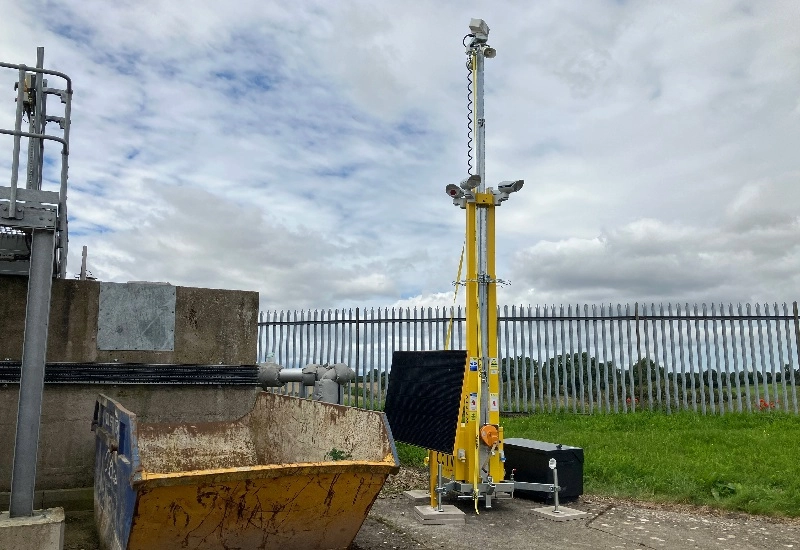
Our plug-and-play environmental sensors are designed to mount directly onto our CCTV Towers without complex installation or extensive infrastructure. When run alongside Stellifii, the sensors easily integrate with our remote monitoring and mobile keyholding services, delivering real-time data and immediate response from day one.
Because the environmental sensors run through our security systems, they're ideally suited to building sites, including those in remote locations, with no need for fixed power sources, offering long-lasting autonomous power.
Step #2: Set predefined thresholds
After sensors are installed, site teams can configure alert thresholds based on regulatory requirements (CDM, HSE, etc.) or project specifications. These may include:
-
Silica dust levels (PM2.5) exceeding 0.1 mg/m³ (averaging over 8 hours)
-
Noise levels approaching 87 dB(A) limits
-
Wind speeds over 25 mph for crane operations
-
Extreme temperatures impacting workers' health (e.g., heat illness)
Step #3: Connect via secure network
Because each sensor operates autonomously, monitoring systems connect securely via a secure 4G/5G network, removing the need for fixed Wi-Fi or mains electricity.
On top of this, our UK-hosted system, with in-built AES256 encryption and GDPR compliance in mind, ensures data security and reduces the risk of cyber breaches, giving IT managers peace of mind.
Step #4: Data feeds into unified platform
All sensor data (air, noise, weather) flows into Stellifii alongside security footage and smart detection alerts. One point of reference for everything you need to know about your site with a single login.
Site managers can access live readings, historical trends and timestamped reports straight from their mobile or internet browser without ever having to set foot on site. This is particularly beneficial for hybrid and/or remote working construction teams.
By merging environmental data, compliance tracking and site security into a unified platform, you reduce vendor sprawl, simplify your IT stack and reduce the risk of breaches and downtime all in one.
Step #5: Instantly generate ESG and compliance reports
Stellifii constantly collects and stores timestamped environmental data, ensuring you're always audit-ready. With reports generated in minutes, you can quickly retrieve verifiable documentation for inspections or audits, exporting data up to 5X faster than legacy systems.
By combining all monitoring data in a single platform, integrated systems prove compliance and strengthen credibility with stakeholders and ESG regulators.
Download our brochures for more information or request a quote for cost-effective site monitoring systems today.
6 Benefits of Integrating Environmental Monitoring in Construction
AI-powered integration is fast becoming the new standard for UK contractors who need real-time oversight across multiple construction projects.
Let's take a look at 6 benefits:
-
Centralised data: All environmental data, surveillance footage and smart detection information feed into a single interface, simplifying site management.
-
Operational efficiency: Automated data collection and reporting eliminate time-consuming site inspections. With teams freed from administrative burdens, they can focus on project delivery.
-
Compliance automation: Stellifii makes reporting easy with GDPR-compliant, audit-ready reports covering CDM, CoPA, EPA, HSE and Net Zero requirements.
-
Predictive insights: Historical trend analysis reveals patterns (dust spikes, seasonal weather conditions) that help with better resource planning and prevent delays before they happen.
-
Cost efficiency: Integrating environmental monitoring sensors on construction sites prevents costly compliance violations and cuts back on the expenses of multiple vendors. Lower insurance premiums are often awarded to construction companies that show proactive risk management.
-
Supports sustainability: Collecting environmental data demonstrates due diligence while automated ESG reporting strengthens tender bids by proving environmental responsibility.
Read more:
-
The ROI of Consolidating Site Monitoring Into a Unified Platform
-
Unifying Security and Site Monitoring: The New Standard for UK Contractors
Integrate Environmental Monitoring Sensors the Smart Way
Integrating environmental monitoring sensors on construction sites doesn't have to be complicated when you have WCCTV on your side.
For IT managers dealing with budget pressures, cybersecurity threats and stretched teams, unified monitoring simplifies operations while delivering tangible benefits like reduced vendor sprawl, automated reporting and clear ROI that positions IT as a strategic business lead.
With over 20-years of experience in site monitoring systems, we provide fully-managed environmental monitoring solutions for the UK's construction sector.
Reach out to our team to discuss your monitoring needs and find out how Stellifii can help today.