Compliance expectations for UK construction sites are rising, and paper-backed processes just can't keep pace. Construction companies are expected to meet CDM 2015, HSE, GDPR, ESG and fire safety requirements, all while delivering projects on time and within budget.
The problem is that traditional construction methods, like spreadsheets and manual spot checks, often create more compliance gaps than they solve. When regulators turn up unannounced, digging through handwritten notes and email threads puts teams into "firefighting mode".
This reactive approach to compliance no longer works in today's regulatory environment. What regulators expect now is ongoing monitoring. Insurers require timestamped digital records to process claims, and clients demand transparent proof of compliance at every project stage.
Smart technology is now the standard for ensuring safety, accountability and control in the construction industry, without increasing manual workloads and headcount. This article explains how to keep up with these changes.
Why Construction Compliance Matters in The UK
With Health and Safety Executive (HSE) and CDM 2015 requirements tightening, those in the construction industry are now expected to prove safety and risk management with credible data.
Under the Building Safety Act (2022), construction professionals need an ongoing record of potential risks, PPE compliance and environmental performance so that everything that happens on-site fully complies with UK standards.
Manual compliance checks are prone to human error and keep project managers unnecessarily busy with repetitive admin tasks. They also create non-compliance risks that can lead to hefty penalties and possible jail time for gross negligence under HSE laws.
Tech-enabled compliance streamlines the entire construction process in half the time. By setting a higher standard across the industry, it’s easy to see why so many construction firms are turning to digital technologies to stay compliant.
Here's why that matters:
-
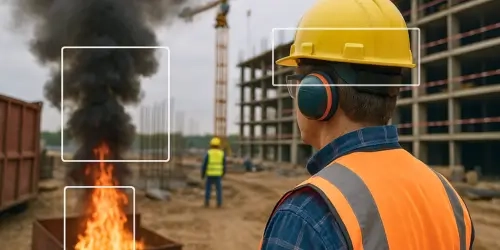
Improved worker safety: Modern technology on construction sites prevents incidents before they happen. AI-powered systems identify missing PPE and flag dangerously high dust emissions with near-pinpoint accuracy, enabling corrective action during hazardous tasks long before workers are hurt.
-
Enhanced accountability: Safety compliance systems create a continuous trail of project data throughout all construction phases. Real-time monitoring shows who did what, when and how it happened, providing a level of accountability traditional methods can't match.
-
Regulatory compliance documentation: By timestamping every on-site incident, digital tools compile audit-ready reports automatically that satisfy HSE, CDM, ESG and GDPR requirements. With the click of a button, cloud-based platforms generate reports up to 5X faster than [legacy systems], keeping complex construction projects compliant from day one.
-
Improved operational efficiency: Automation cuts admin time and supports faster decision-making. Instead of waiting days for manual reports, smarter solutions handle the job in a fraction of the time. Teams freed from manual processes gain significant hours each month, which can be better used elsewhere.
-
Alignment with Net Zero goals: Under the International Sustainability Standards Board (ISSB) framework, all construction environments must track and report Scope 1, 2 and 3 carbon emissions for ESG purposes. Smart construction technology handles this automatically.
-
Competitive edge: Integrated monitoring and unified dashboards improve transparency and tender success rates, particularly in government construction contracts where automated documentation is now expected.
Read more: The True Cost of Manual Reporting in Construction
7 Construction Technology Solutions Transforming Compliance
These are the construction technology solutions transforming the sector and helping IT stay ahead of rising compliance expectations:
1. Rapid Deployment surveillance
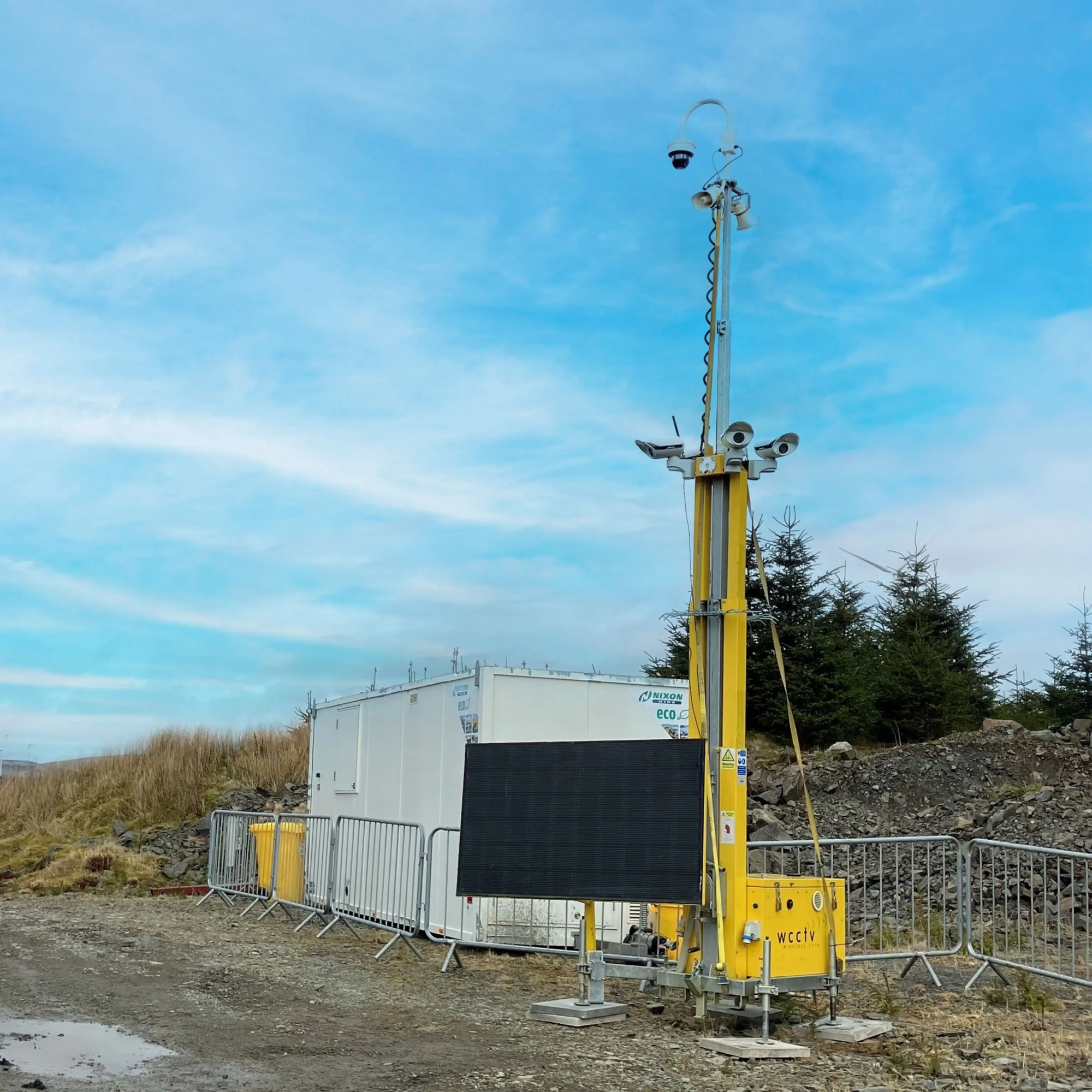
Rapid Deployment CCTV Towers and Temporary CCTV systems provide complete oversight without fixed infrastructure, with basic models running within 20-minutes. Using advanced PTZ (Pan-Tilt-Zoom) cameras and standing up to 6 metres tall with near-360° visibility, CCTV systems monitor construction sites both day and night while timestamping every incident.
Benefits
-
Ongoing monitoring: Continuous site recordings create reliable, timestamped evidence for HSE inspections and insurance claims.
-
Fast setup: Redeployable systems can be moved as site priorities change, avoiding infrastructure delays that leave compliance gaps.
-
Remote access: Secure cloud connectivity over 4G/5G networks lets authorised teams view site data from anywhere, eliminating the need for on-site visits during audits.
Read more: Improving Construction Site Health and Safety with CCTV
2. Artificial intelligence (AI) and machine learning
AI-video analytics analyses video feeds in real-time, quickly spotting PPE violations and unsafe behaviours that could harm skilled workers. As machine learning improves over time, detection becomes more accurate and false alarms are reduced, helping construction projects stay on track while enhancing safety across every working area.
Benefits
-
Automated PPE detection: AI-backed tools identify missing personal protective equipment in high-risk zones far more efficiently than sporadic spot checks.
-
Early risk identification: Smart analytical insights recognise patterns in near-miss incidents before serious injuries occur, supporting HSE workforce safety standards.
-
Reduced workloads: Automated reporting removes the need for manual checks, freeing teams to focus on higher-value safety tasks.
Read more: How Artificial Intelligence is Revolutionising CCTV Tower Monitoring
3. IoT-based sensors
IoT environmental sensors on construction sites monitor air quality (fine particulate matter, VOCs, CO₂), noise levels (30-130 dB) and weather conditions (temperature, rainfall, wind speed) in real-time.
Site managers use these live metrics to make better decisions in hazardous conditions. For instance, if wind speeds exceed safe thresholds, crane operations can be paused to ensure the safety of construction workers. Smart IoT devices also store up to 180,000 timestamped records securely for trend analysis and compliance reporting.
Benefits
-
CDM 2015 evidence: Environmental sensors generate timestamped records that demonstrate due diligence with CDM regulations.
-
Threshold alerts: Instant alerts are triggered when site conditions approach regulatory limits, enabling corrective action before breaches occur.
-
ESG reporting: IoT sensors instantly compile environmental data, supporting Net Zero commitments and ESG reporting under ISSB frameworks.
Read more: The Role of Environmental Monitoring in Meeting CDM 2015 Requirements
4. Remote monitoring
Remote monitoring via NSI Gold Accredited monitoring centres delivers expert oversight without the need for on-site personnel. When a safety or security threat is detected, trained operators review live video feeds in real-time and, where required, deploy mobile keyholding and alarm response teams to investigate.
Benefits
-
Continuous monitoring: 24/7 professional monitoring provides real-time data that regulators, insurers and clients expect.
-
Robust document management: All safety and security incidents (including near-misses) are supported by detailed, timestamped incident logs for insurance and compliance reporting.
-
Lower running costs: Remote monitoring can cost up to 88% less than manned guards while providing wider coverage with superior compliance capabilities.
Read more: Rethinking Construction Compliance Through Smart Monitoring Systems
5. Smart detection systems
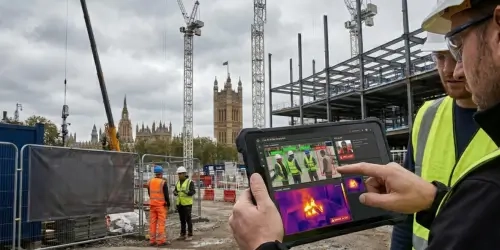
Smart detection systems combine PPE monitoring, smoke/fire detection and intrusion alerts into one secure platform. These software-based tools help construction teams reduce risk, respond faster to issues and improve safety, while automatically timestamping every incident to stay compliant.
Benefits
- Multi-hazard monitoring: A single platform tracks PPE usage, fire risks and security threats the moment something looks off, supported by monitoring logs that meet regulatory requirements.
- Rapid response: Instant alerts allow teams to act immediately, such as pausing work when fire risks arise or correcting PPE breaches before inspections.
- Easy compliance: Every alert is logged with corresponding video footage and timestamps that simplify HSE investigations and audits.
Read more: AI-Powered Risk Detection: Smoke, Fire and PPE Compliance in Construction
6. Intelligent integrations
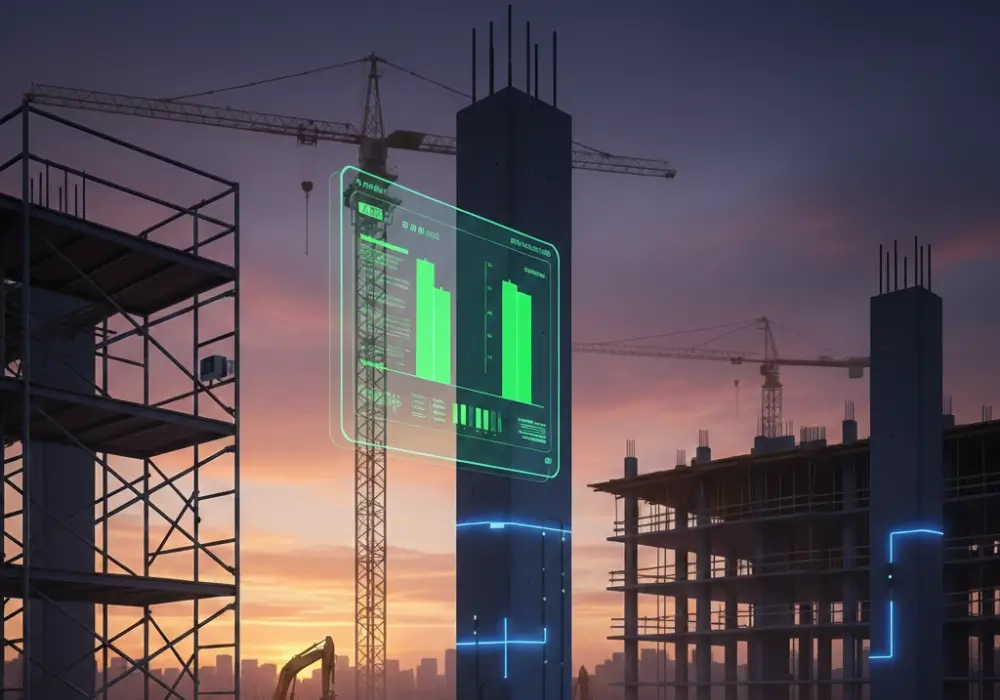
Smart add-on integrations connect CCTV surveillance with environmental sensors and ANPR access controls. All data feeds into one secure dashboard that displays safety protocols and compliance in a single view.
A fully-managed system automatically syncs information across platforms, giving site managers and stakeholders a "birds-eye view" of on-site activity, with precise audit trails built in as standard.
Benefits
-
Centralised compliance records: Integrated systems consolidate all site data (security, monitoring, smart detection) and create complete incident records for every incident.
-
Access control accountability: Automatic Number Plate Recognition (ANPR) creates clear audit trails with verified timestamps and photo/video evidence of all vehicle movements.
-
No-fuss audit preparation: With all compliance data in one place, compliance reports can be generated in minutes instead of days.
Read more: The Benefits of Automatic Number Plate Recognition (ANPR)
ANPR Pic
7. Cloud consolidation
Cloud-based platforms, like Stellifii, bring together site security, site monitoring, project management and compliance reporting into a single dashboard. End-to-end AES256 encryption and secure cloud infrastructure provide remote access and secure data storage that aligns with GDPR.
Benefits
- One data hub: A single, unified dashboard provides instant visibility across all construction projects, eliminating scattered data silos that can create compliance gaps.
- Tech-enabled compliance reporting: With the click of a button, compliance reports are generated up to 5X faster than legacy systems.
- Scalable infrastructure: Cloud solutions seamlessly scale as operations grow, without the complexity of traditional setups.
Read more: Unifying Security and Site Monitoring: The New Standard for UK Contractors
The Stellifii Advantage
Stellifii supports construction managers, compliance teams and IT leaders by automating PPE, worker safety, air quality and fire safety reporting while flagging issues as they emerge.
For IT managers, in particular, system health checks, site footage and compliance data can be reviewed remotely. Built with NDAA-compliant components and AES256-encryption, Stellifii helps construction firms reduce cyber risks while maintaining full visibility across every site, giving teams:
-
Full oversight during working hours: Live video, system health checks, air quality, weather and noise levels are all accessible through a single, secure dashboard.
-
Faster decisions: One secure login provides access to clear dashboards and searchable timelines that support data-driven decision-making.
-
Remote control: Mobile access allows for off-site management across all construction projects, while automated configuration removes the need for complex IT installation.
What this means in practice
-
Cloud-based accessibility from any device, no physical presence required.
-
IoT integration automatically shares site data through one platform.
-
5G-ready infrastructure supports real-time video streaming and instant notifications.
-
Secure, end-to-end AES256 encryption and NDAA-compliant components protect sensitive data.
-
AI-detection identifies PPE violations, fire risks and security threats with near-pinpoint accuracy.
-
Live system diagnostics recognise potential failures before they create compliance gaps.
Ensure Construction Compliance the Smart Way
Manual processes can't keep pace with the complex compliance requirements now demanded by CDM, HSE, GDPR and ESG. This is why regulators, insurers and clients across the UK construction industry already expect tech-enabled compliance.
By incorporating smart detection systems, [IoT devices] and cloud platforms into everyday construction workflows, IT teams can meet regulatory obligations automatically without adding manual effort and headcount, not to mention audit-day stress.
With 6 regional hubs and over 2 decades of construction compliance expertise, our tech-enabled solutions take the pressure off when auditors arrive unannounced.
Don't let compliance gaps slow down your next project. Speak with our experts to see how integrated monitoring platforms can help you stay compliant as expectations continue to rise.