Construction margins are tight, and in today's market, every inefficiency has a serious impact. Yet, many construction firms in the UK are unknowingly losing thousands each year to a hidden culprit: legacy systems.
These outdated platforms (old software, manual processes, disconnected databases) might still "get the job done", but they're quietly draining resources through slow workflows and escalating maintenance costs. In fact, around 85% of construction leaders admit outdated technology is holding their organisation back.
In this guide, we'll explore why legacy systems create more problems than they solve, how these costs impact construction projects and which modern systems are making a real difference in the UK's construction sector.
4 Problems with Legacy Systems in Modern Construction
Relying on legacy systems means relying on outdated infrastructure, often with unsupported updates and weak access controls. These gaps leave construction firms exposed to cybersecurity risks and compliance failures under UK data regulations.
Since legacy platforms typically store data in isolated silos, even simple updates can turn into major hold-ups. When project data is scattered across spreadsheets and manual reports, on-site teams lose valuable hours reconciling conflicting project information, which leads to delays, security risks and cost overruns.
Below, we take a closer look at the 4 hidden costs of legacy systems:
1. Cost impact
-
Budget drains: Maintaining legacy systems is costly, with many construction businesses spending around 60-80% of their IT budget to keep existing legacy applications running. Supporting outdated systems also requires specialised knowledge that's increasingly hard to find. For instance, when the one person who understands your legacy CCTV platform leaves, you end up paying consultants (at a higher price) to keep it running.
-
Lost labour hours: When legacy software can't share data automatically, your team spends hours transferring compliance data from monitoring systems into spreadsheets and HSE reports at the end of each shift. Spending 10-15 hours per week on manual processes equates to roughly 520-780 hours annually per site, time that could be used for higher priority tasks.
-
Rework costs: Site managers record incidents in one platform, while health and safety teams track the same incident in another. Someone must reconcile the records manually when discrepancies arise, but this results in duplicated effort and redoing work that should've only been done once, wasting time and money.
-
Missed tenders due to inefficient processes: More and more clients expect real-time project management and automated compliance reporting. When your legacy systems can't keep pace, you may lose tenders to competitors using more modern solutions.
Read more: The True Cost of Manual Reporting in Construction
2. Project delays
Legacy systems often fail at the most inconvenient times. On-site CCTV servers crash in the middle of critical site activity and environmental sensors go offline because a software update was missed. Access control systems stop working and force teams to fall back on manual workarounds that slow down contractors and disrupt deliveries.
Unannounced HSE inspections make things even harder. If your monitoring platform can't produce the right documentation quickly, investigations halt projects. When site teams scramble to find compliance reports in archive files and email threads, project timelines are further delayed while inspectors wait.
Legacy system maintenance adds another "delay layer". Keeping outdated systems running often means planned system downtime lasting hours or days. During that time, teams lose visibility across sites and risk missing crucial compliance checks, creating delays that ripple through the entire project.
Read more: 7 Causes of Project Delays in Construction
3. Security and compliance risks
Outdated systems create serious cybersecurity risks. In the past year alone, 40% of construction companies have experienced a cyberattack, with small construction firms losing over £115 million annually as a result.
These risks compound on construction projects, where multiple vendors are often used for CCTV, environmental monitoring and compliance reporting. Each system comes with its own security protocols, or lack thereof. One platform may enforce strong passwords, while the other still runs on unchanged default credentials. Encryption standards that were considered secure 10 years ago are now dangerously easy to breach.
For construction IT managers, these security vulnerabilities are a constant concern. When a cyberattack occurs because legacy CCTV systems lack proper security, justifying sensitive data breaches becomes harder to explain to clients and stakeholders, especially when outdated systems should have been replaced years ago.
Beyond cybersecurity, legacy systems also create compliance gaps. UK construction operates under strict regulatory frameworks that require continuous monitoring of site conditions (air quality, noise, weather) for ESG reporting, as well as adherence to safety standards under CDM 2015 and HSE regulations. GDPR also applies in terms of storing sensitive data when CCTV surveillance is in place.
In a nutshell, legacy systems can no longer provide the level of oversight these regulations demand.
Read more:
4. Scalability roadblocks
Legacy systems are built around fixed, on-site infrastructure that makes expansion slow and expensive. They're also poorly equipped to work with modern solutions such as BIM platforms, cloud-based tools and mobile apps.
This becomes a point of concern when your construction firm takes on new work.
Take a large, multi-site contract that requires monitoring across multiple locations as an example. If you're stuck with your current system, you're forced to roll out the same outdated technology across new projects. Instead of supporting business growth plans, the old technology simply repeats the same operational inefficiencies across every site.
Fixed vendor contracts make scalability even harder. Many legacy vendors cap the number of sites or devices you can cover, meaning expansion often triggers renegotiations and extra fees.
Why Hidden Legacy Costs Impact Modern Construction
Let's take a closer look at why these hidden costs impact the UK's construction sector:
-
Razor-thin margins: Construction already operates on tight budgets, where small inefficiencies quickly add up. Legacy systems push up operational costs (maintenance, unplanned downtime, etc.) that quietly eat into your bottom line. Money spent maintaining legacy systems is money not invested in modern platforms, workforce productivity or winning new work.
-
Compliance and safety stakes: Regulatory penalties for non-compliance can cost hundreds of thousands of pounds, with ICO violations reaching up to £17.5 million for data breaches. One missed HSE compliance check or a delayed incident report can cost more than modernising your entire technology estate.
-
Security and asset protection: Theft and vandalism cost the UK construction sector around £800 million each year. Legacy CCTV systems, often limited to "record only" functionality and lacking AES256-encryption or remote monitoring, leave sites exposed to both cyberattacks and security risks.
-
Remote and temporary settings: Construction projects are constantly evolving, with teams working remotely across multiple and often temporary locations. Older systems (designed for fixed office environments) struggle to keep pace with modern sites that call for remote oversight across all locations from a single, NDAA-compliant, cloud-based dashboard.
Why Modern Tools are Replacing Legacy Systems in Construction
Here, we highlight the smart systems replacing legacy setups in construction and explore how this modern software supports today’s construction projects.
Modern systems
-
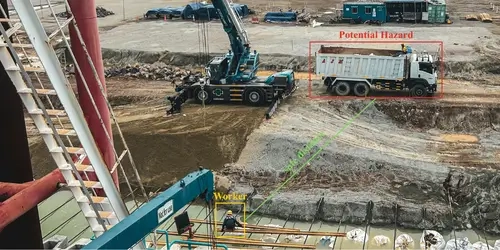
AI-video analytics identify missing PPE, safety hazards and security incidents in real-time. Using machine learning and artificial intelligence (AI), they distinguish genuine threats from false alarms with near-pinpoint accuracy, long before legacy technology even reacts.
-
Remote monitoring through cloud platforms gives site teams 24/7 "eyes in the sky" across all building sites, offering much better visibility compared to basic "record only" systems. When connected to NSI Gold Accredited monitoring centres, alerts are instantly sent to Mobile Keyholding teams to investigate, even during out-of-office hours.
-
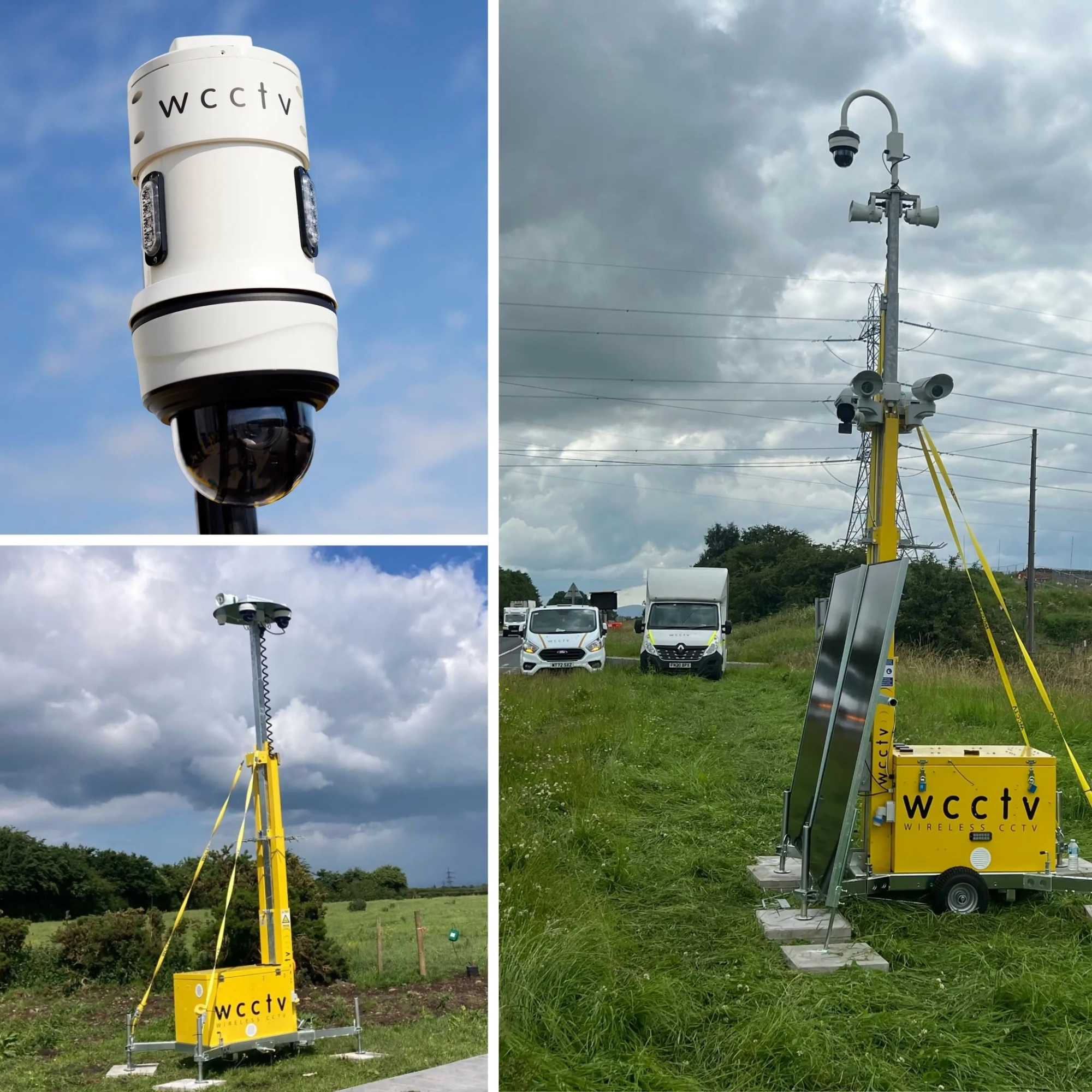
Advanced surveillance systems, such as Rapid Deployment CCTV Towers and Redeployable Cameras, use advanced PTZ (Pan-Tilt-Zoom) technology and cloud solutions to monitor sites in real-time. They operate autonomously and can be set up in as little as 20-minutes, providing immediate protection from day one - without the delays and system limitations of legacy systems.
-
Cloud-based systems like Stellfii consolidate all site data into a single dashboard: surveillance, environmental monitoring, smart detection alerts and compliance reports. IT and project teams access everything through a single login, eliminating data silos, reducing cyber risks and lowering the costs associated with multiple vendors.
-
IoT environmental sensors monitor air quality (particulate matter, CO₂, VOCs), noise (30-130 dB) and weather (temperature, wind speed, humidity, rainfall, etc.) in real-time. Rather than businesses relying on outdated technology for these metrics, smart IoT sensors capture this information and generate timestamped reports automatically.
-
Smart integrations connect CCTV surveillance with environmental sensors, access control systems and smart detection systems for PPE monitoring, smoke/fire and intruder detection. By sharing data automatically across all functions, teams eliminate fragmented data silos and gain comprehensive oversight without the stress and manual effort that come with legacy systems.
Read more:
Benefits
-
Lower operational costs: Modern cloud-based software updates automatically without system downtime or physical call-outs. Around 90% of maintenance issues can be resolved remotely, while flexible monitoring rentals can cut managed service provider costs by up to 88%. In addition, adopting smarter, integrated tools may also help lower your insurance premiums.
-
Improve operational efficiency: Automated data sharing eliminates manual work by up to 37%. Compliance documentation, through cloud-based platforms, generates audit-ready reports at the click of a button. Supporting quicker decision-making, real-time dashboards provide 24/7 visibility across all working zones from any device.
-
Enhanced security and compliance: Advanced CCTV Tower surveillance provides 24/7 protection both day and night. End-to-end AES256 encryption protects sensitive project data with secure data handling as standard and generates timestamped incident logs up to 5X faster than legacy systems for compliance purposes.
-
Scalability and ROI impact: Modern software scales easily as your operations grow. You get robust security measures without complex installation and support for modern integrations such as ANPR, Time Lapse Video and Smart Detection Systems at a fraction of the cost of traditional monitoring.
Read more:
-
The ROI of Consolidating Site Monitoring Into a Unified Platform
-
Unifying Security and Site Monitoring: The New Standard for UK Contractors
Making the Switch to Modern Solutions in 5 Easy Steps
If you want to replace outdated software with modern, cloud-based solutions, here are 5 quick steps you can take today:
-
Identify outdated technology: Start by auditing your current systems. Which platforms rely on specialist knowledge to maintain? Which tools can't support cloud migration? Where do manual processes create bottlenecks? Record the hidden costs (lost productivity, security vulnerabilities, high maintenance costs) to help guide your phased migration approach.
-
Choose modern tools: Prioritise monitoring partners who understand the UK construction market. Look for fully-managed cloud-based systems that meet security and compliance requirements (HSE, CDM, ESG, GDPR).
-
Get team involvement early: Get project managers, health and safety officers and IT leads on board from the start. Early buy-in helps reduce friction and ensures the digital transformation supports how teams actually work on-site.
-
Look for unified platforms: Instead of upgrading legacy CCTV, access controls and environmental monitoring systems separately through different vendors, deploy integrated platforms that handle all 3. This eliminates vendor sprawl while reducing overall operational expenses.
-
Track ROI: Look beyond immediate cost savings and focus on what actually moves the needle: fewer project delays, time saved through automation, reduced rework/duplication and compliance reporting that's up to 5X faster than traditional methods.
Read more: Choosing a Monitoring Partner That Understands UK Construction
Modernise Construction Projects The Smart Way
Legacy systems hold your construction business back through hidden costs that accumulate quietly until they become impossible to ignore. High maintenance costs, security risks and compliance gaps are only getting harder to maintain the longer you hang onto older systems.
But modern systems change all that. Smart integrations prevent incidents, automate compliance and reduce operational inefficiencies, positioning IT as a strategic advantage rather than a cost centre maintaining outdated infrastructure.
With over 20-years wireless monitoring expertise, we provide advanced platforms specifically designed for UK construction. Our modern solutions consolidate surveillance and compliance reporting into a single, unified dashboard that replaces legacy fragmentation while maintaining business continuity.
Don't let legacy systems hold your next project back. Contact our team to discuss how our scalable and secure solutions can modernise your workflows today.