reportingEvery year, around 5,000 UK construction workers develop new or longstanding breathing and lung problems. This rate is significantly higher than across all other industries. Roughly 500 die annually from silica dust exposure alone, and another 4,000 lose their lives to work-related respiratory disease such as Chronic Obstructive Pulmonary Disease (COPD).
These aren't sudden accidents. They're gradual incidents caused by years of invisible and prolonged exposure to air pollutants that have gone unmonitored and uncontrolled.
And dust is only part of the problem. High CO₂ levels and poor ventilation in indoor spaces can impair cognitive function, reduce productivity and increase fatigue.
For health and safety managers, monitoring air quality is a legal obligation under the Health and Safety Executive (HSE) and Control of Substances Hazardous to Health Regulations (COSHH).
This article breaks down how construction workers are exposed to airborne hazards, what HSE regulators expect and how improving worker health through air quality monitoring provides defensible evidence during inspections.
How Construction Workers are Exposed to Airborne Risks
Air pollution is generated at almost every stage of construction, from demolition and excavation through to finishing and fit-out. Many of these risk factors are invisible, even if it seems there's fresh air, and symptoms may only show years after exposure.
Few people realise that diesel engine exhaust (DEE) fumes are officially classed as a Group 1 carcinogen by the International Agency for Research on Cancer, the same category as asbestos and tobacco smoke. Yet in many developed nations, exposure levels go unmeasured.
For a better understanding, here's what construction workers face:
| Airborne hazard | Activity | Health impact |
| Respirable Crystalline Silica (RCS) | Cutting, grinding, drilling (concrete/stone) |
|
| Wood dust | Woodwork, sanding, sawing |
|
| Carbon dioxide (CO₂) | Work in enclosed spaces with poor ventilation |
|
| Fine particulate matter (PM1, PM2.5, PM10) | Demolition, earthworks, material handling |
|
| Welding fumes | Metal fabrication, steelworks |
|
| Carbon monoxide (CO) | Use of heavy machinery (bulldozers, excavators, diesel generators), welding, demolition |
|
| Volatile Organic Compounds (VOCs) | Painting, adhesives, sealants |
|
| Asbestos | Refurbishment of older buildings |
|
| Mould spores | Damp building environments, water-damaged areas and working with poor ventilation systems (e.g., mouldy HVAC systems) |
|
| Diesel exhaust fumes | Heavy plant use, diesel-powered machinery |
|
Poor workplace air quality management has a significant effect on human health. Construction workers exposed to persistent chemical pollutants may not feel or experience adverse health effects until many years later. However, by the time breathing issues appear, the damage is already done.
These HSE statistics reinforce the scale of the issue:
-
Around 5,000 construction workers suffer new or longstanding breathing or lung problems annually.
-
An estimated 500 workers die each year from silica dust exposure.
-
Roughly 4,000 construction workers die from lung-related diseases such as COPD.
Read more: The Modern HSE Playbook for UK Safety Leaders
HSE Expectations for Construction Air Quality Monitoring
The Health and Safety Executive (HSE) expects contractors and safety managers to actively monitor occupational risks and keep a detailed record of incidents and corrective actions as standard.
For air quality compliance purposes, this means:
-
Conducting regular risk assessments to identify airborne hazards across all project phases.
-
Complying with Workplace Exposure Limits (WELs) as defined in EH40/2005.
-
Controlling air pollution so far as it's "reasonably practicable" to reduce exposure to workers.
-
Implementing robust control measures in high-risk construction areas (e.g., demolition).
-
Ensuring adequate ventilation and dust suppression (e.g., wet tactics) methods.
-
Providing personal protection equipment (PPE) where risks cannot be sufficiently controlled.
-
Maintaining detailed records that demonstrate due diligence during audits and environmental investigations (up to 40 years from silica dust exposure).
Air quality regulations for the UK's construction industry
| HSE regulation | Purpose | Compliance requirements |
| Control of Substances Hazardous to Health Regulations (COSHH) | Protect workers from exposure to hazardous/toxic substances |
|
| Workplace Exposure Limits (WELs) EH40/2005 | Set maximum permissible exposure levels |
|
| Health and Safety at Work Act (HASAWA) 1974 | General duty of care to employees |
|
| Personal Protective Equipment at Work Regulations (PPER) 1992 | Ensure appropriate PPE provision |
|
| Air Quality Standards Regulations (AQSR) 2010Applicable to England | Set legal limit values and monitoring requirements for outdoor pollutants to protect human health |
|
| Environmental Protection Act 1990 | Controls air pollution, dust emissions, waste and environmental impact during construction |
|
| Clean Air Act 1993 | Controls dark smoke and dust on building or demolition sites. Section 14 applies to chimney heights |
|
| Environment Act 2021 (Section 2) | Sets the PM2.5 air quality target |
|
ESG and Net Zero obligations
Apart from workers' health, construction companies must monitor and report greenhouse gas emissions (GHGs) for ESG (Environmental, Social and Governance) purposes to ensure the sector aligns with broader Net Zero targets. This has become a central part of safety compliance leaders’ responsibilities across the industry.
Scope 1, 2 and 3 commercial emissions, including dust, CO₂ and vehicle fumes from construction activities, are now increasingly scrutinised by stakeholders and clients.
Recording both outdoor and indoor air quality across all project phases demonstrates environmental responsibility and supports tender bids where sustainability and ESG credentials matter.
Read more:
Risk of non-compliance
-
Unlimited health and safety fines/penalties
-
Enforcement action
-
Site shutdowns and project delays
-
Possible jail time for gross negligence
-
Public liability claims
-
Worker compensation claims
-
Reputational damage
-
Lost tender bids
Read more: 7 Compliance Pitfalls Costing Construction Firm Millions
How Air Quality Monitoring Sensors Help Tackle Construction Worker Health Risks
Smart monitoring sensors help reduce health risks by converting invisible site hazards into actionable insights. Instead of waiting for a foreman's weekly report or depending on periodic spot checks, safety managers get continuous readings that support early intervention and defensible COSHH compliance.
Real-time alerts
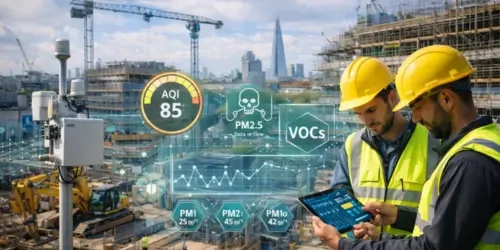
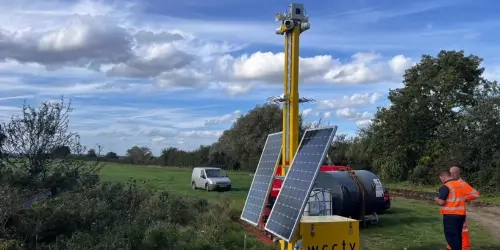
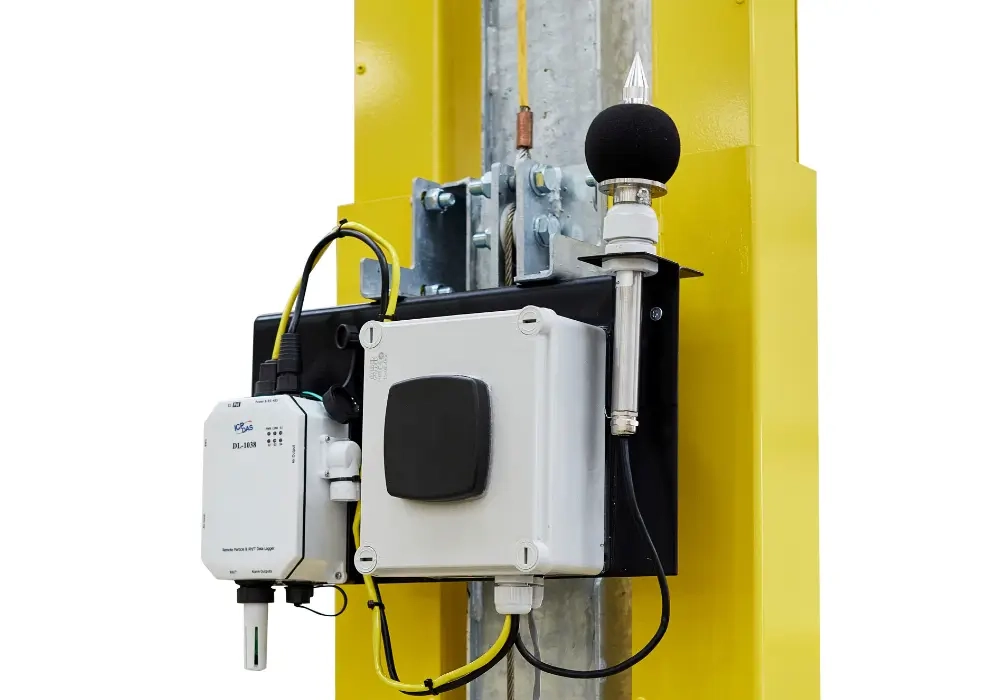
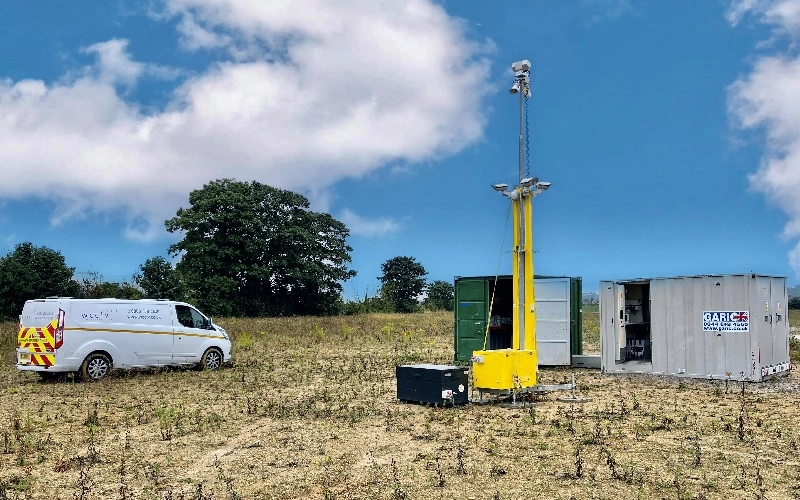
As add-on features to our CCTV Towers and Temporary CCTV solutions, smart Air Quality Monitoring sensors continuously collect data on airborne pollutants both day and night:
-
Fine particulate matter (PM1, PM2.5, PM10) from dust, diesel fumes and demolition work.
-
Carbon dioxide (CO₂) levels in enclosed or semi-enclosed working areas.
-
Carbon monoxide (CO) readings during excavation activities and heavy machinery usage.
-
TVOCs (Total Volatile Organic Compounds) from paints, sealants and adhesives.
-
Temperature and humidity levels, environmental factors that affect how pollutants disperse.
Using AI analytics, IoT tech, machine learning and sophisticated software, systems instantly notify site managers when atmospheric conditions approach your predefined thresholds. This allows them to act quickly to correct the problem before the levels endanger workers.
Read more:
Automated compliance
Smart air sensors capture thousands of hourly data points, storing up to 180,000 timestamped records for trend analysis and compliance reporting. For complete visibility, safety managers can integrate additional environmental monitoring solutions, such as noise and weather monitoring sensors, into a single platform for real-time oversight across all site conditions.
Weather plays a big role in how air pollutants spread across building sites. Strong winds can carry dust and diesel emissions toward working areas, while high humidity levels can accelerate mould growth and increase respiratory risks. Without ongoing monitoring, these invisible threats can quickly undermine even the best control measures.
With every reading automatically logged and timestamped through Stellifii (our cloud-based platform), site teams have digital trails that support COSHH industry standards from day one. If HSE inspectors request air quality readings from 3 months ago, accurate documentation can be retrieved in just a few clicks to prove good air quality on-site.
By merging surveillance, smart detection, environmental monitoring and reporting into a unified cloud platform, safety managers can generate audit-ready reports up to 5X faster than manual methods. In a nutshell, smart air monitoring doesn't just support compliance; it strengthens defensibility.
Read more:
-
The ROI of Consolidating Site Monitoring Into a Unified Platform
-
Rethinking Construction Compliance Through Smart Monitoring Systems
PPE detection for respiratory protection
Air quality controls are integral in construction. However, they must be reinforced by consistent personal protective equipment (PPE) use, particularly during high-exposure activities such as cutting, grinding, welding and demolition. These activities are where airborne contaminant levels can exceed safe thresholds with little warning.
Our Smart PPE Detection Systems automatically verify whether construction workers are wearing the correct PPE in risky zones. Using AI-powered visual detection, they flag infringements in real-time, alerting supervisors when respiratory protection (gas masks, dust masks, air-purifying respirators, and other equipment) is missing.
Beyond PPE enforcement, smart detection systems can also identify the earliest signs of smoke/fire hazards. By recognising abnormal patterns or visible heat signatures, they provide early warnings that help mitigate the release of toxic fumes, protecting both workers and site assets.
By unifying continuous air quality monitoring with automated PPE verification, construction sites move from reactive safety management to total control. The result? Reduced risk to workers by ensuring good air quality, stronger alignment with regulatory obligations and a clear, audit-ready record of accountability across the workforce.
Read more: AI-Powered Risk Detection: Smoke, Fire and PPE Compliance in Construction
4 Benefits of Smart Air Quality Monitoring on Construction Sites
Let's take a closer look at the advantages of monitoring air quality in construction:
-
Worker health protection: Continuous monitoring catches airborne risks before they harm workers. Instant alerts enable immediate intervention/corrective action, such as adjusting ventilation, rotating site teams or pausing work until conditions improve.
-
COSHH compliance: Automated incident logging provides the documented audit trail regulators expect. Timestamped records show monitoring was deployed, thresholds were tracked and action was taken to reduce risk.
-
Defensible evidence: When HSE inspectors ask for air readings, construction safety managers can generate reports with a few clicks. Through Stellifii, both current and historical data can be retrieved, showing exactly what was measured (PM2.5, CO₂, dust, etc.), when and what actions followed.
-
ESG and tender success: Recorded air measurements support ESG reporting and demonstrate environmental responsibility. For construction firms bidding on contracts where sustainability matters, this concrete evidence helps support submissions.
Read more:
Deploying Air Quality Monitoring on Modern Construction Sites
If you're thinking of deploying smart monitoring systems on your next construction project, follow these steps:
-
Identify high-risk activities: Outline which building activities (drilling, demolition, excavation, welding, etc.) generate airborne hazards.
-
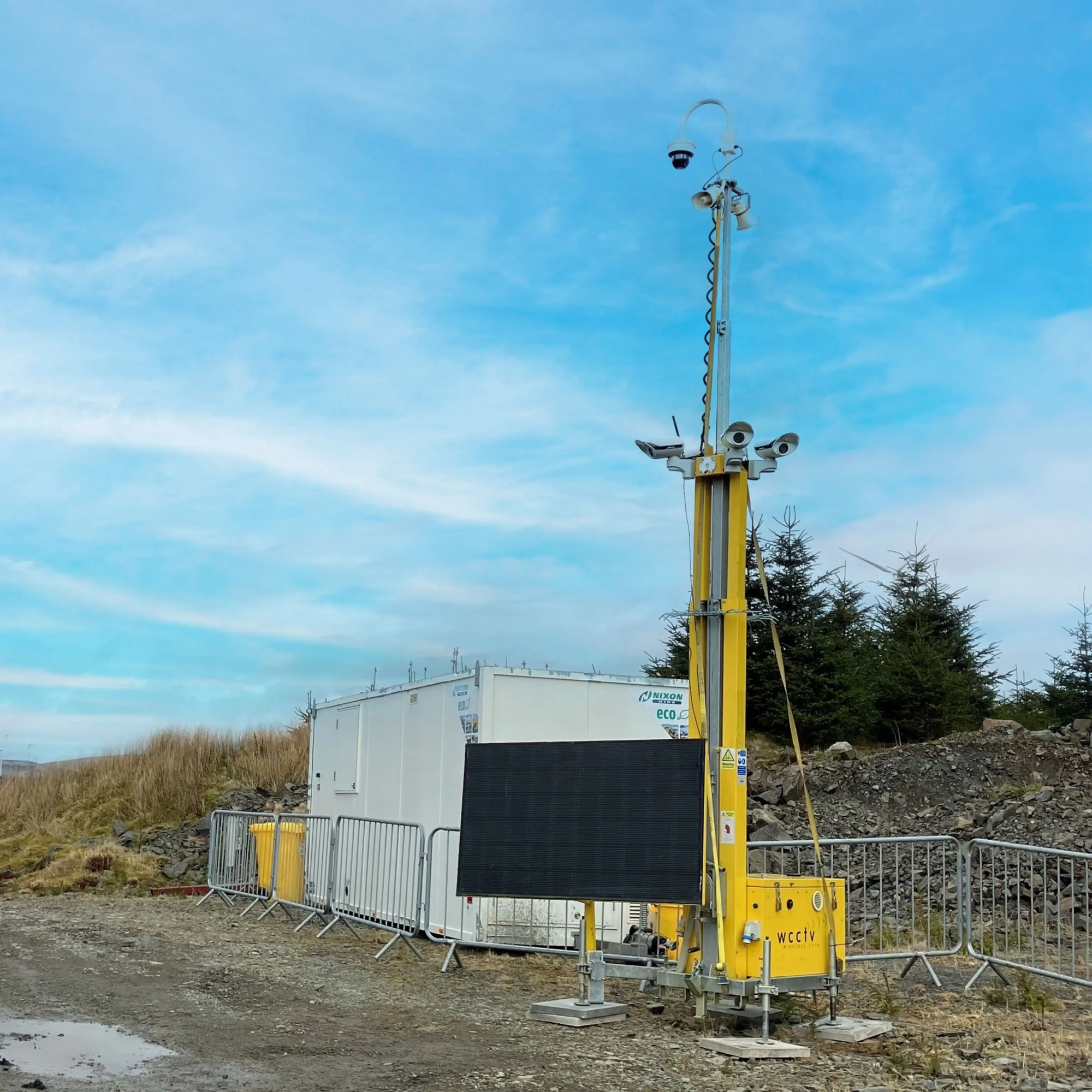
Choose smart sensors: Choose sophisticated air monitoring sensors from reliable UK monitoring providers, like WCCTV, that constantly measure pollutants in real-time (particulate matter, CO₂, CO, SO₂, humidity, etc.).
-
Position strategically: Place sensors in high-exposure zones, near workers and at site boundaries where dust may affect neighbours/nearby communities.
-
Integrate with existing systems: Connect air quality sensors to Rapid Deployment CCTV Towers and smart integration tools, such as environmental monitoring solutions (noise, weather) for complete oversight.
-
Set thresholds: Configure air pollution notifications below WELs industry limits to ensure early intervention.
-
Train staff: Site teams must understand the risks of poor air quality, how response procedures work and how to access real-time site data remotely.
Read more: Choosing a Monitoring Partner That Understands UK Construction
Monitor Air Quality the Smart Way
Poor air quality is one of the most mismanaged risks in construction. Unlike visible safety hazards, airborne contaminants such as silica dust and high CO₂ levels often cause damage over time, with symptoms that don't appear until years after repeated exposure.
While dust and chemical pollutants are an inevitable by-product of construction activities, unmanaged exposure is not. Safety managers have a legal duty under COSHH and HSE regulations to identify and control these risks before they escalate into long-term health issues.
Smart air quality monitoring forms a critical pillar of modern site safety. Ongoing, real-time data enables quick corrective action, reduces exposure and provides defensible evidence during inspections. Instead of relying on legacy systems or manual spot checks, site teams gain complete oversight of airborne risk at every project phase.
With 6 regional hubs and over 20-years of wireless site monitoring expertise, we provide fully-managed, cloud-based monitoring solutions that help UK construction sites protect workers' health from day one.
Don't let poor air quality affect your next project. Monitor pollutant levels the smart way; the WCCTV way.