Construction sites are unpredictable. Workers move between tasks, subcontractors come and go and conditions change by the hour. Meanwhile, safety managers are expected to keep an eye on everything at once, which is physically impossible.
That's the reality in modern construction. Safety officers are responsible for dozens or even hundreds of workers across multiple sites, but you only have so many hours in a day. Traditional safety management that relies on periodic spot checks and reactive reporting is inefficient because by the time an incident is logged, the damage is most often already done.
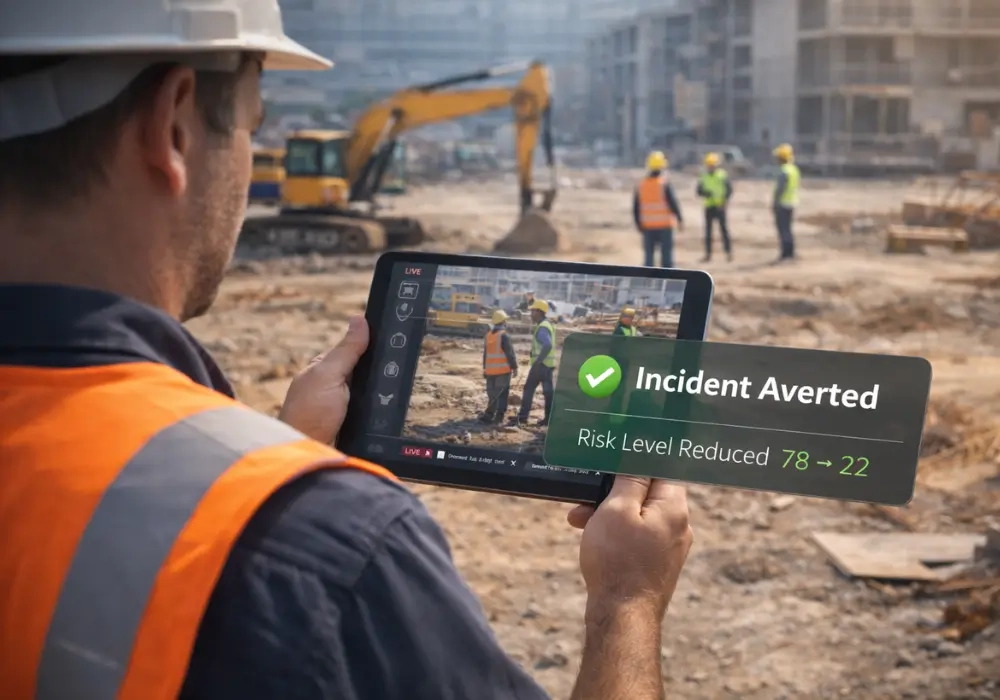
Real-time monitoring changes that. Instead of finding out what went wrong after the fact, you see what's happening in real-time, right now, which allows you to quickly intervene before small hazards become serious incidents.
If you've ever wondered how to reduce construction site incident rates through real-time monitoring, this article covers everything you need to know
.
Why UK Construction Sites Face Rising Incidents
In Great Britain, fatal accidents are 4.8X more likely to occur in construction compared to the all-industry average. In 2024/25, 35 workers lost their lives on-site, a figure higher than in any other sector.
But fatalities are just the tip of the iceberg. Here's what sits beneath:
-
79,000 workers suffered from work-related ill health between 2022 and 2025
-
Falls from heights accounted for 53% of site fatalities in 2024/25
-
50,000 workers sustained non-fatal injuries (2022-2025), with slips and falls accounting for 25%
-
Roughly 5,000 workers have a work-related breathing or lung problem
-
3,726 non-fatal injuries were reported under RIDDOR in 2024/25
-
UK construction loses around 2.2 million working days due to ill health and work-related injuries
And these figures only capture what gets reported. Near-misses, minor injuries and "close calls" often go unrecorded, creating blind spots that lead to bigger problems down the line. On top of this, most incidents happen when no one's actively watching the situation. Between inspections and outside working hours, manual oversight simply isn't enough for accident prevention.
How Real-Time Monitoring Cuts Site Incident Rates
With the evolution of Health and Safety Executive (HSE) laws, site safety protocols are now expected to be preventive, rather than reactive.
Traditional safety monitoring waits for something to go wrong. Live monitoring catches potential hazards before they escalate. It's the difference between investigating an incident and preventing one. In fact, in 2025, some construction companies reported incident reductions of 40-50% when AI-powered continuous monitoring systems were in place.
This new technology exists; the question is whether you're using it to your advantage.
Rapid Deployment surveillance
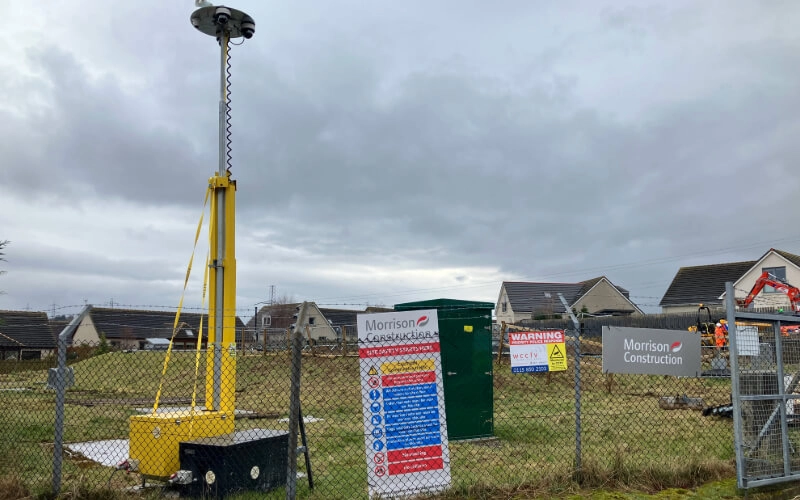
Rapid Deployment CCTV Towers and Temporary CCTV solutions provide 24/7 surveillance across entire construction sites. Standing up to 6 metres tall with near-360° PTZ (Pan-Tilt-Zoom) cameras, they cover areas that fixed installations can't reach. Redeployable CCTV Cameras strengthen site security, extend visibility into hard-to-access areas and can be quickly relocated as project phases change.
Unlike static security systems, smart monitoring solutions use computer vision technology to track construction worker movements, detect objects and identify potential hazards in real-time, rather than simply recording fixed areas like basic CCTV.
In a nutshell, advanced CCTV cameras go wherever the risk is.
Read more: Improving Construction Site Health and Safety with CCTV
Real-time alerts
Site surveillance means nothing without action, and this is where professional remote CCTV monitoring services come in.
Connected to NSI Gold Accredited monitoring centres, trained professionals review live site footage the moment a camera is triggered on-site (e.g., an intruder, a fire, or a PPE violation). From here, they initiate various responses such as live audio voice-down challenges, dispatch mobile keyholding teams or contact emergency services where needed, to deter the incident.
Site managers also receive real-time alerts for every safety incident.
Read more: How Smart Monitoring Systems Enhance Construction Site Safety
AI-video analytics and smart detection
This is where monitoring gets smarter. Powered by artificial intelligence (AI), advanced surveillance and smart detection systems use machine learning to analyse site activity continuously. They distinguish real threats from false alarms while timestamping every incident for safety inspections and compliance purposes.
The best part? They don't get tired, distracted or take breaks; they provide 24/7 analytical insights for your peace of mind.
This is what AI-powered detection systems can do:
-
PPE detection: Flags construction workers entering high-risk zones without the required personal protective equipment (PPE), like hard hats, safety goggles or other safety equipment, and sends instant alerts.
-
Intrusion detection: Differentiates between a person scaling a perimeter fence and harmless movement from wildlife or weather. Near-pinpoint accuracy means fewer false callouts and improved site safety.
-
Smoke and fire detection: Identifies the earliest sign of fire hazards (thin smoke trails, flickering light, heat signatures, etc.) the moment they appear, triggering a quick response before a small fire becomes a blaze.
Read more: AI-Powered Risk Detection: Smoke, Fire and PPE Compliance in Construction
IoT devices
Poor air quality, excessive noise and weather extremes also pose significant incident risks, even though they're invisible to the naked eye. To minimise accidents and protect workers, many construction firms are turning to add-on Internet of Things (IoT) technology to monitor these risk factors:
Environmental monitoring solutions
Store up to 180,000 timestamped logs for trend analysis, ESG documentation and compliance reporting. They track live:
-
Air quality (particulate matter, CO₂, CO, TVOC, etc.)
-
Noise levels (30-130 dB)
-
Weather conditions (temperature, wind speed, humidity, rainfall)
With this site data on hand, safety officers and construction managers are better equipped to make more informed decisions regarding the health, safety and welfare of workers. For instance, if wind speeds exceed safe thresholds, managers can postpone crane operations to ensure worker safety.
Read more: The Role of Environmental Monitoring in Meeting CDM 2015 Requirements
Smart access control
Under CDM 2015 and HASAWA 1974, principal contractors must prevent unauthorised entry to construction sites. Integrating Automatic Number Plate Recognition (ANPR) with CCTV surveillance is a way to do this and improve construction site safety all in one. ANPR logs every vehicle entering/exiting your site, creating a digital record without the need for manned security.
This way, safety teams know exactly who was on-site, what time they arrived and when they left. This is also beneficial for police investigations and internal audits.
Read more: How Integrated CCTV and ANPR Keep UK Sites Secure and Compliant
Wearable technology
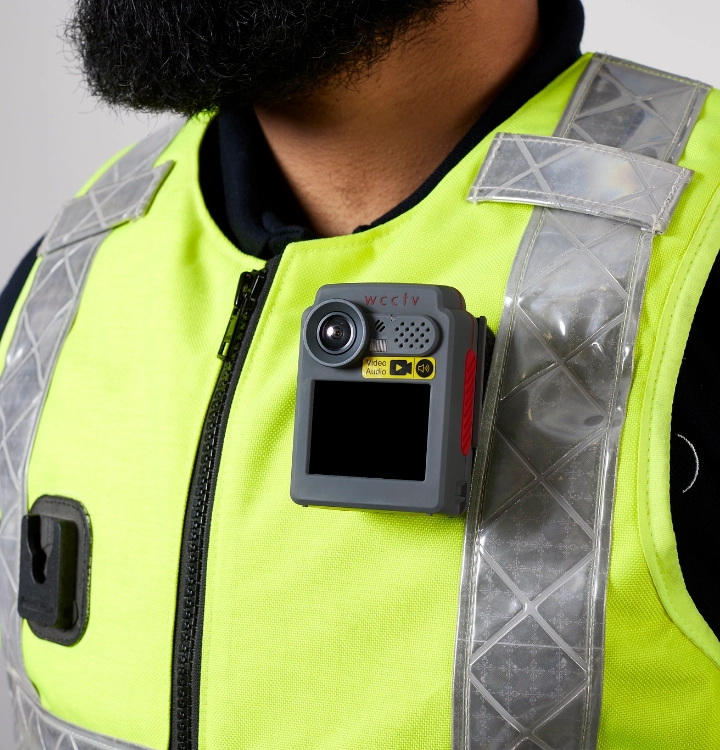
Implementing wearable technology, such as Body Cameras, into your safety strategy adds another layer of "in the moment" visibility. These front-facing cameras capture public-worker interactions and near-miss safety risks from a worker's perspective, so that when disputes arise or investigations begin, you've got first-hand proof to support your position.
Cloud-based dashboards
Real-time data insights are only helpful if you can access them. Cloud-based platforms, like Stellifii, consolidate all site activity (surveillance, environmental data, ANPR logs, smart detection alerts) into a single, AES256-encrypted dashboard.
Integrated software generates audit-ready reports up to 5X faster than legacy methods, making compliance reporting that much easier. When HSE inspectors arrive unannounced, health and safety officers have concrete evidence of continuous monitoring on hand in just a few clicks.
Read more: How Cloud-Based Tools Are Changing Construction Admin
6 Benefits of Real-Time Monitoring for Construction Projects
Smart monitoring with real-time alerts isn't just about catching incidents. It has set a new standard for those in construction environments and has completely changed how site safety is managed across entire operations.
Below are just 6 advantages real-time monitoring provides to the construction sector:
-
Fewer incidents: Continuous oversight catches potential dangers in high-risk environments before they escalate. This leads to fewer injuries, theft attempts, trespasses and violations of safety protocols on-site.
-
Less operational disruption: Every site incident triggers investigations, paperwork, project delays and potential shutdowns. Preventing incidents through live monitoring naturally means better operational efficiency.
-
Better ROI: Lower insurance premiums, fewer compensation claims and less time spent on manual processes compound over time, saving construction companies money.
-
Stronger safety performance: Real-time data shows what's actually happening, not what last week's inspection captured. Taking a smarter approach to accident prevention allows you to spot trends and address problems promptly.
-
Strengthens reputation: Major contractors increasingly demand evidence of proactive safety management, especially when it comes to tender bids. Integrated, live monitoring proves you're serious about worker safety and improves your chances of winning bids.
-
Easy compliance: With HSE now expecting more and more documented records and evidence-backed safety monitoring, smart systems timestamp every event and generate reports in a fraction of the time compared to legacy methods.
Read more:
- How Smart Site Monitoring Protects Margins in Construction
- Why Integrated Monitoring Wins More Construction Tenders
- The ROI of Consolidating Site Monitoring Into a Unified Platform
Why WCCTV is the Trusted Provider for Real-Time Monitoring in UK Construction
Here's a quick overview of how our UK-based smart monitoring systems compare to traditional approaches:
| Feature | WCCTV smart monitoring systems | Traditional monitoring systems |
| Visibility | 24/7, near-360° coverage across all working zones | Periodic inspections that create security gaps and blind spots. |
| Response time | Instant, real-time alerts with rapid response | Delayed response times due to basic surveillance limitations |
| False alarms | AI-powered threat detection reduces false alarm rates | Higher false alarms waste response time |
| Installation | Rapid Deployment solutions can be set up within 20 minutes (basic systems); Redeployable Cameras can be repositioned as projects progress | Permanent infrastructure requires extensive trenching and cabling; fixed installations only monitor static zones |
| Compliance | Cloud dashboards are accessible in minutes, from any device | Paper-heavy processes create hours of manual work |
| Cost | Single provider for surveillance, detection and site monitoring, up to 88% cheaper than traditional methods | Multiple vendors stretch budgets |
View our online brochures and datasheets for more information.
Remote Monitoring: 5 Step Deployment Strategy
Implementing live site monitoring doesn't have to be complicated. Here's the typical deployment process:
-
Site assessment: We survey your site to identify coverage requirements, high-risk environments and connectivity options.
-
System design: Your project teams set up custom configurations based on the project scope, timeline and specific hazards.
-
Rapid Deployment: Our local engineers install CCTV Towers and add-on IoT sensors within hours, not days.
-
Monitoring activation: We connect your monitoring systems to NSI Gold Accredited centres for live surveillance and response.
-
Dashboard setup: Teams access Stellifii for real-time visibility and reporting.
With over 2 decades of wireless monitoring expertise, we provide fully-managed solutions to UK construction companies of any size.
Reduce Incident Rates with WCCTV Today
Site incidents may not be entirely preventable, but with the right systems in place, you can drastically reduce how often they occur.
Smart, live monitoring helps health and safety teams identify potential hazards before they cause harm, respond faster when issues arise and document everything regulators expect.
Don't let accidents hold up your next construction project; reach out to our monitoring experts today.