Construction companies can invest in the best safety technology on the market, but if their frontline workers don't use it, it's worthless.
That's the reality many health and safety officers face in the UK's construction industry. Innovative solutions are installed, dashboards go live and then...nothing.
With 35 fatalities and over 50,000 non-fatal workplace injuries reported in Great Britain between 2022 and 2025, the need for smart safety tools couldn't be more urgent. But how do you encourage your team to actually use them without them feeling like you're micromanaging their every move?
This article breaks down why smart safety technology faces resistance and how HSE leaders can engage construction workers with smart tools from day one.
Why Construction Safety Technology May Face Resistance from Workers
Before you can solve the engagement problem, it's important to understand the root causes of resistance:
Fear of job displacement: Workers may worry that smart cameras, sensors and automation will eventually replace their jobs. "If a machine can spot PPE violations, why would they need me?" It's a valid concern, and one that needs addressing head-on.
Resistance to change: Construction has traditionally relied on hands-on processes, with minimal IT involvement. Many experienced workers have spent years doing things a certain way, so new tools may now feel disruptive, or workers might feel like their expertise is being questioned.
Complexity and disruption: If digital tools and procedures slow work down, workers are less likely to use them. Clunky apps, confusing interfaces and complex safety training create friction that construction workers prefer to avoid.
Micromanagement: CCTV cameras and monitoring systems can feel like personal surveillance rather than safety. Without clear communication about why monitoring is in place, workers may assume management is "watching their every move" and invading their privacy.
Why the Construction Industry is Shifting to Smart Safety Tools
Construction is inherently dangerous, where hazards can escalate with little warning. Traditional monitoring methods like sporadic spot checks and paper-heavy processes can no longer keep pace with the scale and speed of today's construction sites.
And the statistics speak for themselves:
- Nearly 80,000 workers suffered work-related ill health between 2022 and 2025
- The sector has a 4.8X higher fatality rate compared to the all-industry average
- 2.2 million working days are lost annually to workplace injuries and illnesses
- Trips, slips and falls are the most common causes of non-fatal injuries
- Falls from heights account for over 50% of fatal injuries
- 35 workers died on UK construction sites in 2024/25
As Health and Safety Executive (HSE) regulations tighten, construction companies are now expected to take a more proactive approach to risk management. That's why more and more firms are turning to smart safety tools as the obvious next step.
By providing continuous oversight and data-driven insights, smart tools are replacing reactive responses with proactive control while simultaneously improving worker safety. In fact, sites with continuous monitoring can reduce accidents by 20-50% compared to those without.
Despite resistance, the shift is happening. The question isn't whether to adopt smarter safety tech, it's how to do it in a way that engages workers rather than pushing them away.
Related article: The Rise of Smart Safety Systems in UK Construction
6 Ways to Engage Frontline Workers with Smart Technological Advancements
Major contractors already have a future outlook on construction site safety and are making significant strides to ensure worker safety on-site by using smart safety systems.
Here's how construction health safety managers can engage frontline workers with smart technology:
Tip #1: Explain the "why"
Construction workers need to know why safety monitoring tools exist in the first place.
Health and safety managers must explain that tools are there to protect workers, not to micromanage them or collect personal information. Discuss how systems monitor construction sites for potential hazards such as fire risks, PPE violations and/or environmental spikes, not to watch workers' every move.
Be clear on what's being monitored, who sees the data and how it's used within the business. When a camera flags missing personal protective equipment (PPE), it's not about "catching someone out". It's about preventing an injury before it happens and ensuring better safety outcomes should HSE inspectors arrive unannounced.
Transparency builds trust, and trust is the foundation of engagement.
Read more: How HSE Regulations Are Evolving to Advance Construction Site Safety
Tip #2: Involve workers early
Resistance often stems from feeling excluded or caught off guard by new technology without prior warning. When new technology just appears, construction professionals may assume it's been imposed on them, not designed with genuine site safety in mind.
You can change that by bringing frontline workers into the conversation before rollout. Ask what frustrates them about current safety protocols, what slows operations down, and what feels like box-ticking exercises. Since workers are the ones physically doing the work, they have first-hand experience of what actually works (and what doesn't) on-site, so it makes sense to include them in this process.
Construction site safety improves tenfold when workers feel heard and understood, as they're far more likely to support new solutions.
Read more: The Link Between Mental Health and Site Safety: What HSE Leaders Need to Know
Tip #3: Provide tailored safety training
Technology only works if people know how to use it. In construction, this means making safety training a top priority.
Train staff based on real site conditions, not generic scenarios that don't reflect daily realities. Show workers how smart systems operate, how alerts are sent and how to respond when issues arise. Cover the basics too: how to use PPE gear correctly, what triggers a PPE violation and how environmental hazards (e.g., heat stress, blizzards, heavy rain) can impact their safety and health while working.
And remember, training shouldn't be a one-off. Regular refreshers keep safety at the forefront and ensure new employees get up to speed quickly.
Tip #4: Build a strong safety culture
Behind every site incident is a health and safety manager who ultimately carries the responsibility. But no amount of safety protocols and systems can make site safety a one-person job; it has to be embedded in the culture.
Smart tools don't replace culture, but they do support it. The goal is to create an environment where every worker learns to spot potential safety hazards themselves, not wait for someone else to notice or report them.
Encourage supervisors to track vital signs and adhere to safety standards, especially during high-risk tasks. When workers take ownership of workplace safety, they stay vigilant even when no one's watching.
Read more: How to Create a Strong Safety Culture at Your Construction Site
Tip #5: Choose tools that fit workflows
The best tech runs in the background and becomes part of day-to-day operations rather than an interruption.
If a tool slows workers down, they won't use it. If it requires extra steps or has a complicated interface, they'll avoid it. A smart safety system that workers actually use is the one they barely notice: automated PPE detection, passive risk assessments and instant alerts that don't require anything "extra" unless something is wrong.
The solution to engage workers? Keep it simple. Multiple vendors with 5+ separate logins quickly create confusion for construction teams, particularly on busy sites. Integrated systems, on the other hand, where surveillance, site monitoring and access control are consolidated into a single dashboard, streamline workflows and give teams clear data visibility without adding complexity.
Read more: Managing Vendor Sprawl in Construction: Why Consolidated Monitoring Matters
Tip #6: Celebrate small wins
Recognition goes a long way in the construction sector. When workers engage with new safety innovations, acknowledge them.
Highlight the positives: near-misses caught on camera, environmental spikes flagged before they became dangerous or intruder alerts reported through new systems.
When teams see the key benefits of construction technology and how they prevent accidents and protects workers, trust builds and resistance falls to the wayside.
Celebrate teams who actively use dashboards, report hazards and lean into new ways of working. When workers see their peers benefiting, adoption quickly spreads.
The Innovative Technologies Supporting Construction Workers (Not Slowing Them Down)
Here are a few key technologies UK construction firms are already using to support their teams on-site, without disrupting the way they work:
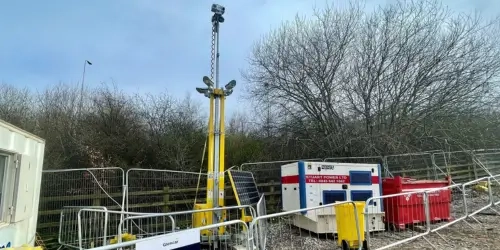
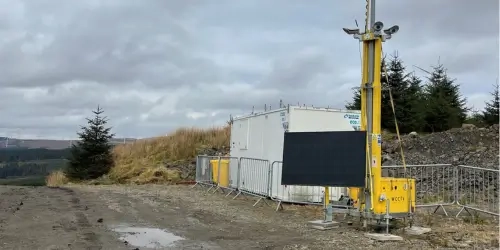
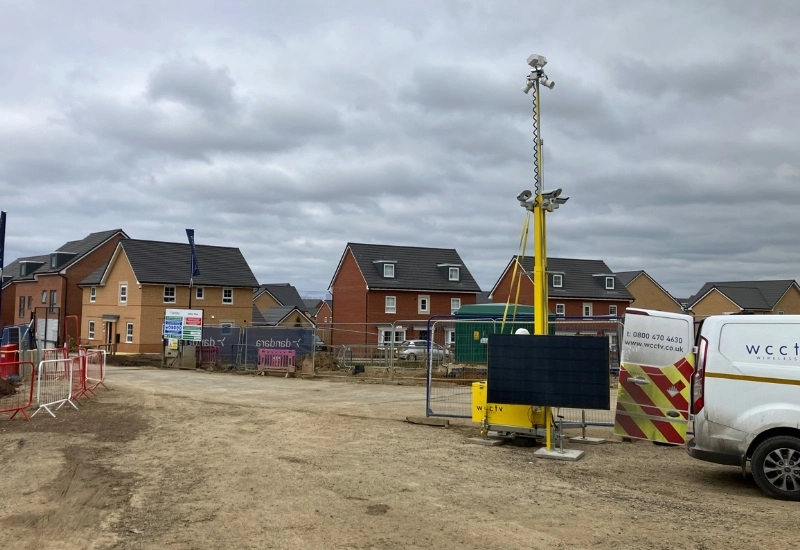
Rapid Deployment surveillance: Smart CCTV Towers and Temporary CCTV solutions with near-360° PTZ cameras provide 24/7 coverage across large complex sites. Operating quietly in the background, they capture site activity automatically without manual input or the need for on-site presence. With in-built hazard detection, these smart machines flag risks early, enabling teams to step in quickly and prevent workplace accidents from escalating into serious incidents.
Remote monitoring: Live monitoring from NSI Gold Accredited monitoring centres adds an extra layer of safety oversight. When threats are detected, trained personnel review site feeds in real-time and take appropriate actions, such as issuing audio voice-down challenges, dispatching mobile keyholding teams or escalating for emergency response. This immediate response operates behind the scenes without adding extra workload for your site teams.
Artificial intelligence (AI): AI-powered safety systems equipped with machine learning "teach" cameras to distinguish genuine threats (perimeter breaches, fire hazard, PPE violations, etc.) from harmless activity. By filtering false alarms, they reduce unnecessary interruptions and only alert workers when something's wrong.
IoT technology: IoT devices collect and transmit data via secure 4G/5G networks, removing the need for manual checks or constant oversight. They reduce tool sprawl and keep everything connected, allowing workers to carry on with their day. Sensors automatically track environmental conditions in real-time, such as air quality, noise levels and weather, flagging risks without human input.
Wearable devices: Body Cameras help reduce incidents of verbal and physical abuse towards public-facing workers while providing clear video evidence of near-misses, danger zones and on-site accidents. Smart helmets have embedded sensors to detect hazardous environments such as gas leaks, excessive noise and heat stress. When risks are identified, workers receive immediate audio or visual alerts, helping them act quickly without disrupting their tasks.
Smart detection systems: Powered by artificial intelligence and advanced software, these systems quickly identify PPE violations, intrusions/unauthorised access and smoke/fire hazards as they arise. Their purpose is simple: to improve safety on-site, not collect personal data or monitor workers unnecessarily. When threats are detected, site teams are notified instantly, allowing them to implement preventive measures before the issues escalate.
Advanced access control: Automatic Number Plate Recognition (ANPR) technology records every vehicle entering and exiting the site in real-time. Automating the log-in process removes the need for manual sign-ins, reducing delays at the gate and keeping traffic moving smoothly.
Cloud-based platforms: Cloud platforms, like Stellifii, give safety and site managers access to all site data from any device. By consolidating surveillance, environmental readings and ANPR logs into a single, secure dashboard, they cut paperwork and free teams to focus on higher-priority tasks. With audit-ready reports generated at the click of a button (up to 5X quicker than legacy systems), Stellifii significantly reduces audit pressure and stress.
Read more:
-
How Smart Monitoring Systems Enhance Construction Site Safety
-
AI-Powered Risk Detection: Smoke, Fire and PPE Compliance in Construction
6 Benefits of Smart Safety Tools in Construction
Getting workers on board with new technology is easier when the benefits are clear.
Here's what smart safety tools deliver for frontline workers:
Fewer injuries: Continuous monitoring catches hazards before they cause harm. AI-powered detection flags PPE violations, fire risks and unsafe environmental conditions in real-time.
Less admin burden: Automated data capture removes the need to chase paperwork after hours. With audit-ready reports generated in just a few clicks, meeting compliance requirements becomes far simpler and less time-consuming.
Faster incident response: Real-time alerts enable immediate action. Remote monitoring services can dispatch mobile keyholding teams within minutes.
Improved compliance: Stellifii consolidates surveillance, ANPR and environmental logs into audit-ready dashboards. When HSE inspectors arrive, documentation is ready in minutes, not days.
Better working conditions: Environmental sensors track air quality, noise levels and weather, protecting workers from invisible risks and demonstrating contractors' duty of care.
Stronger safety culture: When staff see that management invests in worker well-being and safety, trust naturally grows. Engaged workers report hazards, follow safety protocols and look out for each other, with or without the use of smart technology.
Read more: Unifying Security and Site Monitoring: The New Standard for UK Contractors
Engage Your Workforce the Smart Way
Smart safety tools only deliver results when workers actually use them. And workers only engage when technology supports them rather than slows them down.
By clearly communicating why safety monitoring tools are being used, choosing systems that fit workflows and highlighting the positives, your construction workforce will soon realise that smart tech works for them, not against them.
With over 20-years wireless monitoring expertise, we provide fully-managed safety solutions designed for hassle-free adoption. With automated detection, easy-to-use dashboards and minimal disruption to site operations, we help construction firms secure buy-in from the frontline from day one.