For highways managers responsible for temporary traffic schemes or roadwork projects, clear communication is crucial to maintaining traffic management transparency. Road closures, delays and maintenance projects can quickly become a focus on social media, attracting concern and criticism from residents and councillors.
A stretched budget is no excuse for failing to manage public expectations and concerns; the reality is that leaders today are often expected to do more with less. Expensive, large-scale technology and fixed monitoring platforms are not feasible or practical investments for many local authorities. Flexible, easily installed CCTV surveillance has become the solution for many.
The simplicity and affordability of these smart setups help traffic teams gain visibility into high-priority locations without relying on physical patrols or surplus budget. With stronger insights and control, it's easier for managers to convince stakeholders that roadworks and traffic projects are properly planned and professionally delivered.
In this article, we’ll cover how to use road project visibility to earn public trust and build a culture of openness that delivers value for every pound spent.
How Closer Project Monitoring and Data-Backed Evidence Improve Transparency
Continuous tracking of key network activities together with essential data collection helps leaders demonstrate that they're managing roadwork projects effectively, making the best decisions to keep the essential service running smoothly.
Below, we discuss how complete project visibility and evidence-based reporting support clear, confident communications with residents, road users and councillors during high-priority projects.
Full project oversight
Project monitoring utilising modern CCTV systems provides remote visibility of site activity. By accessing the monitoring platform, you can view work zone activities and conditions on your phone or laptop. This helps to spot problems, allowing your team to take action where possible to minimise disruptions.
When overseeing roadworks, you can verify the contractor's performance against agreed standards without continuous site visits, making accountability easier to manage.
A cost-effective smart monitoring platform brings all stakeholders onto the same page. Clear CCTV footage (live and recorded) provides solid visual evidence of events on the ground for everyone to see.
Your team has shared visibility across all monitored locations, and stakeholders (from contractors to councillors) receive consistent information. A unified view strengthens transparency and makes collaboration and communication more effective. This is critical in a landscape where 200 organisations can legally excavate roads, and 81% of local authorities say poor coordination between entities is a major problem.
Evidence-backed reporting
Evidence-based oversight enables leaders to support reports with clear visual records, whether that’s live footage or captured data. This approach helps show project progress and traffic management deliverables with factual, objective updates. By doing so, you build credibility and reassure councillors that decisions are validated by reliable information.
Keeping contractors accountable is a constant challenge, and surveillance-backed evidence makes it easier. For example, you can verify that vehicle access restrictions and safety measures are implemented correctly. Visual proof that workers are not wearing mandatory PPE allows you to quickly address and resolve the issue without getting into a dispute.
By using before-and-after comparisons, you can show your community how interventions have improved safety and traffic flow. Visuals backed by data make it easier to explain why such measures were implemented and offer insights that help your department assess future schemes.
Deployable CCTV: A Cost-Effective Alternative to Permanent Infrastructure
Smart, mobile CCTV surveillance has become a viable and trusted solution for local authorities wanting network visibility and evidence capture.
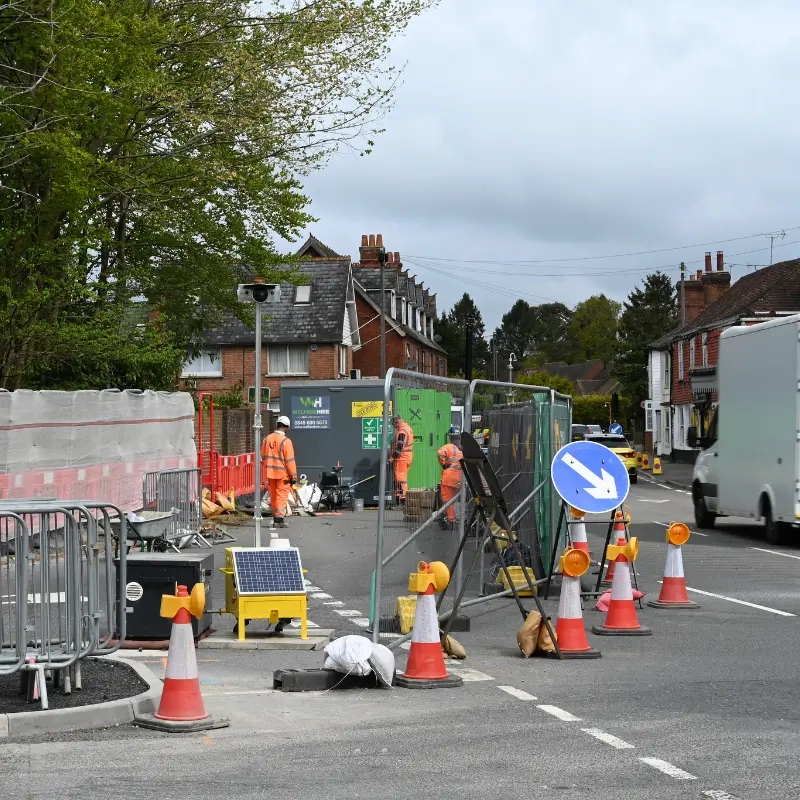
Infrastructure works, temporary traffic schemes, security response and emergency road closures demand flexible monitoring setups. Easily deployable CCTV Towers offer comprehensive visibility without costly, fixed installations. These versatile systems let you set up coverage where it’s needed, when it’s needed, without delays.
Key features of rapid deployment CCTV systems
Designed for temporary and flexible operational needs, mobile CCTV setups feature:
-
High-definition, infrared PTZ (Pan-Tilt-Zoom) cameras to provide the detail and coverage required to manage complex sites day and night.
-
Solar-powered operation (with battery backup), so there's no need for mains electricity.
-
4G/5G connectivity delivers reliable communication without depending on internet coverage.
-
Remote platform access allows you to check in and view alerts, video footage and incident reports from anywhere on your phone or laptop.
-
Rapid installation (20 minutes for basic setups) means you can implement monitoring quickly, without disrupting ongoing work.
Because these systems operate without mains power, fixed broadband and permanent infrastructure, they can be deployed flexibly wherever visibility is needed, from temporary worksites to major infrastructure projects, emergency diversions, remote rural routes and maintenance in busy areas.
Read more:
Maximising existing budgets through flexible deployment
As a traffic or highways manager, you invariably need to stretch a limited budget and allocate resources for maximum efficiency and return. Flexible CCTV meets this requirement perfectly, offering extensive coverage (including safety, security, environmental monitoring and fire detection) for a reasonable spend.
Mobile CCTV systems can be rented, removing the upfront expenditure of fixed infrastructure. Renting means you only pay for monitoring when and where you need it. Equipment can be easily moved between projects, avoiding the expense of duplicating assets and sinking funds into permanent structures that aren't required once the project is over.
Eliminating fixed infrastructure cost frees resources for other priorities, while the ability to monitor multiple locations throughout the year ensures value from each setup. Flexible deployment options also let you bring surveillance to remote rural areas and challenging terrains that otherwise would have no visibility or security.
Tailored flexibility makes deployable CCTV a smart, affordable choice for modern traffic and project oversight. As an indication of cost savings, some companies using CCTV towers for site security report up to 88% savings on their security bill.
Cost-Effective Smart Traffic Solutions for Complete Project Oversight
We offer a range of versatile, affordable monitoring systems that help road management teams proactively oversee temporary projects and worksites from a dedicated, cloud platform.
Here is an overview of our NDAA-compliant security, safety and Environmental Monitoring solutions that deliver advanced project oversight, remotely from any connected device.
|
Product |
What it does |
Support and benefits for roadworks and traffic projects |
|
CCTV Towers and Traffic Management Systems |
Mobile CCTV Towers with HD PTZ cameras or portable Mini Towers with solar/battery power provide near-instant 24/7 surveillance of designated locations. |
Rapidly installed surveillance in various terrains (including rugged and off-grid) reduces the need for physical patrols. Easy repositioned cameras mean you always have eyes on priority sites. High-quality CCTV enhances safety oversight in challenging traffic and work zones, while highly visible (up to 6 metres) towers act to deter theft and vandalism. |
|
CCTV with AI-video analytics detects unauthorised site access, and NSI Gold Accredited remote operators verify threats and respond decisively, warning off the majority of intruders. An optional Mobile Keyholding Response service adds an extra layer of protection. |
Protects assets and restricted areas from unauthorised entry, ensures real-time intervention and strengthens site security. Spares contractors the stress of handling a security call. |
|
|
Add-on ANPR uses AI-imaging to track vehicle movements in designated areas and flags unsafe and unauthorised vehicles. |
Improves access control and traffic flow and helps keep sites secure and compliant. Supports investigations and safety/security reviews. |
|
|
AI-enabled CCTV systems spot and alert managers when people on site are not using the required PPE. The system can also issue a live audio alert to non-compliant workers. |
Improves compliance and enhances worker and public safety. |
|
|
Smart detection using AI analytics automatically generates early alerts to fire dangers. |
Enables rapid response to fire risks, protects people, assets, infrastructure, signs and equipment. |
|
|
Provides real-time wind, rainfall, humidity, dew and temperature data and warns when conditions become unsafe. |
Allows project managers to secure sites against weather impacts. Helps in planning safe working schedules around weather events validated by data insights. |
|
|
IoT-based sensors measure sound levels against set limits and automatically alert teams before breaches occur. |
Ensures compliance with noise ordinances; protects workers and the public from unsafe noise exposure. |
|
|
IoT sensors monitor dust, carbon monoxide, particulates, TVOCs and CO₂ and warn when exposure approaches set limits. |
Protects community and workers' health, reduces complaints about emissions and assists pollutant compliance management. |
|
|
Dedicated Cloud-Based Management Platform |
AI-enabled dashboards consolidate video feeds (from up to 81 cameras). Purpose-designed software lets you view environmental data, safety and security reporting and alerts remotely 24/7. |
Provides comprehensive oversight of project activities, safety, security and environmental tracking in a unified interface. Automated audit trails and reporting strengthen regulatory compliance, management coordination and accountability. |
Designed with operational simplicity in mind, solutions can be quickly and easily deployed and managed without large teams or reliance on the IT department. Integrating several solutions into a single platform allows for smart control of multiple risk areas, delivering cost and management efficiencies.
All our systems are available to rent, letting you match your needs precisely to a temporary solution for the period required.
Read more:
- How Artificial Intelligence is Revolutionising CCTV Tower Monitoring
- What are Environmental Monitoring Sensors?
- AI-Powered Risk Detection: Smoke, Fire and PPE Compliance
5 Ways Better Visibility Through CCTV Improves Public Trust
Stronger visibility into crucial network activities provides the intel you need to manage disruptions and communicate with affected communities. Accurate, current information helps you engage proactively, offering the transparency that residents and road users expect.
Let's look at 5 ways greater visibility strengthens public messaging and trust.
1. Faster responses to public concerns
When residents report vandalism, safety worries, environmental issues or traffic delays, live feeds let you investigate their concerns and check the situation against real data. With the full picture in front of you, you're better placed to reply with confidence and hard evidence instead of unverified reports.
Prompt, positive responses to roadworks and similar complaints show that issues are being taken seriously and help reduce public frustration.
2. Accurate updates on roadworks progress
Road users are more understanding of disruption when they can see that work is progressing as planned. Proactive jobsite oversight ensures you can provide timely and accurate updates on project milestones, delays and completion dates.
It's also a good idea for contractors and traffic planners to map out all temporary traffic management plans, construction zones and detours on public platforms. Keeping these resources updated can go a long way to managing expectations and reducing uncertainty and inconvenience. A Time Lapse Video can be an excellent way to showcase the project's progress and gain positive engagement at its successful completion.
3. Greater accountability across projects
Monitoring project operations creates a clear record of what is happening, when work is taking place and whether traffic management measures are being maintained correctly. This level of accountability helps reassure the public and council that projects are being managed effectively.
Remote monitoring also drives compliance and enforcement by proactively checking on PPE usage and site safety and security practices.
The same visibility also lets you track dust, airborne pollutants and noise control in compliance with HSE, Environment Agency and local authority standards. Weather tracking can produce precise evidence to justify climate-related delays or the need to reschedule work to minimise downtime.
4. Improved transparency around traffic management decisions
Whether implementing road closures, diversions, essential excavations or temporary congestion controls, traffic managers often have to justify their decisions. Visual evidence and objective data help to explain why certain measures were necessary and how they benefit network performance and safety.
While it may not always be possible, releasing the data models and cost-benefit analyses behind new traffic policies also helps foster community trust and buy-in. Residents can explore for themselves and gain a fuller appreciation of the value of your efforts to improve the service.
5. Evidence-based communication encourages confidence
An increasingly sceptical public is more likely to trust communications when they are supported by facts rather than assumptions. With access to live and recorded monitoring data, you can deliver consistent, factual updates on project conditions to all affected parties (residents, road users, council members, MPs, service providers, local businesses).
Transparency and reassurance build invaluable trust in both the project's proposed outcomes and your professional capabilities and commitment.
Gain Better Road Visibility and Strengthen Community Relations
Improving transparency in traffic management schemes requires transitioning from opaque, fragmented operations to open, accessible and data-driven networks.
A data-led approach ensures leaders always have the essential information they need to justify network operations, traffic control and road safety decisions. A smart platform integrating rapid-deployment CCTV provides the basis for collecting and organising this valuable intelligence.
Versatile CCTV solutions offer the visibility required to satisfy councillors' enquiries and show residents that their roads are in capable, professional hands. Improving accountability and safety around your essential projects doesn't have to break the budget. Affordable CCTV rental options mean you only pay for the oversight you need, where and when you need it.
With extensive experience in wireless monitoring, we provide cost-effective, fully-compliant CCTV systems that help local authorities deliver an essential network service, without the need for permanent infrastructure.
Contact our team for further details when you're ready.