Enforcement from the Health and Safety Executive (HSE) isn't easing off. If anything, the bar for what counts as "sufficient" air quality monitoring on UK construction sites keeps rising, and the gap between what regulations require and what manual processes realistically deliver is getting harder to ignore.
For construction compliance teams, workplace exposure monitoring is now an industry standard, but manual systems (like spreadsheets and physical spot checks) can't keep up or provide the level of oversight that today's inspections demand.
Under the Control of Substances Hazardous to Health (COSHH) Regulations, employers must assess, control and monitor exposure to hazardous airborne substances like dust and diesel fumes. All of this needs to be documented. When HSE inspectors ask how exposure limits were managed, they want detailed, evidence-backed data, not basic handwritten reports.
This article explains how air quality and COSHH regulations are linked, the real cost of poor monitoring and how automated environmental monitoring relieves compliance leaders from regulatory overload and personal liability exposure.
How Air Quality and COSHH Are Directly Linked
COSHH is one of the most enforced sets of regulations by the HSE, and it applies directly to airborne substances on construction sites. This includes demolition and excavation work, as well as work in confined spaces with poor ventilation.
Under Regulation 6 of the COSHH regulations, employers must carry out a "suitable and sufficient" risk assessment, implement proper control measures and provide suitable protective gear to workers who may be exposed to hazardous substances.
Where a Regulation 6 risk assessment indicates that Workplace Exposure Limits (WELs) may be at risk of being breached, Regulation 10 requires exposure monitoring to confirm they aren't. WELs, as set out in HSE EH40/2005, include legally binding thresholds for respirable dust, particulate matter and a wide range of other harmful substances generated during construction. Note that asbestos and lead exposure have separate occupational exposure guidelines.
Put plainly, this means a documented risk assessment isn't enough on its own. COSHH requires ongoing exposure monitoring, evidence of controlled exposure limits and records showing that workers' health has been prioritised from the start of a project to the very end.
Meeting these obligations is a big ask when relying on manual processes. One single slip in air monitoring can expose compliance officers to both health and legal liabilities, risks they (and the company) can't afford to take.
3 Hidden Costs of Airborne Risks on UK Construction Sites
As mentioned, airborne pollutants create both health and legal liabilities when not consistently monitored and documented. The health risks are long-term and irreversible, while the legal impact can include unlimited fines, civil claims and, in serious cases, prosecution.
Let's take a closer look:
1. Health risks
Cutting and grinding release Respirable Crystalline Silica (RCS) dust, fine particulates that penetrate deep in the lungs. This can cause occupational asthma, silicosis, lung cancer and Chronic Obstructive Pulmonary Disease (COPD). According to the HSE, more than 500 workers die from this type of occupational exposure every year.
Any work performed in confined spaces (e.g., demolition, basement work) creates environments where CO₂ accumulates, especially where ventilation is limited. Without real-time monitoring, dangerous concentrations can develop with little warning, and without records, there's no way to show exposure limits were tracked for COSHH compliance monitoring.
Heavy machinery and generators are major sources of toxic diesel exhaust fumes. The International Agency for Research on Cancer (IARC) has even classified this airborne contaminant as a Group 1 carcinogen, placing it in the same category as tobacco smoke and asbestos due to its proven human health risks.
Read more: Air Quality Monitoring: Tackling Dust, CO₂ and Worker Health Risks on Construction Sites
2. Productivity losses
Unmonitored workplace air quality leads to ill health, which in turn results in absenteeism. When employees don't pitch for work, productivity naturally declines.
On top of this, inadequate working practices and employee exposure can trigger investigations by the HSE. This pulls compliance officers away from higher-priority work. If the HSE issues a stop notice following an inspection, the resulting site shutdown doesn't just cost money; it costs credibility with clients and contractors alike.
Read more: Air Quality Monitoring: The Overlooked Cause of Project Delays
3. Regulatory and legal costs
Did you know you can be held equally liable if you can't demonstrate exposure monitoring records? This includes up to 40 years for silica dust exposure. Even if you monitor air quality and have the appropriate control measures in place, enforcement action may still follow if you are unable to provide detailed reports that the required steps were taken.
Non-compliance with COSHH is serious and carries unlimited fines in the most serious cases. Construction businesses may also face civil claims from worker exposure to hazardous substances, potential criminal prosecution for gross negligence and long-term reputational damage that may be difficult to fully repair.
For example, in 2022, Oriental Developments Ltd. was fined £15,000 by the Health and Safety Executive for Northern Ireland (HSENI) after failing to conduct risk assessments before workers began asbestos-related construction work.
Read more: 7 Compliance Pitfalls Costing Construction Firm Millions
Why Manual Air Quality Monitoring No Longer Works for Modern Construction
Manual monitoring was never designed for the speed and complexity of modern construction. Periodic spot checks catch a moment in time, and with airborne pollutant levels and weather conditions fluctuating throughout the day, this method doesn't really work.
Below, we compare manual and automated environmental monitoring:
| Factor | Manual monitoring | Automated monitoring | Compliance impact |
| Frequency | Periodic spot checks | Continuous 24/7 monitoring | Automated records with timestamped logs provide data both night and day |
| Data accuracy | Prone to human error | Near-pinpoint accuracy | Reliable evidence with corresponding video footage |
| Response time | Delayed | Real-time alerts | Corrective action before incidents occur |
| Record keeping | Manual | Automated; cloud-based | Audit-ready reports compiled automatically |
| Reporting time | Hours or days | Instant, with exports up to 5X faster than legacy systems | Audit documentation ready within a few clicks |
| Scalability | Limited, expensive expansion | Multiple site coverage from one dashboard | No added headcount as operations grow |
Manual processes put compliance teams permanently on the back foot, always playing catch-up. Automated environmental monitoring changes this entirely, giving you the data you need before an issue becomes a major problem.
Read more:
How Smart Air Quality Monitoring Supports COSHH Compliance
Many UK construction firms are going the smarter route when monitoring air quality. This is because these systems provide real-time data on airborne hazards like dust and gases. Investing in this type of technology not only makes risk assessments easier but also reduces manual sampling costs and provides evidence-backed data for HSE audits, all in one.
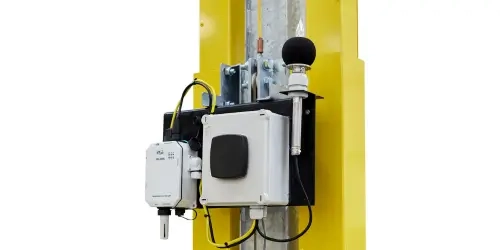
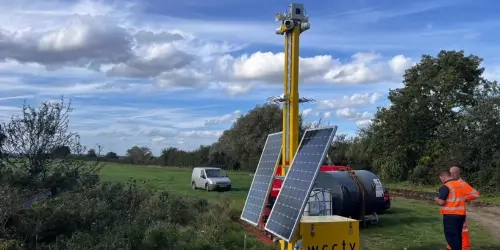
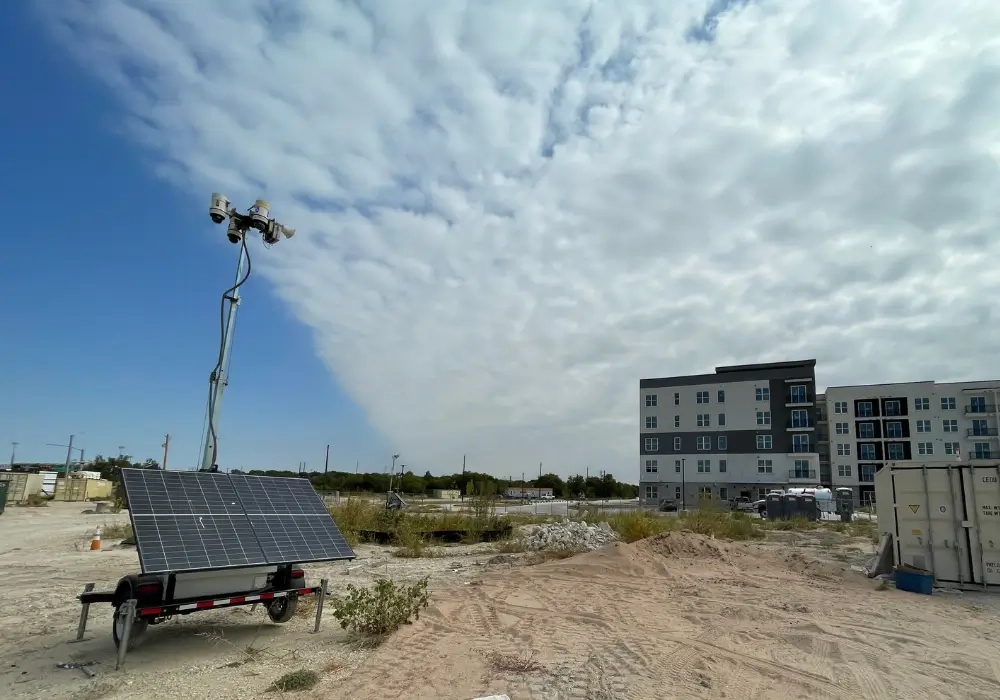
Environmental sensors (for air quality, noise and weather monitoring) are plug-and-play add-ons to our Rapid Deployment CCTV Towers and Temporary CCTV solutions. No separate power infrastructure, no additional IT setup; just unified site monitoring from a single interface.
Here's how they make COSHH compliance monitoring easier for you:
Real-time monitoring
Advanced air quality sensors track, monitor and collect accurate readings across a wide range of pollutants and conditions. These include:
Fine particulate matter (PM1, PM2.5, PM10)
-
Carbon dioxide (CO₂)
-
Carbon monoxide (CO)
-
Nitrogen dioxide (NO₂)
-
TVOCs (Total Volatile Organic Compounds)
-
Humidity (10-99%)
-
Temperature (-40°C to +60°C)
-
Dewpoint
They store up to 180,000 timestamped logs, creating the kind of detailed exposure record that COSHH Regulation 10 expects, without anyone having to do this manually. These readings also support ESG and Net Zero submissions, ticking off additional compliance boxes with minimal effort.
How do they work? When readings approach predefined thresholds, automated alerts are sent directly to compliance/project managers so corrective action can be taken before issues escalate. When connected to professional remote monitoring services at NSI Gold Accredited centres, trained operators review footage in real-time and initiate various response actions on your behalf, such as:
- Issuing live audio voice-down challenges (to warn staff about dangerous exposure limits)
- Dispatching mobile keyholding teams (for on-site investigation)
- Contacting emergency services (if/when needed)
Read more: How Real-Time Construction Site Reporting Works
Smart detection
Taking compliance a step further, add-on smart detection systems provide real-time support for meeting COSHH obligations in construction environments. Regulation 7 requires employers to protect workers from serious risk, including exposure to hazardous substances.
Where reduced exposure is not possible (e.g., during demolition), compliance managers have a legal duty to control exposure limits "as low as is reasonably practicable" (ALARP). This means appropriate control measures must be in place (in line with Regulations 8 and 9), and the correct personal protective equipment (PPE) must be worn at all times.
To comply with Regulation 12, anyone who works with harmful substances must be provided with "suitable and sufficient information, instruction and training". This includes explaining when PPE is required, how to wear it and why it's important to prevent adverse health effects.
But in reality, managers can't monitor every worker, every minute of every shift.
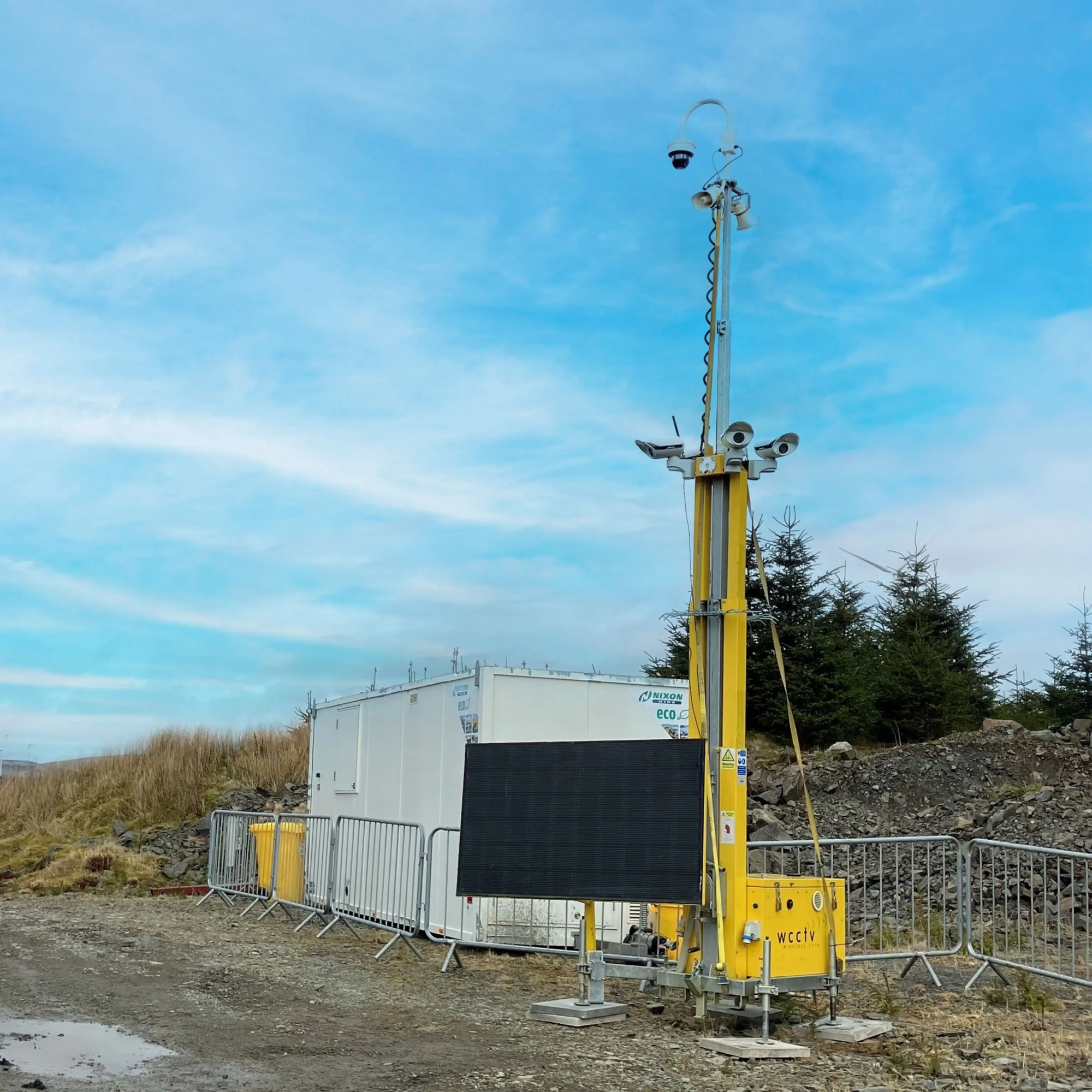
This is where smart PPE detection and monitoring become invaluable. Using high-tech PTZ (Pan-Tilt-Zoom) cameras and AI-video analytics, these systems continuously monitor building activity and instantly flag breaches, such as missing respiratory gear, the moment they occur. This gives compliance managers immediate visibility of non-compliance and supports faster corrective action.
On top of this, airborne contaminants aren't limited to dust and chemical fumes. Construction fires can ignite with little warning, and inhaling toxic smoke is an immediate health hazard. Smoke and fire detection systems alert teams to the earliest signs of smoke or flames, enabling quick intervention before minor incidents escalate into serious problems.
Read more: Using AI-Detection Data for Early Intervention on Construction Sites
Secure cloud-based evidence logs
Using advanced software to record and analyse air readings (alongside smart detection alerts), sensors automatically feed data into Stellifii, our cloud-based platform. From a single dashboard, compliance managers can pull up live and historical site data and generate audit-ready reports in minutes, easily complying with Regulation 10.
This saves hours of manual entry each week, freeing you to focus on higher-priority compliance and operational tasks instead.
Every data point is timestamped and geo-tagged. If you want to revisit an abnormal air reading or a PPE violation from a few weeks earlier, searchable timelines allow you to locate it easily. When HSE inspectors drop in unannounced, there's no need to pull data from 3 different systems or cross-reference information from a spreadsheet; Stellifii's automated audit trail is built in as standard.
Audit-ready reports can be generated on demand, covering specific dates, locations or incident types. Each report supplies a clear record of site activity, clear CCTV footage and how it was corrected, and exports up to 5X faster than legacy systems. This evidence demonstrates due diligence with COSHH regulations in a fraction of the time of manual methods.
Whether you're managing compliance for highway projects, solar farm constructions, residential developments or large-scale civil engineering works, real-time reporting via a secure cloud platform ensures all site data, including air quality, is accurate and accessible at all times.
One dashboard. One audit trail. Complete compliance control.
Read more: How Cloud-Based Tools Are Changing Construction Admin
Protect Workers and Avoid COSHH Fines with WCCTV
If your current approach to air monitoring relies on periodic checks and manually updated spreadsheets, it's time to take a smarter approach. Ask yourself, could you confidently demonstrate continuous air quality and COSHH compliance monitoring records to an HSE official today?
For most compliance managers still working with legacy processes, the honest answer is likely no. And that gap carries real financial and personal liability risk.
With 6 regional hubs and over 20-years of environmental monitoring expertise, we provide fully-managed air quality solutions that deliver measurable outcomes for UK construction.
Don't let poor air quality monitoring become your biggest compliance risk. Contact our monitoring experts to see how automated monitoring can protect workers' health, reduce enforcement action and strengthen audit readiness today.