Most IT managers treat cybersecurity and safety monitoring as separate concerns, but they overlap more than you realise.
Modern construction sites use digital systems for construction site security: surveillance systems streamlining to cloud platforms, IoT sensors monitoring environmental conditions and access controls tracking vehicle movements. Every connected device creates potential entry points for cyber threats while performing safety functions.
When these systems are compromised, both your digital posture and physical site safety are at risk.
For IT managers, understanding how construction cybersecurity and safety monitoring overlap is vital for protecting UK construction sites, and this guide covers everything you need to know.
Cybersecurity Facts and Stats: UK Construction
To put this into perspective, UK construction projects face many cyber threats as digital systems become the new standard across projects. Cybercriminals predominantly target the sector via fragmented legacy technology and weak online security practices.
Here are a few shocking cyberattack statistics for context:
-
40% of construction companies experienced cyberattacks in the last year.
-
Small construction firms lose over £115 million to cyberattacks annually, a 90% increase from 2024.
-
Roughly 7,000 construction companies are in financial distress due to cyber threats.
-
Supply chain vulnerabilities typically show the highest rate of cyberattacks in construction.
3 Types of cyber risks targeting UK construction
-
Ransomware attacks involve malicious software encrypting sensitive data (project files, financial records, surveillance footage, etc.) and demanding payment. Since construction sites can't afford downtime, firms are generally more likely to pay.
-
Data breaches occur when unauthorised persons access sensitive information like project information plans or personal details. These GDPR violations trigger ICO penalties, which can reach up to £17.5 million or 4% of total annual turnover, and cause damage to professional reputations.
-
Phishing and Business Email Compromise (BEC) scams: Phishing involves getting recipients to click on malicious links or share login/personal credentials. BEC scams impersonate legitimate personnel and trick employees into sending money or approving payments.
These hard facts and figures show why cyber and site security matters in the modern construction industry.
Why Cyber and Site Security Matter for Construction
Let's take a closer look at the importance of cyber and site security in the construction sector:
Cybersecurity: Protects digital assets and compliance
Most modern construction sites leverage digital solutions to store sensitive data, often through cloud-based platforms and interconnected devices. GDPR strictly outlines how UK businesses (including construction firms) collect, store and protect personal data, especially when CCTV surveillance is in place. Non-compliance can result in hefty ICO penalties and reputational damage.
On top of this, cybersecurity keeps operations moving. Consider what happens during a cyber attack: your surveillance systems go offline, and suddenly you have no visibility across the site. When digital platforms are compromised and access control fails, project delays occur and sites become vulnerable to theft and vandalism.
Data Protection: What UK inspectors look for
| Requirements | How to demonstrate compliance |
| 24/7 video coverage with remote monitoring | Continuous monitoring systems with timestamped footage accessible remotely through secure platforms. |
| Verified alarms for fire and intrusions | Smart detection systems with automatic alarm systems showing timestamps and response actions. |
| AI systems that track threats without breaching privacy | Surveillance with proper signage, data encryption and robust security policies that align with GDPR laws. |
| Proof of compliance with UK safety regulations | Audit-ready documentation covering HSE, CDM 2015, GDPR and ESG. |
Read more:
Construction site security: Prevents theft and ensures worker safety
Physical security addresses tangible threats: theft of metals/materials costing hundreds of thousands of pounds, project delays caused by vandalism and unauthorised access that can lead to safety hazards.
Under CDM 2015 regulations, UK contractors must conduct proper risk assessments and maintain worker safety throughout every project phase. To ensure this, the Health and Safety Executive (HSE) expects detailed evidence of safety management.
Traditional safety measures relied on perimeter fencing and periodic spot checks to protect assets and keep sites safe. Smarter approaches integrate continuous surveillance monitoring technology with remote control systems that minimise site safety hazards while cutting costs.
The catch is that these digital technologies introduce their own set of problems, creating cybersecurity vulnerabilities that can directly undermine the physical safety measures they were designed to support.
Where Cyber and Security Threats Overlap on UK Construction Sites
The overlap between cyber and security happens where digital systems interact with the physical environment. Understanding these intersection points helps IT managers pinpoint vulnerabilities.
Surveillance systems
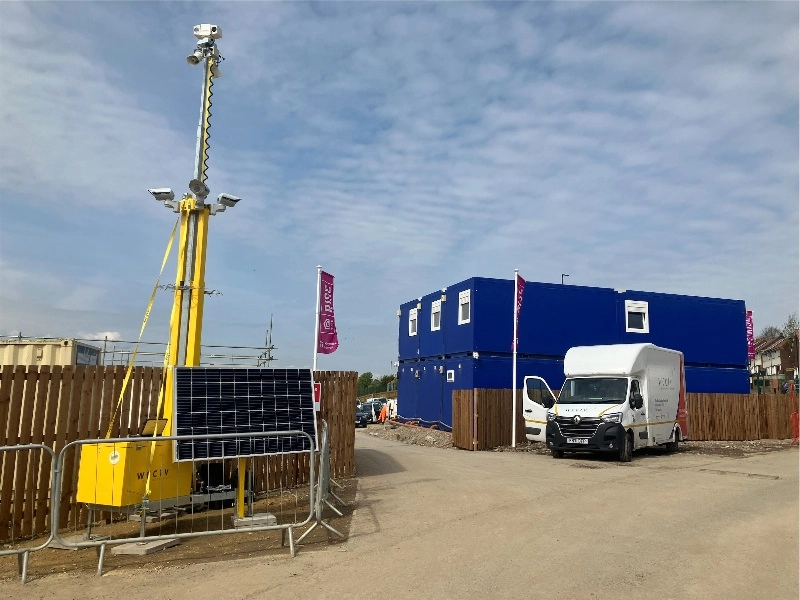
Basic CCTV cameras, PTZ (Pan-Tilt-Zoom) systems and video analytics platforms provide workplace safety, but they're also vulnerable to cyberattacks. Attackers can easily exploit legacy surveillance systems with default login credentials, intercept unencrypted video streams and target poorly configured cloud cameras.
When surveillance systems are hacked, you lose visibility across working zones and stored footage becomes unreliable for insurance claims.
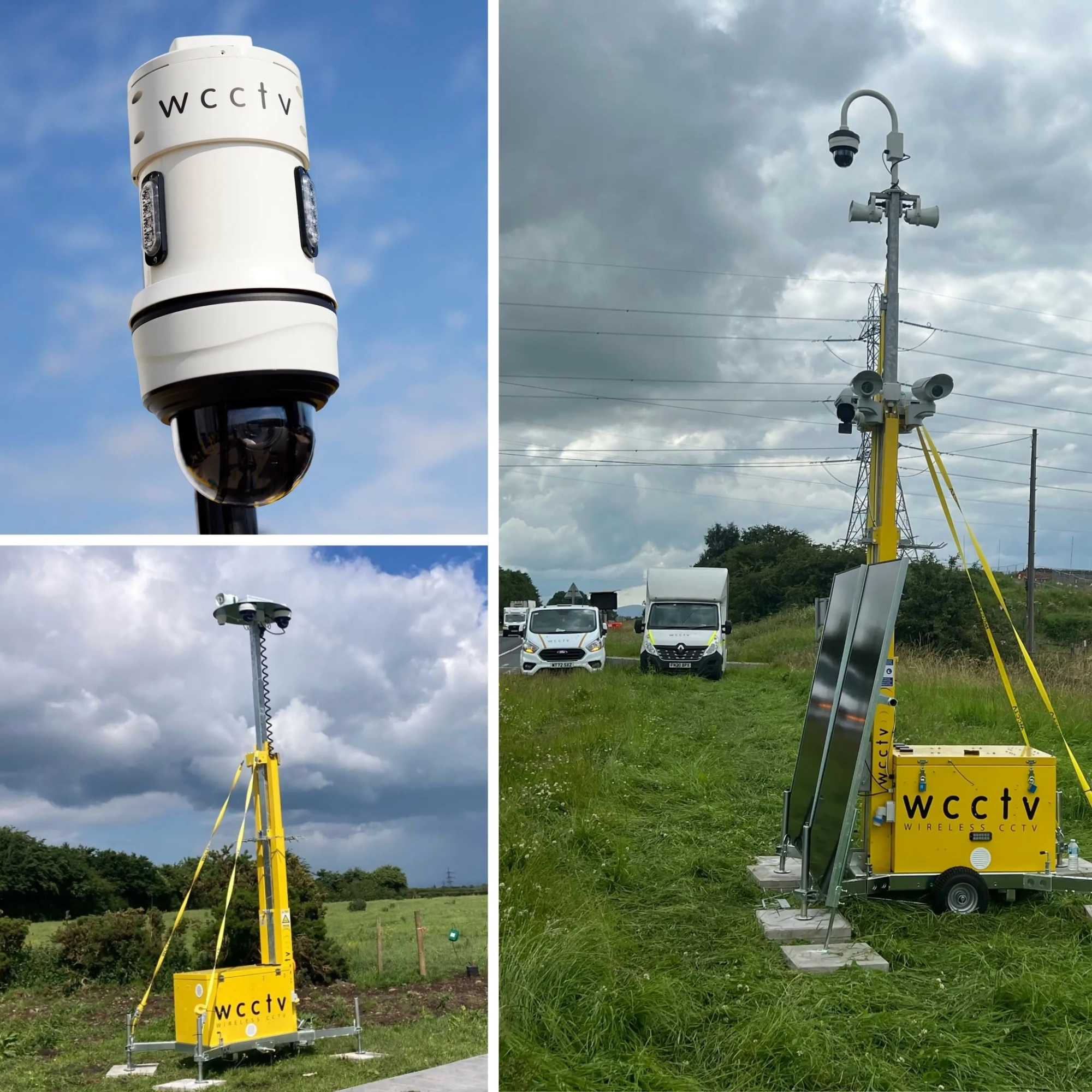
Modern Rapid Deployment CCTV Towers and Temporary CCTV solutions address these issues head-on through end-to-end AES256 encryption, advanced software and secure 4G/5G networks and data storage.
Read more: Improving Construction Site Health and Safety with CCTV
Disconnected legacy systems
Many construction projects in the UK rely on outdated, siloed systems from multiple vendors for surveillance and access control. Because these systems rarely share data or "talk" to one another, they create blind spots and compliance gaps. Additionally, security configurations vary wildly between platforms: one system enforces strong passwords, while the other relies on factory defaults.
This lack of integration makes implementing online safety protocols nearly impossible, as it's hard to apply consistent safety standards across 5+ platforms.
The solution? Smart integrated systems that enable real-time continuous monitoring, consolidate site data into one dashboard and operate through a single secure, NDAA-compliant, encrypted network.
Read more: How Smart Monitoring Systems Enhance Construction Site Safety
Access control systems
Modern access control measures include biometrics, Automatic Number Plate Recognition (ANPR) and AI-powered remote access. These technologies provide full visibility of exactly who enters your building site and can deny unauthorised access instantly.
For digital access controls to work, robust cybersecurity measures are needed to prevent security breaches. If authorisation credentials are compromised, hackers gain illegal access that seems legitimate at first glance, and if ANPR databases are manipulated, the safety of your construction site faces serious risk.
Our ANPR systems and Remote CCTV Monitoring systems integrate seamlessly with Stellifii, our highly secure cloud-based platform. When linked to Mobile Keyholding Response and NSI Gold Accredited monitoring centres, this integration offers robust threat detection and rapid response capabilities.
In a nutshell, Stellifii creates a unified system for security, safety, compliance and site monitoring, ensuring security breaches are detected immediately and site managers are alerted in real-time.
Read more: How Integrated CCTV and ANPR Keep UK Sites Secure and Compliant
IoT-based technology
To support operations, UK businesses and construction sites are turning to drones, GPS trackers, smart cameras, IoT-based sensors and connected heavy machinery. Smart surveillance cameras monitor sites 24/7, distinguishing genuine threats from false alarms, and IoT sensors track air quality, weather and noise for ESG compliance purposes.
But did you know that each IoT device could be a potential threat? Generic sensors often have minimal security to reduce costs, giving attackers "free rein" access to broader systems.
This is why IoT technology must follow online security best practices: strong authentication, encrypted networks and regular security updates. Our fully-managed, IoT-based environmental solutions do exactly that, strengthening your construction site security and online posture from day one.
Read more: Uses for IoT in Construction
How Integrated Site Monitoring Strengthens Cybersecurity and On-Site Safety
Addressing cyber and site-specific security risks separately creates the exact vulnerabilities that attackers exploit. Our intelligent monitoring systems combine IoT technology, AI-powered CCTV and cloud-based analytics into a single platform with automatic security protocols.
-
AES256-encrypted CCTV systems: CCTV Towers and Redeployable CCTV Cameras deliver 24/7 physical site security while maintaining rigorous cybersecurity standards. Stellifii provides end-to-end AES256 encryption and secure data handling that protects video streams and maintains data protection regulatory compliance as standard.
-
AI-video analytic detection: AI-powered surveillance strengthens both physical and cybersecurity. Smart detection systems identify missing PPE, smoke/fire and intrusions using real-time monitoring and transmit data via secure 4G/5G networks.
-
Secure IoT sensors: Our IoT devices integrate with Stellifii through encrypted connections, eliminating security gaps. Centralised site monitoring allows IT leads and site managers to access control systems through a single login, reducing the risk of cyber attacks and breaches.
-
Unified dashboard: Stellifii records and securely stores all construction site information, consolidating surveillance, environmental monitoring and smart detection into one interface, accessible from any device.
Benefits of strengthened cyber and site security
-
Improved site safety
-
Fewer cybersecurity risks
-
Enhanced operational efficiency
-
Unified threat detection
-
Proactive risk management
Prevent Cyber and Safety Risks with WCCTV Today
Maintaining construction site cybersecurity and safety monitoring doesn't have to be complicated when you have WCCTV on your side.
With 6 regional hubs and over 20-years of experience in wireless monitoring, we provide fully-managed, compliant and secure surveillance technology for UK construction.
Reach out to our monitoring experts today and discuss how Stellifii can strengthen and secure your online and safety posture.