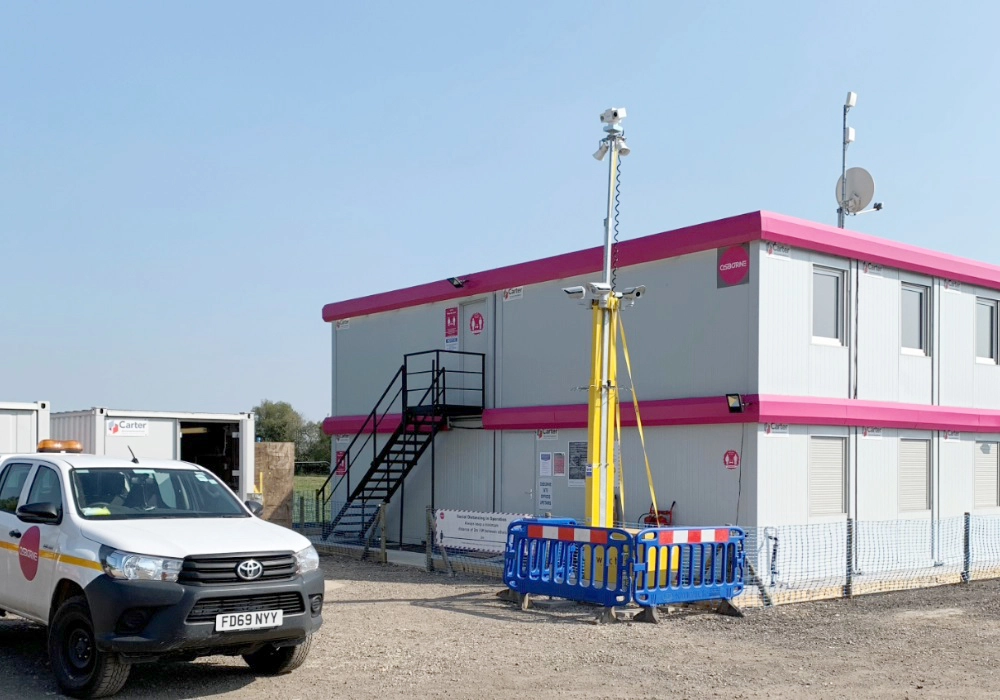
Third-party contractors and suppliers are what keep construction projects moving, but they also bring some of the biggest compliance exposures on site.
From safety competence to labour, failures in your supply chain or environmental and data risks, compliance issues can quickly escalate into legal, financial and reputational problems for your construction firm.
Within this article, we break down the key third-party compliance risks within the construction industry, offering a practical framework and checklist on how to control them without adding to your team’s workload or expenses.
Why Third-Party Risks is Now a Widespread Issue in Construction
Construction relies on subcontractors, agencies, delivery drivers and specialist suppliers, however, this multi-tier supply chain is difficult to monitor and oversee from end-to-end. This makes identifying those gaps in your security more difficult and creates opportunities that risk safety, labour standards and environmental controls to grow.
This growth in opportunity means that issues can go missed, and when this happens, something can go wrong.
However, in an industry where regulations are only tightening for worker, environment and wider community safety, principal contractors are now expected to prove they’ve taken ‘reasonable steps’ to select, supervise and closely monitor third-party activity.
Therefore, any site failures can quickly become an accountability problem for compliance leaders, site managers and overall construction firms.
In short, third-party risks are an extension of your construction firm and are fast becoming a widespread issue in the industry, with sites now more outsourced, more regulated and more interconnected.
Key drivers behind this rise in third-party risks:
-
Larger, multi-layers supply chains that reduce day-to-day visibility and reduce accountability
-
Regulatory expectations place responsibility on the main organisation, not just the vendor themselves
-
Labour shortages increase reliance on temporary and agency workers, elevating exploitation and competence risks
-
Rising ESG and environmental scrutiny now extends into supplier behaviour, especially with waste, emissions, and incident response
-
Undersecured digital vendors create new data and cyber risk pathways
-
Economic pressures can incentivise third-party companies to cut corners on your site, increasing the likelihood of falsified evidence or reduced standards
Essentially, what this means for third-party compliance isn’t an issue you can just push to one side, it needs to be prioritised by construction firms.
Compliance is a central part to how risks can be judged on UK construction projects, which is why it’s important to understand how regulators assess your responsibility for the supply chain.
How UK Regulators View Third-Party Responsibility in Construction
Regulations start with a simple foundation, you can outsource work, but you can’t outsource responsibility. For principal contractors and construction firms, the expectation is that they will plan, manage, monitor and coordinate the construction project so that all contractors and subcontractors are working safely and legally.
This responsibility held on construction firms includes checking the competency of third-party contractors and suppliers before appointing them onto a project. And once on-site, expectations will continue that site managers and compliance leaders will continue to superview their performance on-site, in line with regulations.
Due to this heavy expectation, regulators generally look beyond who caused the breach, and ask ‘What system of control did you have in place?’. Following any HSE or environmental standard inspection or incident, there are typical elements that they test for:
-
Whether you selected third parties based on skills, knowledge, experience, and organisational capability
-
Whether expectations are clearly communicated across all levels (e.g. site rules, safety procedures, incident response, reporting)
-
Whether you actively monitor compliance once work has started
This ‘ownership’ applies to all areas of responsibility for construction sites, from ESG standards to worker safety. Site managers and compliance leaders face personal liability risks greater than others, so it’s vital they apply the tools that can protect their sites and themselves.
Compliance cannot be considered a tick-boxing exercise, especially based on the labour ethics outlined by the Modern Slavery Act, which emphasises a risk-based supply-chain due diligence based on construction being repeatedly flagged for its high risk.
What “Due Diligence” and “Reasonable Steps” Mean in Practice
Regulatory expectation outlines will commonly use the terms ‘due diligence’ and ‘reasonable steps’, and it’s important that any compliance leader truly understands the meaning of this to properly protect their sites.
These terms don’t represent perfection, but they do strongly emphasise the expectation of a defensible, risk-based process that can provide evidence quickly.
The term ‘due diligence’ is a term referring to the stage prior to appointing an external third-party to your project, and ‘reasonable steps’ covers how you control these during the delivery of the project.
|
Stage |
What’s expected |
Examples |
Internal owner |
|
Due diligence (pre-appointment) |
Check competence for the project scope |
Trade skills, relevant experience, certifications, past project evidence |
Procurement / Supply Chain and Health and Safety |
|
Review capability and history |
RAMS quality, training, supervision, incidents |
Health and Safety / Compliance |
|
|
Verify legal cover |
Insurance, licences, certifications |
Procurement / Compliance |
|
|
Screen ethical/labour risk |
Right-to-work, welfare, sub-tier transparency, employee surveys |
HR / Compliance and Procurement |
|
|
Reasonable steps (on site) |
Set clear site rules |
Inductions, permits, PPE, work zones, safety signage, refresher training |
Site/Project Management and Health and Safety |
|
Monitor actively |
Spot checks, walks, surveillance cameras, intrusion detection systems |
Site Management and Health and Safety |
|
|
Escalate issues |
Corrective actions, stop-work, remote monitoring services |
Site Management (with Health and Safety support) |
|
|
Keep evidence |
Dated checks, actions, close-out, incident reporting, centralised dashboards, surveillance footage |
Compliance / Health and Safety |
Regulators will judge construction firms and their supply chains based on reasonable proportionality. For example, a low-risk supplier may only be required to need light-torch checks and periodic checks from contractors, whereas a high-risk subcontractor can trigger the need for greater measures like tighter onboarding, frequent monitoring, and clearer, more concise escalation rules for incidents.
For compliance leaders, however, this leaves them with one main takeaway: these regulations aren’t designed to enforce firms to police third parties to a T, but they are expecting you to prove you have the right system in place to detect, prevent and correct actions and behaviour that create risk on-site.
By displaying your due diligence and commitment to safety, you’re in a much stronger position when inspections, audits, insurers and post-incident reviews take place.
Whilst understanding the expectations is important, the next step is to learn the specifics of where third-party compliance typically breaks down in practice. Regulators will often focus on these most due to them being the most common compliance failures across UK construction sites.
The Most Common Third-Party Compliance Risks on UK Construction Sites
Third-party compliance risks tend to cluster into predictable areas, and by knowing how these appear on a site in reality will help you target any security and safety measures where most regulators and clients will likely look into first.
Health & Safety Competence Gaps
Even strong contractors fall victim to employing weak sub-tiers onto site, but just one mistake can be costly if regulators discover this. They expect you to verify that any third-party workers on your site have the skills, knowledge, experience and organisational capability to complete their tasks.
In order to maintain construction site health and safety, contractors and compliance leaders should be looking for more than a badge or accreditation. It’s establishing their capabilities, assessing their reputation, investigating training and ensuring equipment used is regulatory safe.
There are several common failure points, and these include:
-
Risk assessments are not specified to the site, providing generic and/or copied guidelines that do not consider your site’s dangers. This means they’re less likely to be followed.
-
Overstretched supervisors that are left to manage multiple gangs and trades on-site, often leading to missed health and safety breaches like a worker injury or near-miss incident.
-
Missing, out of date or misaligned training records regarding high-risk activities at work, meaning that workers could be working with certain equipment or in an area where they shouldn’t be due to a lack of training.
-
Project schedule pressures lead to short-cuts taking place on-site which are unlikely to be challenged, placing both workers and local area at risk.
Labour and Ethical Risks
Construction is continually referred to as a high-risk sector, especially for labour exploitation and modern slavery, based on the complexities surrounding subcontracting, reliance on temporary labour and poor visibility beyond Tier 1.
Typically, contractors and compliance leaders should remain aware of the following risks:
-
Unvetted labour agencies or sub-tiers providing workers that hold unclear statuses.
-
Right-to-work, welfare and wage compliance gaps hidden throughout different areas of the supply chain.
-
Workers are housed and/or transported by third parties without any oversight in place.
-
Utilizing self-employment status and arrangements that mask exploitation or compliance breaches.
Environmental and ESG Risks
Over recent years, there’s been a significant growth in interest from regulators surrounding ESG (Environmental, Sustainability, Governance) . With construction labelled the second biggest contributor to greenhouse gases as an industry and worker illnesses known to be linked to poor environmental conditions on-site, duties have now become a shared responsibility.
From waste disposal and emissions to pollution incidents, construction firms are expected to take reasonable steps to ensure these areas are managed effectively to prevent any environmental impacts on workers and surrounding areas.
Even if this is an issue that occurs due to a third-party contractor, this would still be considered as a shared responsibility with yourselves and you could be held liable for this compliance breach.
Common break down areas include:
-
Incorrect disposal or storage of waste on site.
-
Missing/incorrect waste transfer notes or licence checks.
-
Inaccurate or sporadic environmental readings of noise, dust and CO2, leading to exceeded thresholds that are noticed too late or not reported quick enough meaning that firms can face regulatory penalties.
-
ESG claims that suppliers are unable to evidence, for example, using low-carbon materials, zero emission vehicles and recycling rates.
Related Articles:
Data, Security and Surveillance Risks
With construction sites becoming more connected through access control measures, environmental sensors, CCTV and monitoring platforms, third parties come into contact with sensitive data and systems more frequently nowadays.
Although, construction may not be the first industry you would relate GDPR and cybersecurity, however, through technology developments, firms are now facing a rise in cyber and information-governance exposure.
Common data issues include:
-
Vendors storing and accessing footage or data without clear rules and data protection procedures in place.
-
Weak cybersecurity controls from smaller suppliers that provide weak entry points to any unauthorised individuals.
-
Unclear or weak retention, sharing and subject-access processes for site surveillance that allow sensitive information or data to be leaked.
-
Over-extended access permissions to subcontractor workers who pose a danger to your site or who may not have the necessary training to protect data.
Financial and Operational Integrity Risks
Although less obvious, financial and operational integrity are common risks that often sit behind incidents or disputes.
Whether it’s false assurance from external subcontractors or corner-cutting from waste disposal companies, these risks undermine compliance and increase the likelihood of legal and financial penalties from regulators.
Examples of this are as follows:
-
Expired insurance, certifications or plant test records.
-
Substitution of materials without approval prior.
-
Falsified training or induction evidence.
-
Overstretching of supplier capacity, leading to unsafe or non-compliant deliveries.
Adding these risks up shows that third-party compliance risks aren’t just a matter of coincidence, but rather a build up of small, yet visible signals in the supply chain that occur before a major breach occurs.
Early Warning Signs Your Supply Chain Is Becoming a Compliance Liability
Third-party compliance issues generally build up over time, not in a singular incident, making spotting those early warning signs vital to preventing a breach on site.
Whether it’s missed evidence or vague answers from subcontractors, it’s important that this behaviour isn’t normalised and is flagged at the earliest convenience.
Ideally, for compliance leaders, the goal isn’t to catch the breach in real-time, but instead, spot the early warning signs and intervene then whilst the risk is lower and easier to contain.
The problem being that construction is a fast-moving industry, with strict project deadlines and subcontractors often changing mid-project. Therefore, the most useful warning signs are the ones you can identify quickly and act upon immediately, without needing to complete a full audit.
We’ve broken down the most common third-party compliance risks, their early warning signs and immediate actions that can be taken:
|
Risk area |
Early warning signs |
What to do immediately |
|
Health and safety competence gaps |
|
|
|
Labour and ethical risks |
|
|
|
Environmental & ESG risks |
|
|
|
Data, security & surveillance risks |
|
|
|
Financial & operational integrity risks |
|
|
Identifying the early warning signs is only part of the battle in preventing third-party compliance risks, however, the true protection comes from creating a clear, easily repeatable framework that can stop them in the first place and tighten control as risk increases.
A Practical Third-Party Risk Management Framework for Construction Sites
There are three key elements to building a strong framework built for the reality of the construction industry: make it risk-based, make it repeatable and make it easy to evidence.
The aim being that compliance leaders and primary contractors can focus their efforts on where exposure is at its highest, standardise all other areas and keep live audit trails, whilst preventing resource drain on your compliance team.
Below provides a quick step-by-step guide on creating a practical third-party risk management framework for your construction site:
Step 1: Segment Third Parties by Risk, not by Size
There’s a misconception that large suppliers come with greater risks, however, it’s generally smaller, more niche contractors that are. To minimise the risk of surprises and exposing your site to compliance issues, you should segment by what could go wrong and how badly.
Things to consider when creating your risk hierarchy:
-
Work Type - Are they involved in any high-risk activities? (this includes, demolition, lifting ops, deep excavation, hot works, waste removal, agency-heavy trades)
-
Site Impact - Does it have the ability to affect multiple areas and people at once? If so, this may need to be of greater priority
-
Supply Chain Depth - What’s the likelihood the third-party will include sub-tiers you can’t see?
-
Data and Tech Touchpoints - Where will they have access to? And what tech platforms? (consider access to any CCTV, systems, networks, sensors, digital reports)
Once you have answered all these questions, you should be able to put together a high/medium/low tier list that drives how onboarding and monitoring needs to be for each supplier and contractor.
Step 2: Standardise Pre-Qualification and Onboarding
Inconsistency creates risks, if onboarding varies by project or manager, risks begin to slip in. You should aim to have everyone working from the same playbook, and to do this you need to standardise the ‘minimum evidence pack’ so that every supplier clears the same baseline.
Core onboarding elements we’d recommend including are as follows:
-
Competence proof that goes beyond generic badges and certifications
-
Risk assessments that match the actual site and task
-
Training and supervision plan
-
Insurances, licences and certifications
-
Labour and ethical screening where higher risk tiers are identified
-
Environmental controls
This standardisation of evidence documentation is vital to ensuring on-site health and safety, without it, you can take action to prevent mobilisation on your construction project until they can provide this.
Step 3: Apply Contractual Controls
Contracts aren’t designed to just be signed and hidden away, they are designed to protect your construction project and people. They play a key role in enforcing safety and security, whilst also minimising the risk for you as the main contractor from any penalties or legal claims.
Within any contract, you should build in the following elements:
-
Clear compliance KPIs
-
Right-to-audit and right-to-stop-work clauses
-
Sub-tier disclosure rules
-
Incident and near-miss SLAs
-
Data/security expectations where technology and footage will be involved
The goal being that expectations cannot be misinterpreted or misunderstood, and that any consequences are pre-agreed with any third parties entering your construction site.
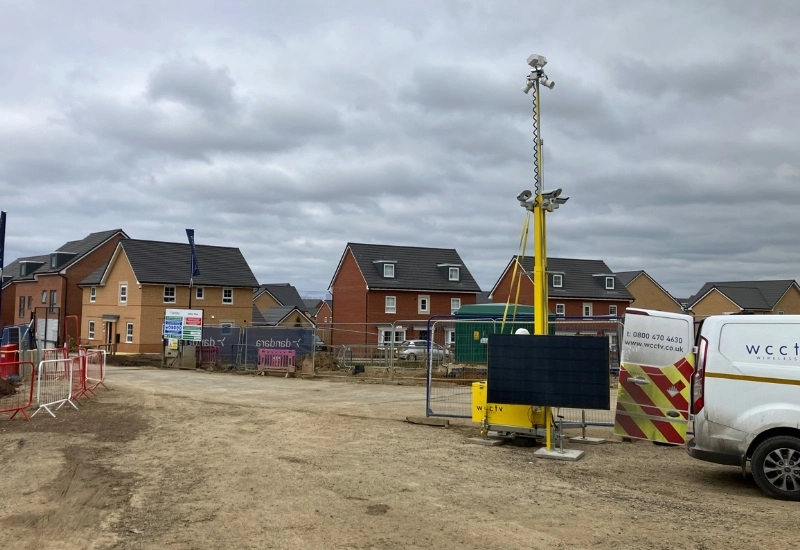
Step 4: Ensure Continuous Monitoring on Live Projects
Annual audits don’t capture the day-to-day, however, even daily checks aren’t enough to monitor live projects for any safety risks. The only effective way to protect your site from any third-party risks is to have a live monitoring system in place that is easy to scale and practical for complex construction environments.
Below outlines how mobile surveillance systems with live monitoring works in doing this:
-
High-risk suppliers: Enhanced camera coverage and real-time PPE/exclusion-zone checks, backed by quick site validation
-
Medium/low risk - Standard surveillance coverage with remote CCTV monitoring and AI video analytics to keep check of any suspicious behaviour 24/7
-
Trigger escalation - Repeat camera-flagged lapses help managers and compliance leaders to target the high-risk areas and tighten oversight
The main benefit of continuous monitoring are the real-time checks it provides as a system with third-party suppliers and contractors on site, making sure they remain compliant at all times, not just when there’s a spot check or regulatory audit.
Step 5: Have Evidence-ready reporting for audits and boards
Regulators are now demanding clear, consistent and accurate audit trails to display a construction firm's due diligence to safety and security on-site.
When an auditor or board member is asking for a report, they need those answers within minutes, not days.
Automated reporting platforms like Stellifii can connect with your CCTV systems to provide real-time, accurate and date-backed information via a centralised platform. Where relevant, time-stamped surveillance footage is provided alongside any breach to support in audits and investigations.
This is vital to protecting your construction firm from personal liability claims, legal battles and financial penalties by providing physical evidence of your sites and the compliance measures you have in place.
Good reporting provides several benefits including:
-
Single source of truth for competence checks, monitoring incidents
-
Trend visibility (repeat offenders, rising environmental exceedances, falling reporting rates)
-
Board-level metrics tied to risk reduction and ROI
Without the information to back up your statements as the main contractor, it’s extremely difficult to protect your projects from the dangers of third-party workers and companies as without the evidence, you have no method of proving this.
By moving from manual reporting to automated reporting, this not only lowers risk exposure and prevents dangers in real-time, but also to strengthen your business’ case for future investment.
Construction compliance is complex when it comes to third-party risks and without having understanding of your day-to-day site standards, workers across the business are unlikely to embed a new compliance culture into their everyday life.
Embedding a Compliance Culture Across Contractors
Whilst monitoring keeps eyes on your site day-to-night and catches the problems, culture works to prevent them completely.
By changing workers’ perceptions on compliance from it being ‘red tape’ that simply blocks and slows down projects to being a part of how a business builds and develops in a safe manner, individuals are more likely to engage in your site safety rules, including third parties.
There are 10 key steps you can take to help grow a strong compliance culture on your construction site for both workers and third-party contractors:
-
Incorporate standards into your everyday site routines - Embed it into inductions, daily briefings, permit-to-work, toolbox talks and shift handovers. Simply holding it in a folder won’t be enough to keep safe site behaviour continuous long-term.
-
Always lead with the ‘why’ - Avoid all the jargon and get to the important part: explaining why standards exist to keep people safe, keep projects moving and avoid reworks.
-
Be realistic with your expectations and let people know them early - Don’t just assume that onboarding equals understanding. You should always carry out refresher training throughout the project, when shifts rotate or when conditions change.
-
Ensure fairness and consistency - Culture can easily break down when one subcontractor gets a free pass. Therefore, with any worker or third-party person, you need to ensure consistency; same rules, same checks, same consequences.
-
Use live monitoring as learning, not just for enforcement - If a camera is continuously flagging PPE lapses, intrusions or environmental exceedances, use this information to respond quickly, take corrective action and learn from it. Fast feedback can shape behaviour quicker than monthly spot checks.
-
Make supervision a shared responsibility - You should ensure that every high-risk contractor names a site compliance lead and assign them with clear duties. This may include briefings, checks, reporting, and ensures ownership sits with the contractors, not just you.
-
Reward positive site behaviour and achievements - Reinforcing safe behaviour during training, toolbox talks and supplier reviews drives both those individuals and others to embed this into their everydays, not just a tick boxing exercise.
-
Create clear, evidence-backed metrics that cannot be ignored - Sharing information like the number of incorrect PPE checks detected, injuries avoided and intrusions prevented to help those on-the-ground understand the benefits of a strong compliance culture.
-
Make the reporting process simple for site issues - Near-miss reporting gives good insight into your site’s safety and if third parties are working within pre-agreed limits. Therefore, you need to reinforce how reporting protects workers and the project, and not just to punish people.
-
Close the loop on every site issue - This means if a contractor raises an issue or gets a corrective action, follow it through and show the action in doing this. Visibility builds trust quickly and shows your commitment to everyone on site.
When standards are clear, fair and part of their everyday job, contractors are more likely to be open to compliance shifts from something they were previously chasing to something they own.
Related Articles:
-
Rethinking Construction Compliance Through Smart Monitoring Systems
-
The Benefit of Smart Compliance Monitoring within Construction
Quick-Start Checklist to Protect Your Construction Site From Third-Party Risks
Embedding a strong compliance culture across your construction sites can take time, and your firm can’t afford to wait for these third-party risks to develop and lead your sites to face penalties, stop-work notices or legal claims.
Whilst you steadily build out your compliance culture, use the following quick-start checklist that provides simple actions that tighten control without slowing projects or deliveries:
-
Risk-tier every third party on the project - Consider work type, site impact, supply chain depth and data access.
-
Set a non-negotiable ‘minimum evidence pack’ - This helps to standardise risk assessments, training, supervision plans and expectations of third parties.
-
Block mobilisation on site until the evidence pack is completed - Project safety comes from consistency, not exceptions, so no evidence, no start.
-
Provide short risk assessment walkthroughs for high-risk suppliers - This helps to confirm if they match the real tasks, site conditions and sequencing.
-
Confirm sub-tier visibility - Require written disclosure of any labour agencies or subcontract sub-tiers before they arrive on-site.
-
Ensure site rules and escalation processes are in writing - From PPE, permits, zones, waste rules, reporting SLAs and stop-work authority. These should be shared with every contractor lead, including third-party companies.
-
Use live monitoring across your sites - Ensure camera coverage of all areas to carry out real-time checks, especially in high-risk areas.
-
Escalate issues early, not just once a pattern has formed - Report even minor breaches to ensure tighter monitoring and corrective action can be taken immediately, not over a matter of days or weeks.
-
Keep evidence logs clear, concise and consistent for every supplier - Time-stamped surveillance footage, corrective action taken and the location of an incident should be logged for every supplier and kept compliant with GDPR.
For most construction sites, they often rely on fragmented systems to cover all dangers presented by third-party workers and businesses, however, these are both expensive and difficult to manage.
Smart compliance monitoring pulls all of this together, giving you live, scalable oversight that requires fewer manual checks and creates an automated audit trail which aligns with data security expectations.
With AI-driven tools like Stellifii, compliance teams can move from firefighting to providing you with complete control of your site in real-time.
Moving From Reactive to Evidence-Ready Compliance at Your Construction Sites
Reactive compliance is time-consuming, high-risk and highly inaccurate at times as compliance teams are left scrambling for reporting and documentation or identifying issues during audits, or even worse, after an incident has occurred.
Evidence-ready compliance means you’re seeing risks as they happen whilst logging proof automatically in those moments.
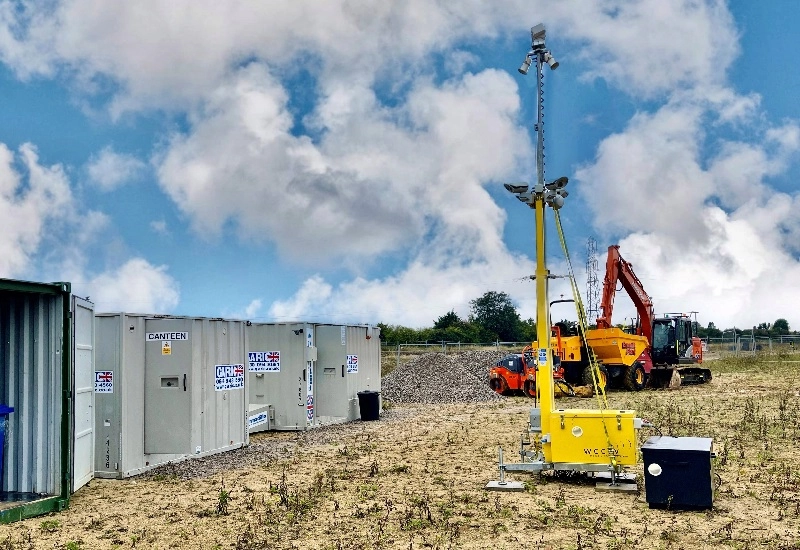
Stellifii is an all-in-one, cloud-based compliance platform that automates evidence gathering through the live surveillance monitoring via our temporary units (CCTV Towers and Redeployable CCTV Cameras).
Through this platform, tools like smart detection systems, environmental sensors, time lapse video and performance monitoring software integrate into one platform, providing you with complete oversight through one centralised dashboard.
Below provides a brief outline on how Stellifii supports construction sites in monitoring and preventing third-party risks:
-
Centralised live oversight of high-risk areas like all entrances, exits and blind spots
-
Consolidated compliance monitoring that eases third-party monitoring and audits, whilst also saving you up to 88% on security costs compared to guards
-
Catching health and safety risks early through PPE detection which flags missing high-vis, hardhats, safety goggles and footwear
-
Tracks environmental risks (air quality, weather, noise) to ensure you stay within regulatory limits, and inform in real-time if exceeding them so that you can take immediate corrective action
-
Automates audit trails through secure pathways to protect your firm from any third-party security risks that could be presented during the project
Essentially, Stellifii turns CCTV coverage and site sensors into live compliance, supported by AI-driven technology that helps to identify genuine third-party risks early, with regulator-ready evidence to support audits.