Managing a road network successfully requires more than periodic inspections and historical collision data. Highway managers in the UK need continuous visibility of safety risks, weather impacts, environmental compliance and security threats.
Every works project and temporary traffic scheme generates constant information throughout its duration. When this data is unified, it helps councils make better, faster decisions and supports transparent communication. Good data has the power to significantly improve worker safety, asset protection, incident reporting and regulatory compliance.
This article covers the essential data types required to control a modern network and how user-friendly monitoring technologies help collect them to make traffic project management smarter and more efficient.
Why Data is Critical in Modern Highways Management
As the UK's population grows, the Department for Transport (DfT) projects Britain's motorways will carry 54% more road users by 2060, placing greater strain on networks than ever before. Without reliable, current data, it will be difficult to operate and maintain an efficient road system over the coming decades.
The right data helps road authorities move away from intuition and guesswork, delivering the visibility and actionable insights needed to make the right decisions about safety, maintenance, incident management and investment priorities.
High-quality information empowers teams to manage the following with clarity and confidence:
-
Validating decisions: You have the relevant information to provide councillors and residents with evidence-based explanations for high-profile accidents. Traffic management plans, road closures, and investment decisions can be firmly justified.
-
Resource allocation: Maintenance, infrastructure, mobile surveillance and patrols can be targeted where they're statistically most needed, boosting team productivity and operational efficiencies.
-
Proactive control: Greater visibility enables more proactive network management. Rather than reacting to events, your team starts managing them, reducing compliance breaches, worker safety risks, infrastructure failures and roadwork complaints.
-
Safety outcomes: In Britain, nearly 30,000 people are killed or seriously injured on the roads Data helps explain the variables (speed, weather, poor lighting, bad roads, bottlenecks) that cause serious accidents. Armed with this information, you can implement effective measures to reduce risks and upgrade safety.
-
PAS 2161 and road condition information: Local authorities need road condition data to monitor, plan and prioritise their highway maintenance activities. In 2024, the Department for Transport (DfT) released PAS 2161, a new standard for monitoring England's roads aimed at ensuring the quality and comparability of this vital information across the country.
What Network and Traffic Management Data Do Road Authorities Need (And How to Collect It)?
Road authorities draw on a wide range of intelligence to strengthen operational awareness and network management.
Below, we highlight 8 key types of data traffic managers need and how modern monitoring technologies help collate the information.
1. Great traffic visibility
Understanding how vehicles move through your network is vital for effective traffic management and smooth service delivery. Traffic data can be collected through various estimation methods, with some methods providing more accurate estimates than others.
Modern CCTV Towers and camera systems provide vital insights for managers overseeing traffic projects, gathering relevant data to answer councillor queries and public complaints. Crucially, this information can be collated without relying on physical inspections and easily accessed remotely on a phone or laptop.
Supported by a dedicated cloud platform, our video-based traffic management systems gather data from up to 81 cameras in one place, allowing users to view and act on critical insights from vehicle behaviours to environmental monitoring and site safety concerns.
Traffic management data solution
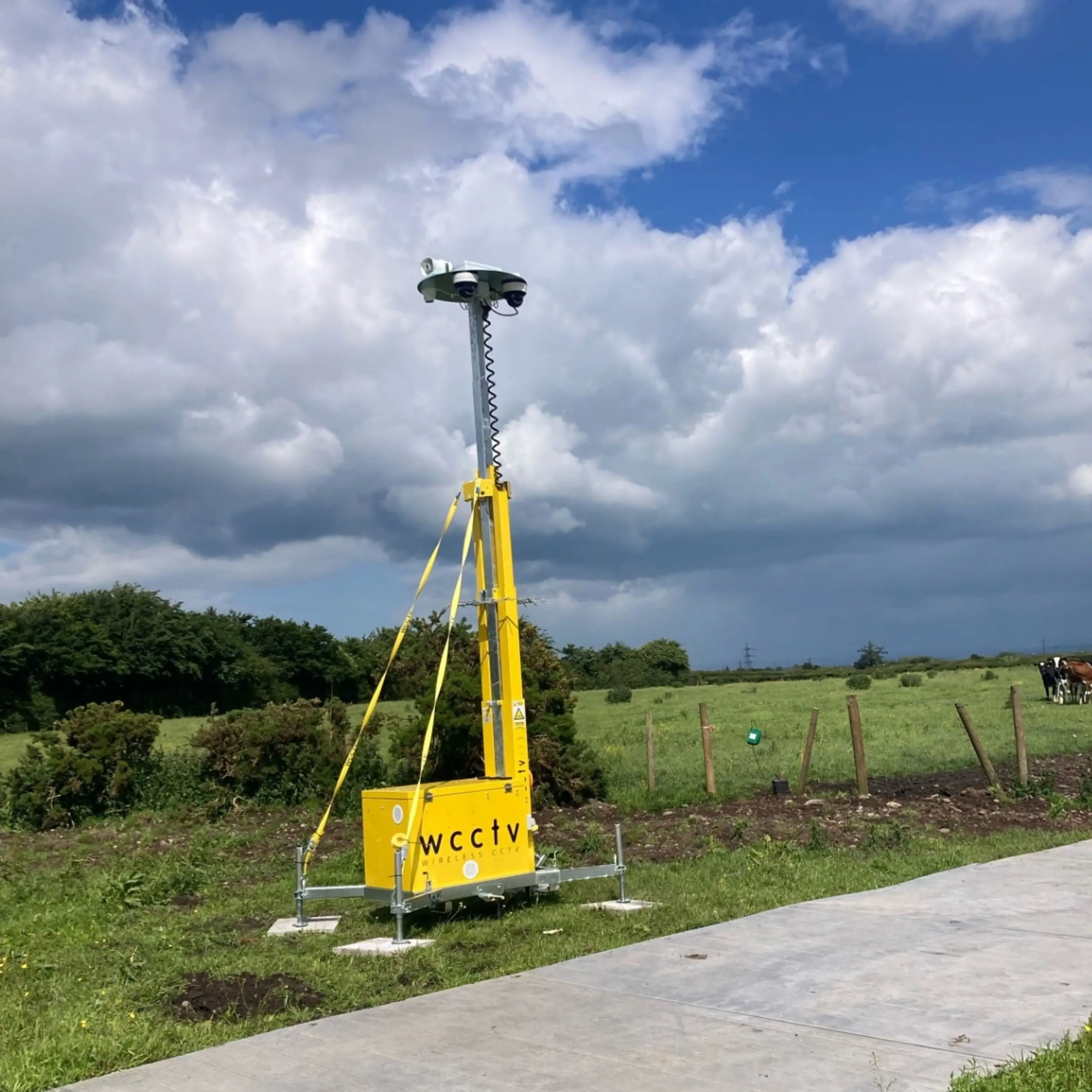
Our Traffic Management Towers can operate without hardwiring, on-site internet, or permanent infrastructure. Utilising wireless 4G/5G connectivity, they provide high-quality surveillance with live and recorded footage.
Combined with cloud-based management, traffic teams can pull data from all monitored locations and easily export and share it. This comprehensive oversight helps leaders make fully-informed decisions about hazards in working environments and address stakeholder and compliance queries transparently.
Read more:
2. Road safety and incident data
Collision statistics are a useful indicator of road safety on your network, but they don't tell the full story. To understand the big picture, you also need information on work zone incursions, speeding, illegal manoeuvres and emerging environmental and weather hazards.
By capturing and reporting project data throughout delivery and retrospectively, highway teams are better placed to:
-
Identify work zone incursions, speeding events and illegal manoeuvres trends to better understand risk across project sites.
-
Quantify safety performance using objective data, helping to inform future planning and risk mitigation strategies.
-
Monitor worker safety by analysing incident reports.
-
Measure compliance with site procedures and regulatory requirements.
-
Support incident investigations with accurate historical data, providing context and evidence for reporting and root cause analysis.
-
Evaluate the effectiveness of traffic management measures, safety interventions and project controls using measurable outcomes.
-
Generate actionable insights that drive continuous improvement across future projects and programmes.
Safety and incident data solution
Rapid deployment Mini CCTV Towers integrated with our cloud-based platform ensures 24/7 data gathering that can be easily pulled for reports, reviews and to demonstrate compliance throughout any project.
The information captured collectively through our platform, including worker safety concerns and unauthorised access, provides a wealth of context that helps to improve current and future projects.
Fully autonomous Mini Towers are solar and battery-powered and can be installed and repositioned by one person. This makes these compact units an ideal solution to monitor temporary sites, fast-evolving projects, emergency interventions and remote rural areas.
3. Vehicle movement and ANPR data
Vehicle movement data helps to drive vehicle safety across project and work zones, and provides the information needed to handle complaints and investigations. Automatic Number Plate Recognition (ANPR) systems use AI-imaging to log all vehicles and their speeds in designated areas, supporting:
-
Better investigations with accurate, timestamped incident reports.
-
Data-backed measures to improve vehicle safety on current and future projects.
-
Easy verification of complaints and solid evidence to answer them.
-
Stronger access and movement control.
Vehicle movement data solution
Automatic Number Plate Recognition (ANPR), as an add-on to our CCTV systems, tracks vehicle movements across monitored locations. The system automatically records number plates along with travelling speed, date/time and location. When integrated with our dedicated cloud platform, it can also provide details of the vehicle type (make, model, colour).
If a vehicle causes an accident on the worksite or enters a restricted area, ANPR retains a record of the incident for investigation and review. The system delivers crucial evidence to strengthen incident investigations and safety measures and reveals trends that can assist future project planning.
4. Weather and environmental conditions data
Bad weather has a significant impact on road safety, traffic flow, maintenance works and contractors' wellbeing. Fog, heavy rain, ice and snow create disruptions, dangers and a higher probability of accidents and breakdowns. Severe weather also degrades many road surfaces over time, causing:
-
Potholes and sinkholes
-
Surface erosion and reduced traction
-
Loose gravel
-
Crumbling edges
-
Water buildup
Real-time climate data helps your teams respond effectively to changing conditions and plan for expected disruptions, including adjusting workflows to keep operations safely on track.
Weather data solution
Weather Monitoring Sensors can be fitted to our CCTV Towers to assess flooding, fog, snow and high-wind dangers without sending your team into hazardous conditions. These advanced weather systems continuously track and report on the following:
-
Rainfall levels
-
Wind speed and direction
-
Temperature
-
Humidity
-
Dew point
24/7 climate updates let you modify work schedules, protect assets and prepare emergency responses to limit weather disruptions and damage. When bad weather or environmental factors force temporary route closures or diversions on your network, you have data-backed evidence to justify these decisions.
5. Environmental compliance data
Roadwork projects require councils and contractors to monitor environmental impacts on road users and nearby communities. Potentially harmful hazards that must be controlled include:
-
Noise levels
-
Excessive dust
-
Carbon monoxide and carbon dioxide levels
-
Volatile organic compounds (gases and fumes from solvents, paints, and adhesives)
Continuous environmental data monitoring helps your teams and contractors protect both workers and residents while proving compliance with HSE and other regulatory standards.
Environmental measurements together with traffic and journey data are also used to support carbon reduction goals and develop more sustainable transport systems as the UK strives to achieve net-zero carbon emissions by 2050.
Environmental data solution
Advanced Environmental Monitoring Sensors, which can be fitted to our CCTV Towers, allow work teams to track noise and air quality levels against permissible limits 24/7.
-
IoT-based Air Quality Sensors continuously monitor dust, fine particulate matter, TVOCs, carbon monoxide (CO) and CO₂ to help contractors control airborne pollutants from work activities.
-
Smart Noise Monitoring Sensors capture sound over ranges of 30-130 Decibels and 20Hz to 12.5kHz. The system alerts project managers before noise levels breach thresholds or become a hazard and/or neighbourhood nuisance.
Precise environmental data tracking with IoT technology and automated alerts protects workers and limits environmental risks. The system also retains all relevant incident data so that you can address public complaints and compliance enquiries confidently.
Read more:
6. Roadworks and workforce safety data
Road infrastructure and maintenance projects create unique risks for workers and commuters. Visibility into work zone activity is crucial to ensure safety procedures are followed and risks are responsibly contained.
Useful insights that help you manage work and safety standards include:
-
PPE compliance
-
Vehicle movements within work areas
-
Site access
-
Out-of-hours activity
Roadworks safety data solution
As an add-on to our CCTV and Mini Towers, AI-powered oversight systems automatically identify safety incidents and prompt managers to take action.
PPE Monitoring is a Smart Detection System that spots, alerts and records (with timestamped visuals) when individuals are not wearing legally required safety equipment. The system can also issue a live audio alert to non-compliant personnel.
Active enforcement with video evidence enhances compliance and safety and avoids delays, regulatory inspections and disputes that can arise from PPE violations.
To strengthen access control and limit unauthorised activities, ANPR triggers alerts when unapproved vehicles enter work zones and logs the intrusion with visual evidence.
7. Security and asset protection data
Highway infrastructure, equipment and temporary traffic management assets are vulnerable to theft, vandalism, fire and unauthorised access. For leaders charged with overseeing these assets, real-time monitoring and fast response capabilities are key. Your team needs intelligence that enables them to:
-
Detect intrusions and security threats quickly
-
Identify and respond to fire hazards
-
Reduce disruption to projects and keep operations on track
Security and asset protection data solution
Our AI-powered Intrusion Detection Systems trigger immediate alerts and automatic intruder warnings following threat identification, requiring no human intervention. Backed by Remote CCTV Monitoring (standard with our Security Services), NSI Gold-Accredited professionals react swiftly to verified alerts, issuing voice-down challenges and further warnings, including summoning the police if necessary.
As an added deterrent, you can include Mobile Keyholding Response, where licensed security specialists visit the site immediately after receiving and verifying a threat alert.
Advanced Smoke and Fire Detection systems can be integrated into CCTV Towers to warn of early signs of smoke and fire. This AI-enabled detection reacts faster than traditional fire alarms, enabling a rapid response to protect infrastructure. The system retains timestamped data and video evidence of all fire events.
Read more:
8. Network-wide operational intelligence
Crucially, managers need a way to bring all these data sources together. Disconnected systems have severe limitations, including unhelpful silos and information gaps that make it difficult to understand what's happening across the wider network. Strong highways management requires a centralised view of:
-
Security intrusions and threats
-
Traffic conditions
-
Environmental and weather information
-
Safety alerts
-
Incident reports
-
Historical trends
Network-wide intelligence solution
Our cloud-based management platform unifies information from multiple data streams (up to 81 cameras) into centralised dashboards. This organised view allows you to assess live and recorded footage and incident reporting, and address safety, security, complaints and regulatory issues accurately and fully.
Specialist software, AI insights and cloud connectivity ensure you always have the big picture on your phone, laptop or any other connected device.
The Costs of Operating Without Reliable Traffic Data
Let's briefly look at the costly consequences of not collecting and using relevant data as part of your operations.
-
Financial costs: Traffic assets and infrastructure not safeguarded by visible CCTV are easier targets for theft and vandalism. Besides the direct cost of loss, insurance premiums will likely be higher too, reflecting weak security and higher claim rates.
Without surveillance gathering traffic, security and unauthorised vehicle data, you lack the intel to assist investigations and prevent recurring theft and damage. -
Public tensions and reputational harm: Without objective data, it's harder to counter inaccurate claims on social media and in the press. Professional reputations are quickly tarnished when leaders can't convincingly explain how they handled a workplace incursion accident, especially when injuries and fatalities occurred.
-
Inefficient budget spending: Quality, consistent information informs smart spending on proactive security and safety initiatives. By contrast, without reliable data, you may invest in low-priority areas, leaving more urgent projects and roadwork sites exposed to safety and environmental risks.
-
Legal liability: Section 41 of The Highways Act 1980 sets out legal responsibilities for road safety and construction that local authorities must follow. If you can't demonstrate responsible network monitoring and diligent maintenance, you can be exposed to legal liability.
-
Accountability stresses: When incidents or regulatory breaches occur, and councillors demand answers (with evidence), an incomplete explanation leaves you vulnerable. Failure to adequately address valid concerns undercuts both your and the team's credibility.
Get Better Data And Improve Network Management
By combining mobile CCTV, AI-powered analytics, ANPR, smart detection, environmental monitoring and platform-based control, you build a comprehensive picture of network projects with actionable data guiding informed responses to risk issues.
Clear, reliable insights allow you to protect worker safety, allocate resources smartly and deliver a high-performing network for your community, whilst maintaining a good relationship with them throughout the project. Consistent data gathering builds valuable intelligence that guides continuous improvement in project safety, efficiency and public trust.
Contact our team today to discuss market-leading monitoring and data solutions employed and trusted by road authorities country-wide.