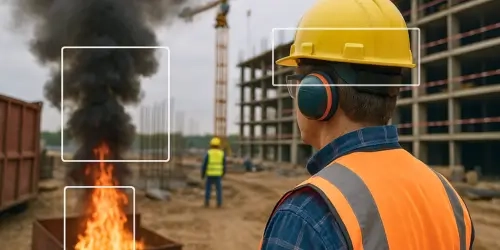
In 2024/25, 35 UK construction workers lost their lives due to falls from height, while historically, roughly 4,000 deaths are linked to occupational lung disease caused by prolonged exposure to dust and hazardous substances. Fires and smoke inhalation are some of the other serious threats workers face on construction sites every single day.
What's more, the sector loses around 2.2 million working days annually due to ill health and work-related injuries, all of which are preventable.
Under UK health and safety laws, the Health and Safety Executive (HSE) expects construction firms to take proactive measures to reduce risk. That means proper risk assessments, fire risk management and recorded compliance. But manual inspections can't cover every working zone at every minute of the day.
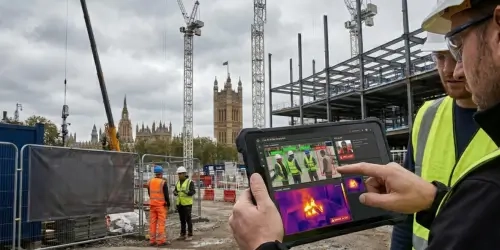
This is where AI detection for construction changes everything. Instead of waiting for supervisors to spot violations during weekly walkabouts, AI-powered systems continuously monitor building sites both day and night. They automatically flag PPE violations and catch signs of smoke and fire as they unfold, enabling quick intervention before they escalate into major problems.
In this article, we'll explain why personal protective equipment (PPE) and fire safety matter, how AI detection compares to traditional methods and how faster detection directly protects workers' lives and safety managers' reputation.
Why PPE and Fire Safety Matter for the Construction Industry
Construction sites are inherently dangerous. Workers are at risk almost every day, where falls from heights, crushing injuries, respiratory hazards and fire risks can occur with little warning.
For health and safety site managers, this means proper PPE and fire safety protocols should be a top priority. If not, it can be the difference between a safe shift and a serious incident, and whether or not your reputation is put on the line.
HSE statistics speak for themselves:
-
35 fatalities on UK construction sites in 2024/25
-
79,000 workers suffered work-related ill health between 2022 and 2025
-
500 construction staff die annually due to silica dust exposure
-
25% of non-fatal construction injuries are caused by slips, trips and falls
-
5,000 workers are affected by work-related lung disease
-
~46% of male construction workers (born in the 1940s) have mesothelioma (a form of cancer caused by asbestos exposure)
-
Over 300 site fires broke out in 2022, with 16% caused by hot works
-
London had the most construction site fires (84) in 2020/21
-
Hot-works-related site fires cost the construction industry nearly £70M in damages
Personal protective equipment protects workers from immediate hazards. Hard hats prevent head injuries, high-visibility vests ensure workers are seen on-site and respiratory gear protects against dust and diesel fume inhalation.
Smart fire detectors extend this protection by catching the earliest signs of smoke/fire risks before they escalate into emergency evacuations and injuries.
PPE and fire regulations
UK construction sites must comply with numerous safety compliance regulations:
-
The Health and Safety Executive (HSE): Britain’s national regulator of occupational health and safety across most industries, including construction.
-
Health and Safety at Work Act (HASAWA) 1974: General duty of care to protect workers' health, safety and wellbeing.
-
Personal Protective Equipment at Work Regulations (PPER) 1992: Employers must provide free PPE and ensure it's worn correctly and properly maintained at all times.
-
Construction (Design and Management) CDM Regulations 2015: Requires adequate risk assessments, safety control measures and safety planning for all construction phases.
-
Regulatory Reform (Fire Safety) Order 2005 (FSO): Mandates fire risk inspections, detection/warning systems, fire extinguisher training and evacuation planning.
-
Fire Safety Act 2021: Provisions to the FSO regarding domestic premises.
-
Building Safety Act 2022: Framework for the regulation, oversight and enforcement of building safety across England concerning high-risk residential buildings (7+ storeys or 18 metres tall).
-
Control of Substances Hazardous to Health Regulations (COSHH): Requires appropriate respiratory protection where airborne hazards exist.
-
Control of Noise at Work Regulations 2005: Stipulates hearing protection, such as ear coverings, in noisy working areas and sets maximum noise-exposure limits.
-
Working at Height Regulations 2005: Thorough risk management and PPE provision for workers working from heights.
Read more:
-
How HSE Regulations Are Evolving to Advance Construction Site Safety
-
The Importance of Construction Vibration Monitoring in Demolition Work
Why compliance matters
Construction safety regulations are in place because PPE compliance failures and fire safety breaches cost lives. Every requirement within the HSE's framework was introduced in response to real incidents, from fatal fires to major safety failures such as London's Grenfell Tower tragedy in 2017.
While compliance might seem like "red tape" or an administrative burden, it's designed to prevent accidents and foreseeable risk in construction environments. PPE enforcement, fire risk inspections and detailed safety records aren't box-ticking exercises but tried-and-tested safeguards built on lessons learned the hard way.
Adhering to industry standards is also a health and safety manager's legal defence should disputes arise. In a sector where enforcement action can result in 6-figure fines, project shutdowns or possible jail time for gross negligence, meeting compliance obligations protects both lives and reputations.
Read more: Rethinking Construction Compliance Through Smart Monitoring Systems
Consequences of non-compliance
-
Financial penalties: Up to £165,000 penalty for repeatedly ignoring fire safety standards, £60,000+ in fines for failing to protect workers against hazardous dust and over £6M for failing to install basic safety measures (e.g., proper lighting, speed controls, etc.).
-
Employer liability: Compensation claims from injured workers or families of fatalities.
-
Project delays: HSE investigations halt work until issues are resolved, leading to delays, rework and cost overruns.
-
Insurance premium hikes: Site incidents trigger higher insurance costs.
-
Reputational damage: High incident rates quickly erode trust with clients, workers and stakeholders. In serious cases, failing to uphold site safety responsibilities can result in jail time.
Read more: 7 Compliance Pitfalls Costing Construction Firm Millions
Comparing AI Safety Detection to Traditional Monitoring for Construction Site Safety
Traditional monitoring methods, like periodic spot checks and paper records stored in isolated vendor platforms, are no match for modern construction sites.
By the time site data is compiled and shared with decision-makers, the information may already be outdated and affected by human error, and that's before factoring in the admin time required to gather it all manually.
AI safety detection, on the other hand, completely transforms safety standards in a fraction of the time. Instead of waiting for handwritten reports, it delivers continuous monitoring across all construction sites.
Smart software and analytics flag PPE violations and fire/smoke risk as they happen, while instant alerts and automated cloud-based reporting enable quick intervention and audit readiness, respectively.
Below is a quick comparison:
| Feature | Traditional monitoring | AI monitoring |
| Coverage |
|
Continuous 24/7 monitoring across all working zones |
| Response time | Delayed | Instant |
| Evidence |
|
Timestamped logs with corresponding video footage of every incident stored in cloud platforms |
| Scalability |
|
One system covers multiple zones simultaneously |
| PPE detection |
|
Automatic detection through AI-video analytics, computer vision and machine learning |
| Smoke/fire detection |
|
Near-instant visual detection of the earliest signs of smoke or flames (thin smoke trails, heat signatures, etc.) |
In a nutshell, traditional methods rely on humans being in the right place at the right time. AI detection ensures nothing slips through the cracks, day or night, across every zone.
Read more:
8 Ways AI Safety Detection Saves Lives in Construction
AI-powered smart detection systems for PPE and smoke detection combine computer vision, machine learning and real-time alerts to catch potential risks before they cause harm.
Here's how they save lives:
1. Smart surveillance
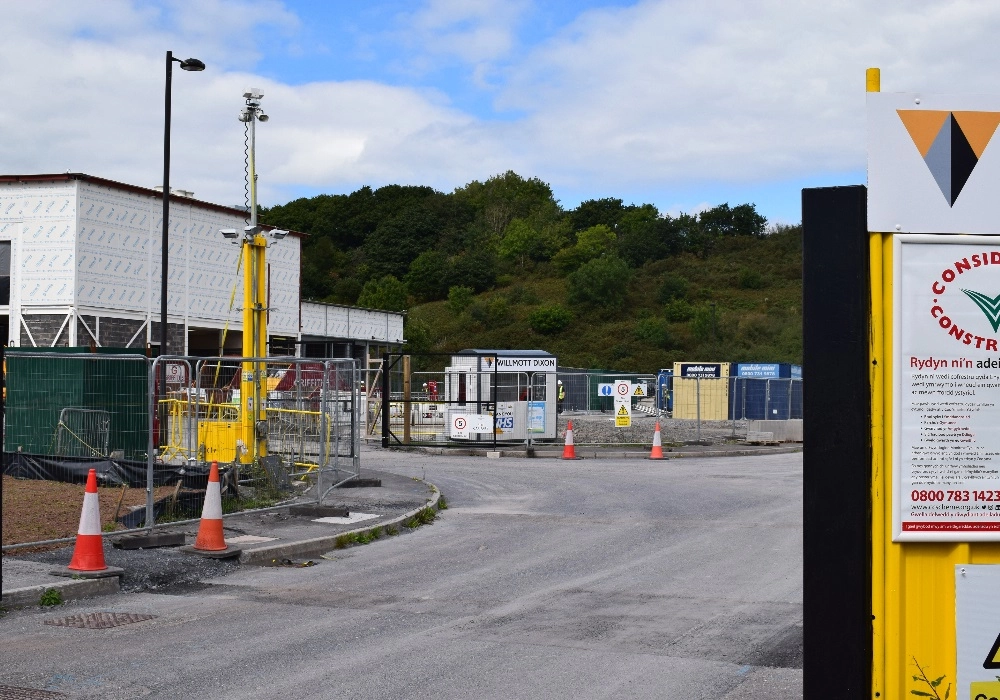
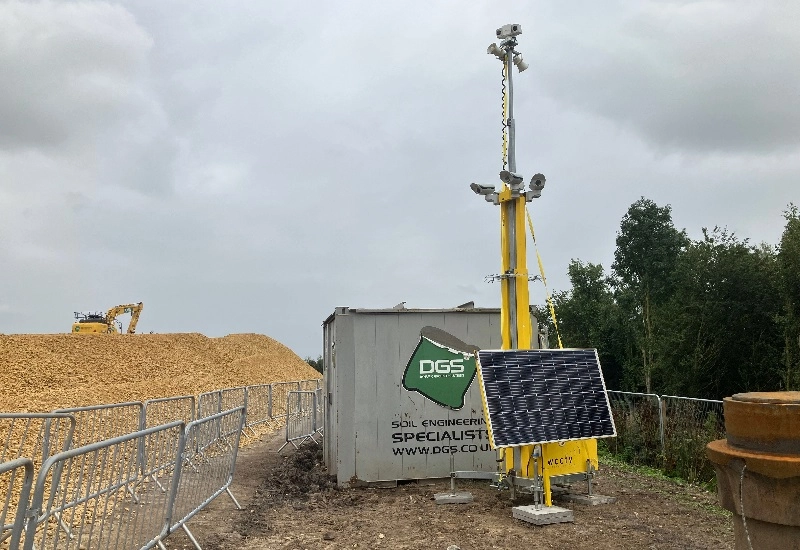
Easily integrated with our CCTV Towers and Temporary CCTV solutions, smart detection uses near-360° PTZ (Pan-Tilt-Zoom) cameras to scan every working area for potential risks.
-
PPE detection: Cameras monitor workers entering high-risk zones, flagging anyone without protective gear before they're harmed.
-
Smoke/fire detection: Near-360° vision searches for movement, colour patterns and behaviours that match known fire signatures, long before traditional sensors even react.
Read more: Improving Construction Site Health and Safety with CCTV
2. AI-video analytics
Machine learning AI technology takes hazard detection to the next level, distinguishing genuine threats (PPE violations, site fires) from false alarms like steam or plumes of dust. This level of sophistication reduces alert fatigue while ensuring real safety issues get immediate attention.
-
PPE detection: Uses artificial intelligence (AI) systems to recognise specific safety equipment (hard hats, hi-vis vests, gloves, goggles, etc.) and flags violations with near-pinpoint accuracy even on crowded sites.
-
Smoke/fire detection: AI-video analytics identifies smoke patterns, heat signatures, colour changes and light flickers that humans might miss. They filter out dust, steam and vehicle exhaust fumes that could trigger false alarms while identifying trends in high-risk areas (e.g., hot works).
Read more: Smart Analytics Insights in Construction
3. 24/7 Real-time monitoring
Accidents on construction sites can happen with little warning. That's why more and more construction firms are turning to professional 24/7 safety monitoring for real-time hazard identification to protect their workforce.
- PPE detection: Shift workers, early arrivals and lone subcontractors are monitored continuously via remote access, ensuring appropriate PPE is worn even when construction managers aren't on-site.
- Smoke/fire detection: Site fires often start outside working hours, whereby damage is only noticed/reported hours or days later. 24/7 remote monitoring signals the alarm the moment fires start.
Read more: Reducing Construction Site Incident Rates Through Real-Time Monitoring
4. Instant alerts
Smart AI safety detection triggers alerts within seconds of identifying a hazard, allowing for early intervention or corrective action.
-
PPE detection: Safety managers receive instant alerts when workers enter high-risk areas without protective gear. Systems also trigger live warnings automatically via built-in speakers.
-
Smoke/fire detection: Early warnings give site teams enough time to evacuate, contain the fire or call emergency services before small safety issues become major problems.
Read more: A Complete Guide to Construction Site Safety and Security
5. Rapid response
Alerts only matter if action follows soon after. That's why rapid response is just as important as detection itself. When remote monitoring services are connected to NSI Gold Accredited centres, trained operators review and escalate verified incidents in real-time.
-
PPE detection: Trained operators issue audio warnings via voice-down systems to instruct workers to correct violations in real-time.
-
Smoke/fire detection: Operators verify site footage, dispatch mobile keyholding teams and contact emergency services at the earliest sign of fire risk, all within minutes.
Read more: Why Should Construction Sites Use NSI Gold Accredited Security?
6. Supporting technologies
PPE and smoke/fire systems work alongside our add-on integrations to strengthen overall safety outcomes:
-
Automatic Number Plate Recognition (ANPR) serves as a basic safety control to monitor vehicle speeds in and around construction sites.
-
Environmental Monitoring tracks air quality, noise levels and weather conditions (temperature, humidity, rainfall, etc.), allowing site managers to implement various safety measures (e.g., PPE during dust storms) while supporting ESG and Net Zero targets.
-
Intrusion Detection identifies unauthorised access that could lead to arson or unsafe behaviour.
-
Time Lapse Video documents project progress for operational efficiency and safety updates.
Read more:
- GDPR, ESG and Construction: What Every Leader Needs To Know
- Air Quality Monitoring: Tackling Dust, CO2 and Worker Health Risks on Construction Sites
7. Safety culture
No amount of written safety protocols or toolbox talks can prevent accidents on their own. Safety has to be embedded in the everyday culture of a construction site, in how people work and how quickly risks are addressed.
Smart safety tools play a big role in reinforcing that culture. Real-time monitoring isn't about catching people out or assigning blame; it's about creating a consistent standard that applies to everybody. When PPE compliance and fire risks are monitored constantly, safety expectations become non-negotiable, and over time, this consistency drives behavioural change.
Read more: Engaging Frontline Construction Workers with Smart Safety Tools
8. Automated compliance
Saving lives starts with accountability. AI detection provides real-time data that proves due diligence and satisfies regulatory inspections all in one. This reduces reliance on manual checks and frees safety leaders to focus on higher-priority tasks rather than chasing up compliance.
-
PPE detection events are timestamped and logged with video footage, demonstrating that continuous monitoring was in place and action was taken.
-
Smoke/fire detection shows exactly when and where fire incidents occurred, supporting investigations, insurance claims and HSE regulatory inspections.
All safety data is consolidated in Stellifii, our cloud-based platform. Here, construction management teams can retrieve PPE, smoke and fire information directly through a single, AES256-encrypted dashboard and generate reports up to 5X more quickly than legacy systems.
Read more:
-
PPE Detection in Action: Keeping Construction Projects Compliant with HSE
-
AI-Powered Risk Detection: Smoke, Fire and PPE Compliance in Construction
6 Benefits of AI Safety Detection in Construction
In construction, automated detection offers many benefits:
-
Reduced workplace injuries: Catching PPE violations and fire risks early before they harm workers.
-
Strengthens HSE compliance: Documented real-time monitoring meets regulator standards, making site audits hassle-free.
-
Lowers insurance premiums: Fewer site injuries and accidents reduce your risk profile with insurers, often leading to lower rates and more favourable terms.
-
Reduced downtime: Early fire detection prevents major damage to site assets, eliminating site shutdowns and lengthy HSE investigations.
-
Improved contractor accountability: Visual evidence for PPE and fire ensures consistent enforcement for all workers.
-
Demonstrate duty of care: Integrating AI into safety strategies is a surefire way to win client, stakeholder and regulator trust as it shows workers' safety is prioritised.
Read more: How Smart Site Monitoring Protects Margins in Construction
Save Construction Worker Lives the Smart Way
Construction sites are filled with risks that endanger workers' lives every day: falls from heights, exposure to toxic fumes, heavy machinery, excessive noise, fires, and more. While these threats may be common in the sector, serious injury and loss of life should never be accepted as "part of the job".
Under UK health and safety law, safety managers have a legal duty to protect the health and safety of their workforce. That responsibility requires ongoing risk management and evidence-based preventative measures.
Real-time detection is the best solution. With 24/7 remote monitoring, instant alerts and automated documentation, potential hazards can be addressed as they happen, not hours or days later.
With 6 regional hubs and over 2 decades of wireless monitoring expertise, we provide fully-managed AI-powered detection systems that improve response times, reduce reliance on manual checks and support strong audit trails from the get-go.
Are you confident your construction site could withstand an unannounced HSE inspection tomorrow? If not, WCCTV can help.