Construction is one of the most dangerous industries, and the numbers make that hard to ignore.
In 2024/25 alone, 35 construction workers lost their lives on site and roughly 50,000 more suffered non-fatal injuries. Behind every one of these statistics is a hazard that wasn't caught in time.
Safety managers know the risks, but they can't be everywhere at once, and traditional monitoring methods can't keep pace. Weekly inspections miss what happens between shifts, and manual checklists don't catch emerging risks as they unfold. By the time an incident is reported, the damage is often already done.
The solution? Smart technology. AI-powered detection, IoT-based environmental sensors and real-time alerts identify hazards as they happen, not hours or days later, allowing managers to intervene faster. This results in fewer incidents and sites where workers are genuinely safer.
This article covers the 10 most common construction site hazards and how smart technology helps prevent them.
Top 10 Construction Site Hazards
Let's take a closer look at the most common construction hazards, ranging from falls from height to unauthorised access, and everything in between:
1. Working at height
Falls from height are the main cause of fatal injuries in the UK's construction industry, accounting for over 50% of the 35 workplace deaths in 2024/25. Even non-fatal falls can injure workers, leading to compensation claims and project shutdowns while the Health and Safety Executive (HSE) investigates.
The problem with traditional monitoring methods is that they rely on physical barriers and basic harness checks. But site managers can't watch every platform and scaffold every minute of the day. It's no surprise that many injuries and falls occur between manual inspections.
How technology helps
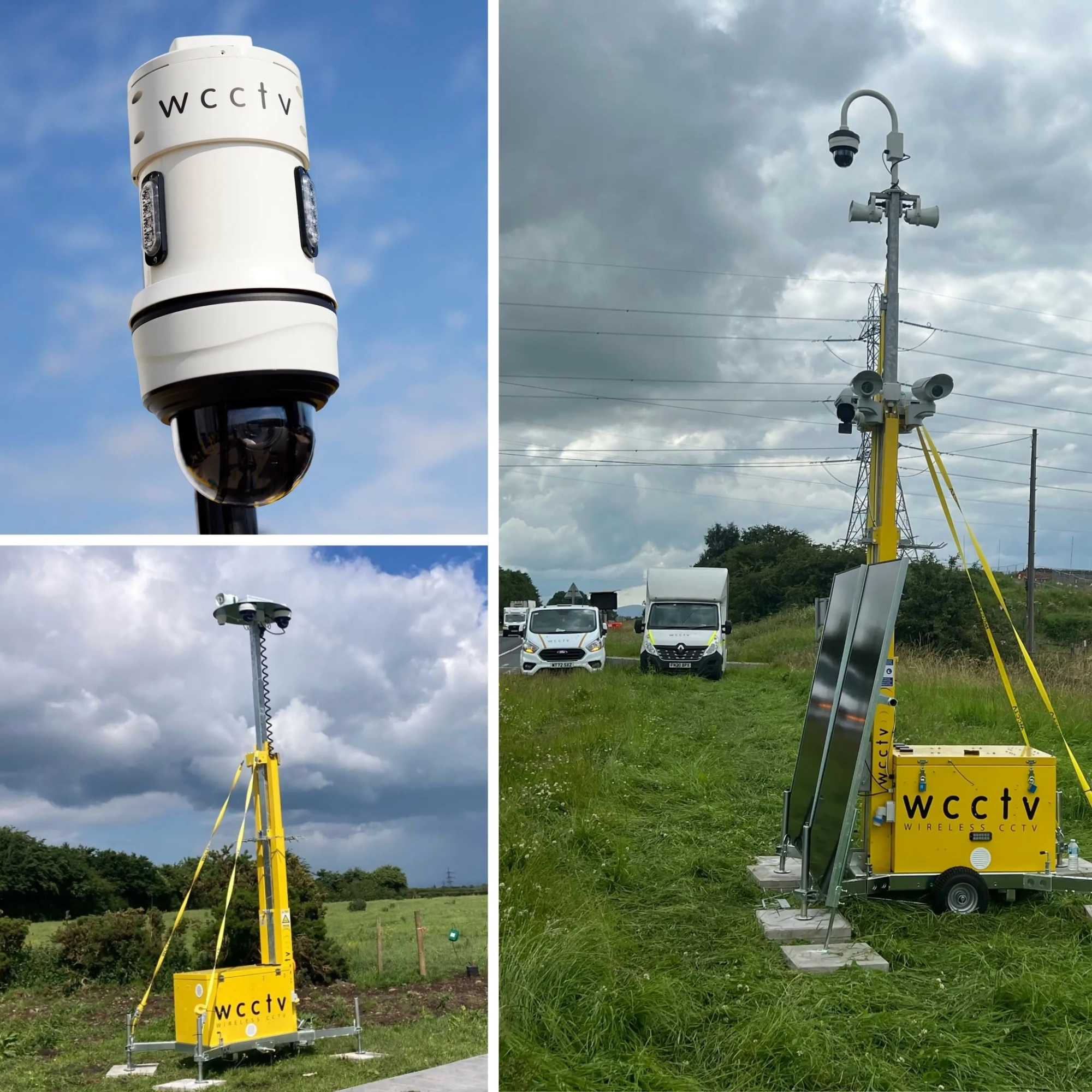
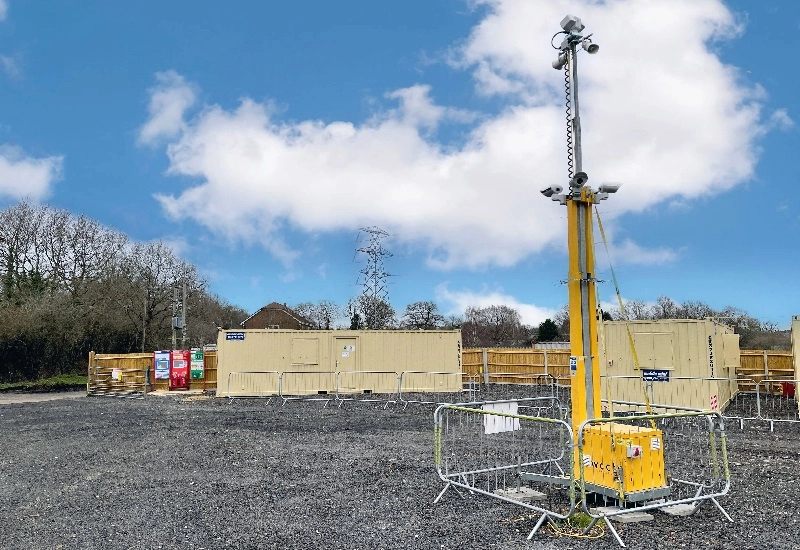
Advanced CCTV Towers and Temporary CCTV solutions with PTZ (Pan-Tilt-Zoom) cameras provide near-360° coverage of raised work areas. Designed for temporary and/or high-risk environments, they provide live and recorded footage, consistently monitoring for safety hazards on a construction site.
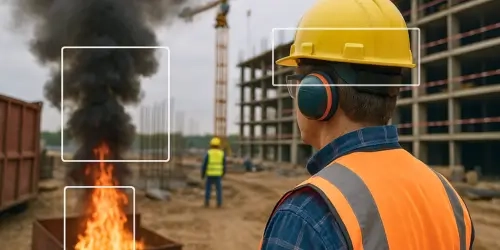
Using artificial intelligence (AI) and machine learning, smart detection systems flag unsafe behaviour and PPE violations the moment they unfold. This means that if cameras detect a worker without the appropriate protection gear or see that a scaffolding is overcrowded, an instant alert is triggered before accidents occur.
What's more, remote monitoring services at NSI Gold Accredited centres issue live audio warnings or dispatch mobile keyholding teams once trained operators verify the threat. This also prevents unsafe actions, allowing for quick corrective action long before manual inspections even notice.
Read more: How Smart Monitoring Systems Enhance Construction Site Safety
2. Slips, trips and falls
Between 2022 and 2025, approximately 50,000 construction workers sustained non-fatal injuries; 25% of these were due to trips, slips and falls.
Uneven surfaces, oil spills, demolition/excavation pits, loose building materials and debris all pose significant risk to workers. Factor in weather conditions like heavy rain, sleet and snow, and construction hazards increase tenfold.
Manual spot checks only catch these risks at one point in time. By the next walkabout (which could be hours or days later), new risks may have appeared. Regular risk assessments prevent injuries on building sites, but safety teams can't be everywhere at once.
How technology helps
Continuous CCTV surveillance watches construction sites both day and night. AI-powered software analyses live footage to identify recurring issues in work and storage areas, zones where clutter and debris often accumulate. When incidents do occur, timestamped evidence supports investigations and insurance claims.
Read more: Smart Analytics Insights in Construction
3. Moving objects (vehicles and heavy machinery)
Construction sites are busy places with excavators, cranes, lifting equipment and supply vehicles operating in close proximity to workers almost every day. In fact, based on HSE statistics, stuck-by-incidents accounted for 12% of all non-fatal injuries between 2022 and 2024.
The traditional approach? Dependence on traffic management plans and manned guards physically managing construction site safety. However, human oversight has its limitations, especially during shift changes or when multiple construction projects are underway.
How technology helps
Automatic Number Plate Recognition (ANPR) systems use Optical Character Recognition (OCR) to read vehicle registration plates from video or still images. Easily integrated with our mobile CCTV solutions, ANPR catches vehicle make, model, colour and recorded speed, adding valuable context beyond the plate itself. This gives safety teams the concrete evidence needed for investigations and accountability.
CCTV Towers positioned in high-traffic zones capture ongoing vehicle and worker movements. Add-on intrusion detection systems alert supervisors when unauthorised persons enter working areas. This level of surveillance can drastically reduce injuries on-site.
Read more: How Integrated CCTV and ANPR Keep UK Sites Secure and Compliant
4. Excavation and collapsing trenches
Excavation and groundworks are dangerous construction activities. Trench collapses, ground instability and accidental contact with underground power cables have caused many injuries and fatalities over the years.
The use of vibratory power tools and heavy ground-working equipment can weaken the surrounding soil, increasing the likelihood of a cave-in. When a collapse happens, it often occurs suddenly with little warning. The weight of falling soil makes rescue missions extremely difficult and survival outcomes low. Because of these risks, proper planning, risk assessments and protective equipment are essential.
Traditionally, visual assessments of trench walls, slopes and soil stability were considered sufficient. In practice, they rarely are.
Earthworks also involve "invisible" threats like silica dust that, after prolonged exposure, can cause silicosis, Chronic Obstructive Pulmonary Disease (COPD) and lung cancer. It's believed that around 500 construction workers die annually due to silica dust exposure, reinforcing the need for dust control and workers to wear personal protective equipment (PPE).
How technology helps
Smart environmental monitoring solutions can help prevent these site hazards.
Weather monitoring sensors measure atmospheric fluctuations (rainfall, temperature, wind speed) that could affect dust levels, slope stability and operational timelines. They alert safety teams the moment conditions change that could increase the risk of a collapse.
Air quality sensors continuously collect data on fine particulate matter (PM1, PM2.5, PM10), CO₂, TVOC, carbon monoxide and other toxic airborne fibres in real-time. When dust levels reach unsafe thresholds, managers are notified immediately so corrective action can be taken.
Apart from environmental impact, ongoing PPE surveillance through smart detection systems identifies violations in real-time. If workers enter excavation areas without the appropriate PPE (e.g., respiratory device, high-visibility jackets, etc.), systems instantly flag the breach and alert safety teams. This helps reduce hazard exposure and strengthens overall compliance and accountability.
Read more: Integrating Environmental Monitoring Sensors on Construction Sites
5. Fire hazards
Reports show that Greater Manchester, North Wales and Merseyside had the highest number of construction fires in 2022/23, with hot works being the main cause.
Fires can quickly spread across construction sites when exposed timber, insulation and combustible materials are lying around. The open nature of many working areas, combined with limited detection, allows fires to go undetected until major damage is done.
Traditional fire safety typically relies on standard smoke detectors that only trigger after a substantial amount of smoke reaches the sensors. By that stage, the fire may already be well developed.
On top of this, site fires often occur outside working hours, when the site is unoccupied and there is nobody present to raise the alarm. Causes range from smouldering materials left after hot works to deliberate arson, all of which can go unnoticed for hours.
How technology helps
Modern Smoke and Fire Detection uses artificial intelligence to identify the earliest signs of fire, such as:
-
Thin smoke trails
-
Heat signatures
-
Colour changes
-
Flame patterns
-
Flickering light
They notice fire hazards much quicker than basic smoke detectors while filtering false alarms caused by dust and steam with near-pinpoint accuracy. This gives site teams more time to respond and far better protection for everyone on site.
Read more: AI Safety Detection for Construction: PPE, Fire and Smoke Alerts That Save Lives
6. Dust exposure
It's estimated that around 5,000 construction workers have a work-related breathing or lung problem (new and long-standing). Silica dust, asbestos, wood dust, diesel exhaust fumes, mould spores and other airborne toxins cause conditions that may not surface until years after the initial exposure, such as siderosis (i.e., "Welder's lung"), silicosis, COPD and lung cancer.
Traditional controls like dust suppression (wetting method), Respiratory Protective Equipment (RPE) provision and periodic manual inspections can only do so much. Since exposure levels fluctuate throughout the day, spot checks might miss harmful peaks that cause the most harm.
How technology helps
Smart air quality sensors constantly monitor airborne pollutants in real-time. When readings approach Workplace Exposure Limits (WELs) (e.g., 0.1 mg/m³ for Respirable Crystalline Silica (RCS)), instant alerts enable early intervention, such as pausing work or rotating site teams.
This not only ensures workers aren't put in harm's way but also creates a detailed audit record that regulators expect. These devices store up to 180,000 timestamped readings, supporting ESG monitoring and reporting obligations under the Control of Substances Hazardous to Health Regulations (COSHH).
Read more: Air Quality Monitoring: Tackling Dust, CO2 and Worker Health Risks on Construction Sites
7. Excessive noise
Did you know construction workers are 3X more likely to suffer hearing damage than the average employee? Once hearing is gone, there's very little that can be done to fix it.
The reality is, prolonged exposure above 85 decibels (dB) causes irreversible hearing loss, which neither surgery nor a hearing aid can correct. Yet, many construction activities like drilling and jackhammering can exceed thresholds within minutes.
Traditional noise monitoring typically involves manual walkabouts and the use of hearing equipment. But compliance depends on whether safety teams have performed comprehensive noise risk assessments (under Control of Noise at Work Regulations 2005) and whether workers actually wear protective gear.
How technology helps
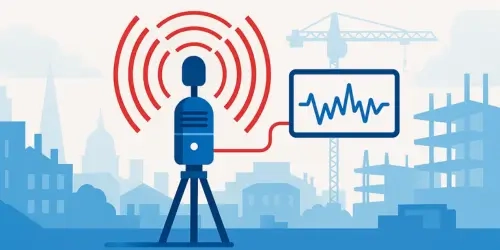
IoT-based noise monitoring sensors use a condenser microphone to track a wide sound (30-130 dB) and frequency (20Hz to 12.5kHz) range across noisy building sites. Continuous monitoring and real-time alerts notify safety managers when readings approach unsafe thresholds, enabling quick corrective action before damage occurs.
PPE smart detection instantly flags violations the moment they occur while timestamping and storing every event in Stellifii, our cloud-based platform. With information easily retrieved in a click or two, Stellifii generates reports up to 5X faster than legacy systems, making compliance stress-free.
Read more: Smart Noise Monitoring: Protecting Workers’ Hearing and Meeting HSE Standards
8. Adverse weather
Rain, wind, snow and extreme temperatures can change by the hour. High winds make crane operations dangerous, heavy downpours cause slips, heat waves increase fatigue and thick fog impairs visibility.
Studies also show that nearly 40% of UK site managers have said inclement weather is a major contributor to project delays and financial losses. On top of this, around 22% of construction management teams say freezing temperatures, excessive rainfall and flooding are some of the sector's biggest threats.
Yet, many construction sites still rely on standard forecasts that don't reflect actual conditions. This is a costly mistake.
How technology helps
Designed for critical outdoor sites, smart weather monitoring systems track live environmental conditions that help project teams assess risks, make informed decisions and document conditions for compliance reports, safety discussions and/or insurance claims. Monitoring conditions at transmission distances of up to 100 metres, these IoT-based devices record:
-
Temperature (from -40°C to 60+°C)
-
Humidity (10-99%)
-
Wind speed (0–110mph)
-
Rainfall (hourly)
-
Dew point
Read more: Weather Monitoring Tools That Keep Construction Projects on Track
9. Hand-arm vibration syndrome
Hand-arm vibration syndrome (HAVS), also known as "Vibration White Finger", is caused by using vibrating tools for extended periods. A few of these tools include pneumatic drills, grinders and jackhammers. Tingling, "white fingers" (loss of blood flow), numbness and loss of grip strength are common symptoms of HAVS.
According to the HSE, roughly 2 million people are exposed to hand-arm vibration at work, and around 17% of construction workers are at risk of developing HAVS.
Traditional controls, such as manually controlling vibration exposure limits, can no longer suffice. Without continuous monitoring, it's difficult to prove compliance with the Control of Vibration at Work Regulations 2005 or accurately monitor vibration levels, especially during demolition work.
How technology helps
IoT technology helps reduce the risk of injury by continuously monitoring tool vibration levels and automatically alerting safety managers when exposure nears threshold limits (2.5 m/s² over 8 hours).
On top of this, smart PPE detection systems verify that workers are wearing the required protective gear, helping to strengthen compliance and prevent avoidable harm.
Read more: The Importance of Construction Vibration Monitoring in Demolition Work
10. Unauthorised access and intruders
Construction sites contain valuable electrical equipment, heavy machinery, assets and copper, making them easy targets for theft and vandalism. Intruders also create liability risks whereby contractors can be held responsible if an unauthorised person is injured on-site, regardless of whether they entered illegally.
Traditional monitoring solutions like manned patrols, basic perimeter fencing and static CCTV are no match for modern construction and organised crime groups (OCGs). This is because security guards can't cover every boundary simultaneously, and basic surveillance leaves blind spots that criminals can exploit.
How technology helps
Intruder detection solutions use near-360° PTZ cameras and AI-video analytics to distinguish genuine threats from false alarms. AI enables early detection and interception of threats, with minimal human intervention. Systems are sophisticated enough to differentiate between someone scaling a perimeter fence and harmless movement caused by debris or wildlife.
When integrated with fully-managed CCTV Towers with professional remote monitoring services, trained operators at NSI Gold Accredited monitoring facilities verify live footage, initiating various response actions such as mobile keyholding dispatch or issuing voice-down audio challenges to deter the risk.
Read more: How Artificial Intelligence is Revolutionising CCTV Tower Monitoring
Prevent Construction Site Hazards the Smart Way
Construction hazards are inherent to the industry, but many incidents are preventable when risks are identified and addressed early. Proactive monitoring and smarter safety controls give teams the ability to intervene before minor issues escalate into serious injuries or costly delays.
Continuous 24/7 remote monitoring and real-time alerts enable immediate action when thresholds are exceeded or unsafe behaviour is detected. Automated reporting provides the defensible evidence regulators expect while cutting time-consuming administrative tasks in half.
By consolidating surveillance, site monitoring and smart detection into a single cloud platform, Stellifii gives health and safety officers far greater control across every site.
With 6 regional hubs and more than 20-years of wireless monitoring expertise, we understand the realities of hazardous construction environments and provide practical solutions tailored to the sector's most common risks.
Don't let preventable construction hazards jeopardise your next project. Sidestep risks the smart way; the WCCTV way.