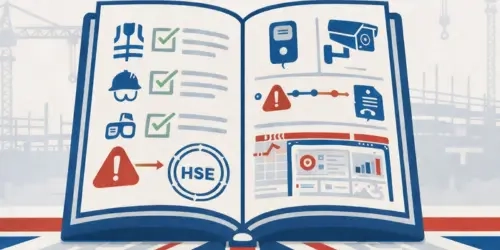
adopting the digital transformation in constructionConstruction safety isn't failing because health and safety teams don't understand the problem. It's failing because the systems they rely on haven't kept up with the times.
Paper-backed processes only capture what happens during physical walkabouts, and spreadsheets tally data days after an incident occurs. By the time a safety threat is identified, documented and lands on your desk, workers may already have been harmed.
By keeping health and safety managers stuck in "firefighter mode", traditional methods are no match for modern construction. Projects are more complex, and HSE requirements are tighter. Plus, stakeholders, clients and insurers want accurate, evidence-backed documentation that paperwork alone can't provide.
The answer? Proactive prevention. Real-time monitoring, AI-powered detection, IoT technology and centralised dashboards that identify potential hazards before incidents occur.
This article covers why reactive safety measures are holding the UK construction industry back, what construction health and safety proactive prevention looks like and how safety managers can make the shift.
Why Health and Safety Management Matters in UK Construction
Construction is a dangerous sector. Workers face daily safety risks such as falls from height and exposure to hazardous substances. The consequence of poor safety management? Long-term health issues for workers, civil claims and lives lost.
This is what the statistics say:
-
35 fatalities on UK construction sites in 2024/25
-
Falls from height account for the most fatal injuries (53%)
-
Nearly 80,000 workers suffered work-related ill health between 2022 and 2025
-
500 annual deaths are said to be linked to silica dust exposure
-
An estimated 4,000 deaths are linked to occupational lung disease each year
-
Around 41,000 workers have a new or long-standing musculoskeletal disorder
-
Economic cost from work-related ill health and workplace injury is around £1.4 billion
Behind every number is a real person, a construction worker who didn't go home or a career ended by harm that could have been prevented. For health and safety management teams, each incident brings an investigation and puts their reputation on the line. Every near-miss that slips through is a future incident waiting to happen.
Under the Health and Safety Executive (HSE), Britain's national regulatory body for workplace safety, management teams have a legal obligation to protect workers so far as it's "reasonably practicable". Every rule and regulation exists to keep workers safe and prevent accidents and ill health.
The risks of non-compliance are serious:
-
Financial penalties
-
Project delays
-
Increased insurance premiums
-
Reputational damage
-
Criminal prosecution (for gross negligence)
-
Compensation claims
-
Civil lawsuits/legal action
Read more: 7 Compliance Pitfalls Costing Construction Firm Millions
Reactive Site Safety vs Proactive Safety Management
Too many construction businesses still operate with reactive health and safety processes that look something like this:
-
Incidents happen
-
Investigations follow
-
Reports are filed
-
Repeat
Not much is done in between this to identify and address potential hazards before something happens. But this is where proactive safety software changes everything.
Here's how reactive vs proactive safety management measures up:
| Aspect | Reactive safety | Proactive safety |
| Timing | After incidents occur | Before incidents occur (via continuous monitoring) |
| Focus | Incident response, corrective fixes | Hazard identification, risk prevention |
| Methods | Paper reports, manual walkabouts, retrospective audits | Real-time monitoring, instant alerts, automated risk detection |
| Metrics | Injury rates, lost time, RIDDOR reports | Near-miss reporting, violations prevented, fast response times |
| Evidence | Written records, manual vendor platform consolidation | Timestamped footage, automated logs, live cloud dashboards |
| Workload | Time-consuming manual documentation, prone to human error | Automated monitoring, logging and reporting reduces admin burden |
Put plainly, reactive safety asks, "What went wrong?" while proactive safety asks, "What's about to go wrong, and how do we stop it?"
Read more:
Why Paper-Based Safety is Holding UK Construction Back
Paper-based site safety management was designed for a different era, when projects were smaller and regulations were less strict. Modern construction has outgrown this:
-
Delayed data: Paper systems show what has already happened. By the time site data is compiled, the information is outdated. Relying on legacy safety practices means you're always on the backfoot.
-
Documentation gaps: What happens between inspections isn't recorded. Near-misses go unreported, and emerging hazards aren't seen. Reconstructing events comes down to witness statements and memory when incidents happen.
-
Admin overload: Manual audits and report filing eat hours of valuable time; time that could be better spent on prevention. Safety managers quickly become "paper pushers" instead of safety leaders.
-
Inconsistent enforcement: Safety managers document and enforce safety protocols differently. Some sites maintain detailed records, others don't. This inconsistency creates compliance gaps and blind spots.
-
Multi-site stress: Managing workplace safety across multiple sites and projects increases paperwork tenfold. Project data living in siloed vendor platforms makes centralised visibility virtually impossible.
-
Hybrid/remote working teams: Safety managers cannot be everywhere at once. Hybrid/remote working setups mean less physical presence, which is exactly where visibility matters most.
-
Rising threats: Paper-backed processes can't handle organised crime groups (OCGs) targeting construction sites, increased regulatory compliance demands and ESG
Read more:
Regulatory pressure
UK construction operates under some of the strictest health and safety laws. Meeting these obligations through manual processes alone makes compliance extremely difficult:
|
Regulation |
Purpose |
Why manual methods struggle |
|
RIDDOR 2013 (Reporting of Injuries, Diseases and Dangerous Occurrences Regulations) |
Report serious occupational incidents, diseases and dangerous occurrences to HSE within stipulated timeframes (e.g., immediately for fatalities; 24 hours for major incidents, etc.) |
|
|
The main UK law enforcing occupational health and safety management |
|
|
|
Health and safety management throughout all project phases |
|
|
|
Control of Substances Hazardous to Health Regulations (COSHH) |
Control worker exposure to hazardous substances |
|
|
Protect workers from hearing damage |
|
|
|
Prevent fires and emergency preparedness |
|
Read more:
What HSE expects
Safety inspections can happen at any time. Here's what the HSE expects:
-
Evidence of ongoing (24/7) monitoring, not just inspections done here and there.
-
Proper personal protective equipment (PPE) for high-risk tasks (e.g., guardrails, hard hats).
-
Timestamped records identifying potential hazards and how quickly they were addressed.
-
Documented corrective action showing violations triggered genuine responses.
-
Thorough risk assessments, COSHH assessments and proper training records, not generic templates.
Paper systems struggle to provide this documentation. Siloed data stored in disconnected legacy systems leaves site teams scrambling for evidence, which doesn't sit well with HSE inspectors.
For construction safety managers under constant pressure, protecting workers and staying compliant depends on smarter, more efficient ways of working.
Read more: Rethinking Construction Compliance Through Smart Monitoring Systems
The Tools Helping Construction Teams Stay Safe
Proactive safety management gives safety managers the tools to match the scale and complexity of today's construction projects, and it is fast becoming the standard across the UK industry.
Here's what that looks like on the ground:
Smart surveillance
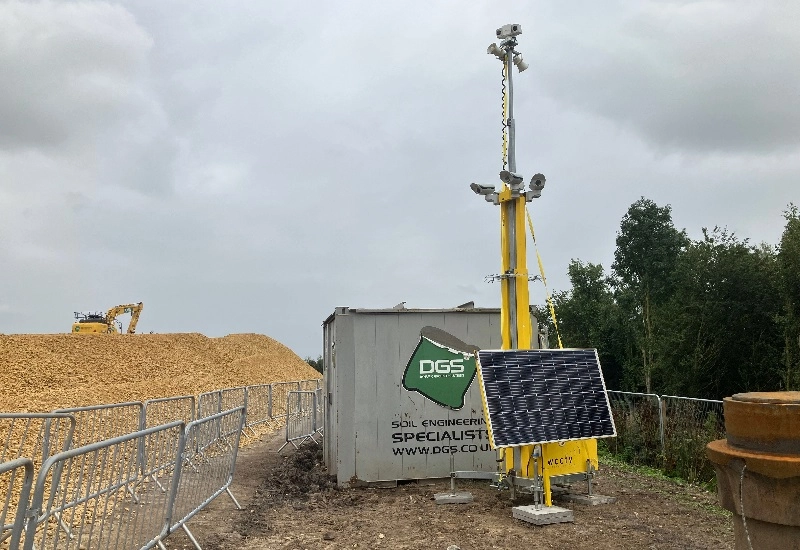
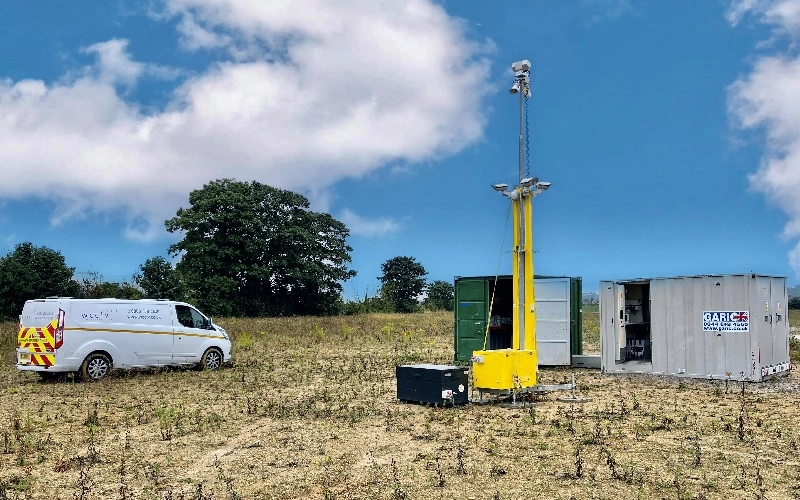
Rapid Deployment CCTV Towers and Temporary CCTV with near-360° PTZ (Pan-Tilt-Zoom) cameras provide 24/7 visibility across all work zones. Unlike static cameras or routine patrols that only notice a fraction of site activity, smart cameras capture everything that happens in real-time.
Other smart surveillance options, like Redeployable CCTV Cameras, can be easily positioned as construction projects evolve, making them ideal for covering blind spots and hard-to-reach areas.
Visibility goes further when surveillance is linked to professional remote monitoring services from NSI Gold Accredited centres. Here, site footage is reviewed live, and when a threat is detected, trained operators initiate various response actions all within minutes. This can include:
-
Issuing live audio voice-down challenges
-
Dispatching mobile keyholding teams
-
Notifying emergency services as needed
For multi-site operations, remote monitoring means safety managers can track all projects from a single interface. This eliminates the blind spots paper processes create.
Reactive vs proactive
-
Traditional approach: Supervisors walk sites periodically and document findings on clipboards or spreadsheets. Gaps between visits go unnoticed.
-
Smart approach: Cameras monitor sites both day and night, even in low light or adverse weather conditions. Real-time alerts allow quick action as hazards develop, long before they cause harm.
Read more: The Best Options for Construction Site CCTV
AI-powered smart detection
Smart detection systems using intelligent software, AI analytics and machine learning algorithms identify potential hazards as they unfold. They do this automatically to address various safety concerns on-site with very little human intervention.
-
PPE detection flags workers missing the required safety gear (e.g., hard hats, high-visibility clothing, safety goggles). Instant alerts are triggered the moment workers enter high-risk zones, improving workplace safety before minor issues escalate.
-
Intrusion detection identifies unauthorised access with near-pinpoint accuracy, distinguishing genuine threats from false alarms.
-
Smoke and fire detection systems catch early fire warnings, such as thin smoke trails or heat signatures. They flag issues instantly, long before standard fire alarms even react.
-
Smart access control, such as Automatic Number Plate Recognition (ANPR), uses Optical Character Recognition (OCR) to monitor unauthorised vehicle access in gated sites or controlled zones.
Reactive vs proactive
-
Traditional approach: Site teams spot check PPE usage during walkabouts, basic fire detection only triggers after smoke reaches sensors and manned guards control entry/exit points.
-
Smart approach: AI systems are always on duty, flagging violations and emerging threats as they occur. By analysing historical camera data, managers can effectively plan ahead. For instance, if data shows safety risks increase during hot works or demolition, teams can deploy additional PPE or stricter safety protocols for those construction activities.
Read more:
-
PPE Detection in Action: Keeping Construction Projects Compliant with HSE
-
How Integrated CCTV and ANPR Keep UK Sites Secure and Compliant
-
How Artificial Intelligence is Revolutionising CCTV Tower Monitoring
IoT technology
Internet of Things (IoT) technology connects devices (smart cameras, sensors) to the internet so they can collect data without constant human input. IoT-based environmental sensors keep an eye on atmospheric conditions while work is underway. This helps site teams make better safety decisions and provides concrete evidence for risk assessments and insurance claims.
-
Air quality sensors continually monitor CO₂, VOCs, fine particulate matter (PM1, PM2.5, PM10) and other airborne pollutants. This is particularly beneficial in confined spaces where ventilation is limited or during demolition, where silica dust is more likely to be released. All readings are taken in real-time and trigger alerts when dust or fumes approach predefined thresholds.
-
Noise monitoring systems track occupational sound levels, an often overlooked site hazard. Systems monitor a wide range of decibels (30-130 dB) and frequencies (20Hz to 12.5kHz) on construction sites, triggering instant alerts when levels near the Control of Noise at Work Regulations 2005 limits.
-
Weather monitoring sensors measure live site conditions: temperature (-40°C to +60°C), wind speed (0-110 mph), humidity (10-99%) and hourly rainfall, all of which affect workers' safety. For instance, strong winds make crane operations unsafe and heavy downpours run the risk of trench collapses during excavation.
Sensors store up to 180,000 timestamped readings for trend analysis and compliance reporting, creating the audit trail COSHH and HSE regulatory bodies expect.
Reactive vs proactive
-
Traditional approach: Manual inspections record environmental readings at one point in time. Since the weather can fluctuate by the hour, and dust levels can spike at any given time, this method is ineffective for protecting workers' health.
-
Smart approach: Ongoing monitoring of site conditions captures every fluctuation. Real-time alerts enable early intervention before exposure limits are breached and workers are harmed.
Read more: The Role of Environmental Monitoring in Meeting CDM 2015 Requirements
Cloud consolidation
Cloud-based platforms like Stellifii bring all site activity and project data into a single view. From one secure dashboard, safety managers can see everything that happens right to the minute.
From workplace accidents and emergency procedures to legal compliance and preventive measures, everything is available from any device in just a few clicks.
-
Centralise visibility: All sites, all data, all in one place.
-
Automated logs: Every detection alert is timestamped alongside corresponding video evidence.
-
Instant retrieval: Historical data is searchable in minutes, not days.
-
Audit readiness: Compliance reports export 5X faster than legacy systems.
Reactive vs proactive
-
Traditional approach: Data spread across multiple platforms leads to vendor sprawl, draining valuable hours from site teams and raising operational costs. Safety audits can take days to pull together, leaving managers stuck reacting to issues after the fact rather than proactively preventing them.
-
Smart approach: Audit preparation is straightforward when everything's consolidated into a unified dashboard. No scrambling for scattered reports in archive files; just control at your fingertips.
Read more: Managing Vendor Sprawl in Construction: Why Consolidated Monitoring Matters
5 Benefits of Proactive Safety Management for UK Contractors
Here are 5 advantages that proactive health and safety management offers to UK construction:
1. Stronger audit confidence
When HSE inspectors arrive, audit trails are ready virtually instantly. Timestamped logs show continuous monitoring, and video footage shows that violations were detected and addressed in due course. Allowing safety managers to generate reports up to 5X faster than legacy systems, Stellifii brings all site safety aspects to your fingertips in minutes.
Read more: How Cloud-Based Tools Are Changing Construction Admin
2. Fewer incidents and insurance claims
Better site safety means fewer incidents. Fewer incidents mean fewer insurance claims, and fewer claims mean lower risk profiles, less chance of legal exposure and cheaper rates. Real-time monitoring catches potential dangers in high-risk environments before they escalate, keeping workers safe and managers in control.
Read more: Reducing Construction Site Incident Rates Through Real-Time Monitoring
3. Strong safety culture
When teams know risks are visible in real-time, safety stops being a box-ticking exercise and becomes a proactive safety culture. Consistent and automated enforcement builds trust as rules are applied equally. Personal protective equipment (PPE) isn't worn to satisfy regulators but because workers understand it protects them.
It's this culture, embedded in day-to-day operations, that saves more lives than paperwork ever could.
Read more: Engaging Frontline Construction Workers with Smart Safety Tools
4. Measurable ROI
Proactive prevention is measurable, delivering returns that make it hard for construction boards to ignore:
-
Fewer incidents: Accident prevention leads to fewer investigations and compensation claims.
-
Less admin time: Automated reporting frees safety managers from time-consuming manual work.
-
Reduced rework and delays: Hazards caught early don't become project-stopping problems.
-
Lower claims: Better safety management reduces insurance and legal exposure.
-
Less downtime: Continuous monitoring prevents shutdowns and boosts operational efficiency.
Did you know that proactive measures can save £3-£5 in potential incident costs for every pound invested in safety?
Read more: The ROI of Consolidating Site Monitoring Into a Unified Platform
5. Reputation protection
With fewer on-site incidents, safety managers protect both their own and the company's reputation.
On top of this, clients evaluate safety records when awarding tender contracts. A poor track record raises instant red flags.
Proactive prevention shows commitment, that documented evidence isn't just "another safety policy" to tick off the list. It means thorough risk assessments are done, and safe practices/safety standards are consistently applied to ensure the overall safety of everybody on-site.
Read more: Why Integrated Monitoring Wins More Construction Tenders
5 Steps to Shift from Reactive Paperwork to Proactive Prevention
If you're considering adopting the digital transformation in construction, follow these 5 steps:
-
Audit current position: Evaluate your current processes. Where does data live? What gets documented and what doesn't? Are there gaps between inspections? Pinpoint pain points: admin bottlenecks, visibility blind spots and non-compliance risk.
-
Define priorities: Which areas need the most attention? Where is compliance most vulnerable? Where are you falling short in the eyes of HSE? Start where a proactive approach will deliver the most value.
-
Integrate smart tech: Choose smart surveillance systems, IoT devices and unified dashboards with artificial intelligence (AI) built in. Look for remote monitoring at NSI Gold Accredited centres and wireless transmission via cloud platforms.
-
Pilot: Deploy on one construction site first to get a feel for the technology. Measure metrics: prevented accidents, response times and admin hours saved. Build a strong case to present to stakeholders before scaling across all operations.
-
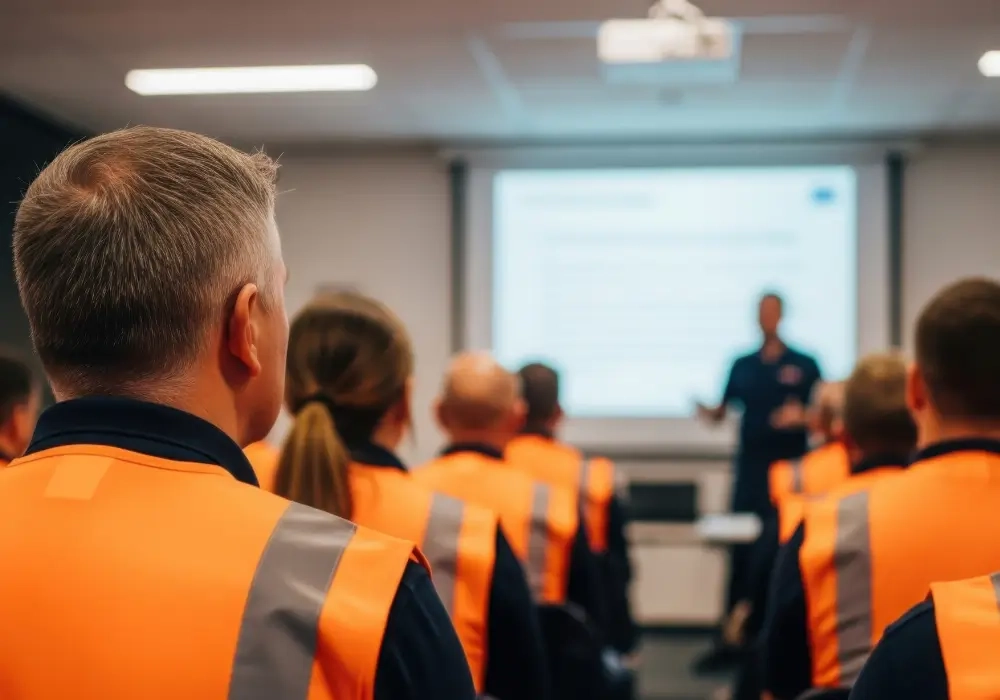
Train and scale: With proven results, expand across sites. Provide comprehensive training for staff on using the new health and safety software and responding to incident alerts. Use centralised dashboards to maintain visibility as you grow.
What often gets in the way (and how to address it)
-
Budget concerns: Pilot systems and present ROI projections (reduced incidents, lower insurance, less admin) to the board.
-
Workforce resistance: Explain that tech supports workers rather than micromanaging them.
-
Integration complexity: Choose platforms that integrate with existing systems.
The Next Step in Construction Health and Safety Management
Paper-based safety management served its purpose. But in an era of fast-moving projects and tightening HSE regulations, reactive processes can't keep pace.
Proactive prevention gives health and safety management teams something they've always wanted: control. Smarter monitoring gives them the visibility and evidence they need to protect workers and demonstrate due diligence in a fraction of the time.
And the results are hard to ignore. Contractors embracing proactive monitoring are already seeing a big difference: lower incident rates, measurable ROI and hours saved from manual work.
With no sign of the industry slowing down, how confident are you with your legacy-based safety management system? Ditch the paperwork for fully-managed proactive prevention with WCCTV today.