The construction industry contributes around 6.4% to the UK's GDP, with almost 194,000 construction companies making up 13.5% of all employers in the country.
Despite its economic significance, construction remains one of the most hazardous industries for workers, with a fatality rate 4.8X higher than the all-industry average.
But health and safety managers in charge of keeping everyone on-site safe often have too few staff and/or a limited budget. This is why, for many, maintaining 24/7 oversight and ensuring compliance across complex projects can feel impossible.
That's where smart safety systems in UK construction are making a real difference. These smart technologies are replacing paper-backed processes and time-consuming manual work with real-time monitoring, automated alerts and live data analytics. The result? HSE leaders are more in control of what happens on-site without the pressure of being everywhere at once.
The Evolution of Safety and Surveillance in Construction
For a long time, construction safety relied on the basics: clipboard inspections, periodic site walks, paper-based audits and manned security. Site managers performed spot checks, guards patrolled perimeters and incidents were reported after they happened.
This approach had limitations:
-
Reactive by design: Traditional systems only flagged problems after incidents occurred. Near-misses weren't recorded, and behavioural issues went unnoticed. Basic "record-only" CCTV required site teams to playback footage logs manually to see site activity.
-
Admin overload: Manual processes consumed hours of HSE time; time that could have been spent on prevention rather than documentation.
-
High labour costs: Manned security meant significant ongoing expenses, particularly for large or multi-site operations.
-
Inconsistent coverage: Human fatigue, shift changes, leave days and weather conditions created gaps in surveillance and monitoring.
-
Siloed data: Site information sat in separate systems; CCTV footage here, environmental monitoring there and compliance records elsewhere. This made it difficult to identify trends or demonstrate due diligence.
Modern construction demands more. Projects are larger and more complex, timelines are tighter and compliance requirements are stricter than ever before. Clients want evidence of safety protocols, and regulators expect documented risk management practices and control measures to prove your due diligence.
All of this can be achieved with smart safety systems that give health and safety officers the visibility, accountability and data insights they need to do their jobs effectively.
Read more: The Growing Expectation of Tech-Enabled Compliance in Construction
5 Reasons Traditional Safety Systems are Becoming Obsolete
Here's why legacy systems are falling short in the construction sector:
-
Manual inspections: Periodic spot checks miss what happens between visits. On large construction sites, one person can't be everywhere at once. Smart safety monitoring systems provide continuous monitoring without adding headcount, at a fraction of the cost of manned guards.
-
Carbon footprint concerns: ESG and Net Zero requirements are pushing construction companies to reduce environmental impact. Diesel-powered security vehicles and high-energy consumption legacy systems are being replaced with greener alternatives that align with sustainability goals.
-
Limited scalability: Traditional safety methods require more staff when sites expand. Smart surveillance scales without exorbitant costs. Integrated monitoring and cloud-based platforms monitor multiple building sites from a single dashboard.
-
Human error risks: Fatigue, distraction and mental health conditions all affect manual processes, creating blind spots where crucial information can be missed. Foot patrols often only flag safety issues days later, while workers tasked with correlating data across 5+ legacy systems spend more time on paperwork than on proactive safety management.
-
Compliance failures: Paper-based audit trails struggle to keep pace with evolving HSE regulations, leading to gaps that can result in non-compliance penalties and fines. When inspectors arrive, scrambling for documentation instantly puts teams into "firefighting mode". Smart systems generate audit-ready reports automatically, with exports up to 5X faster than legacy systems.
Read more: The Hidden Costs of Legacy Systems on Modern Construction Projects
The Rise of Smarter Safety Systems in the Construction Industry
Smart safety systems are no longer new technological advancements or pilot projects; they're becoming standard practice across the UK's construction industry.
Here's how they are transforming the sector:
Real-time surveillance and remote monitoring
Traditional CCTV captured footage for post-incident review. Smart surveillance systems do something completely different: they can prevent accidents by enabling real-time intervention.
In fact, sites with continuous monitoring can reduce accidents by 20-50% compared to those without.
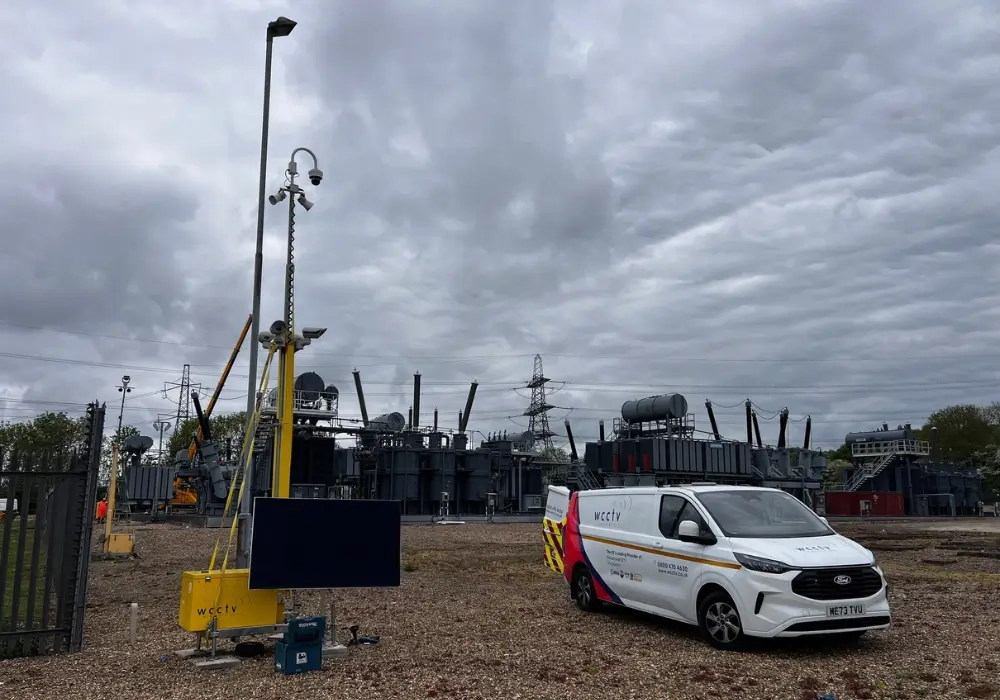
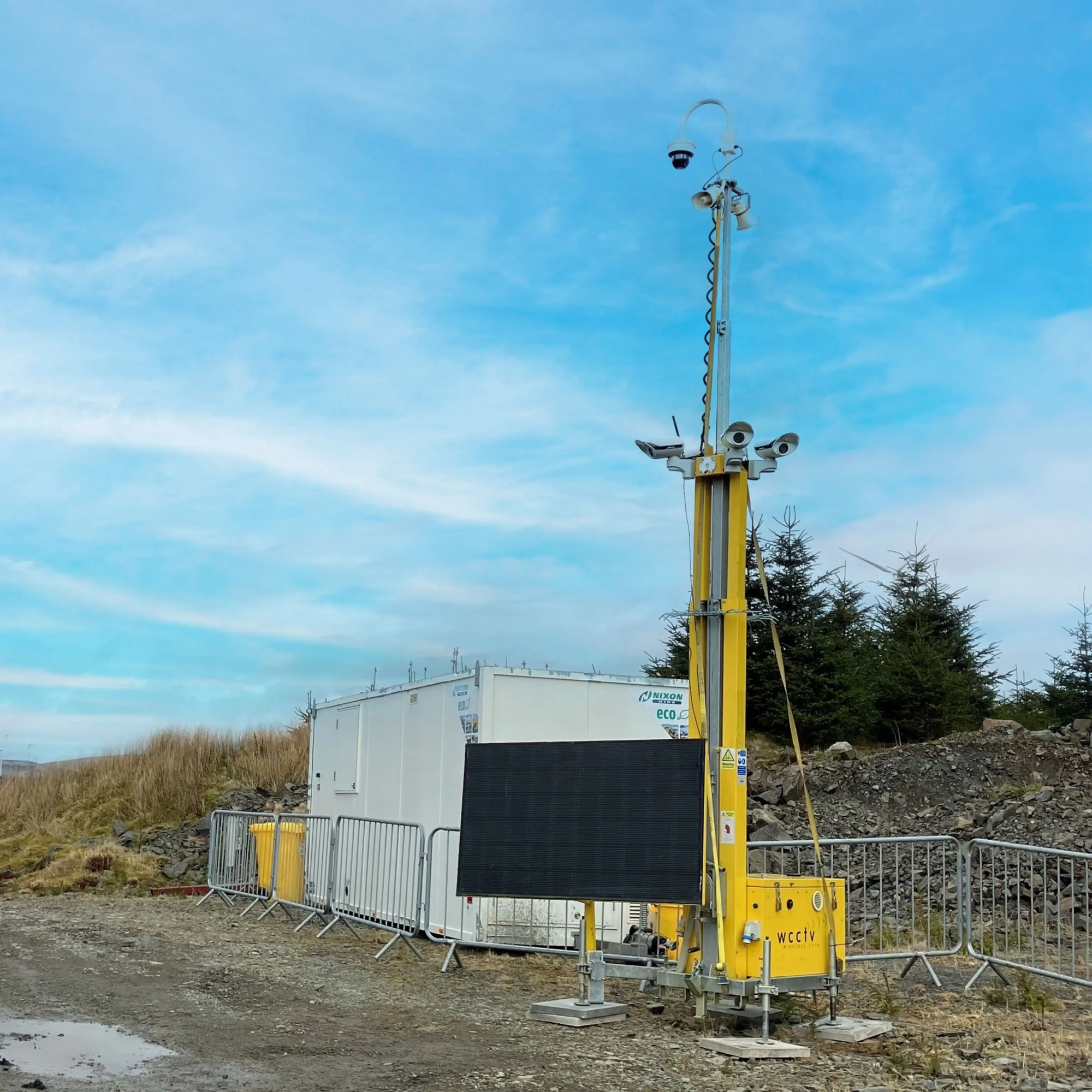
Rapid Deployment CCTV Towers and Temporary CCTV solutions stand up to 6 metres tall with PTZ (Pan-Tilt-Zoom) night vision cameras that provide near-360° coverage. Unlike fixed installations, they can be repositioned as construction projects progress.
When paired with remote monitoring services, these systems become proactive security tools. Trained operators at NSI Gold Accredited facilities watch live feeds 24/7, issuing real-time audio warnings or dispatching mobile keyholing teams where needed.
Read more:
AI-powered detection and alerts
Artificial intelligence (AI)-powered systems take safety and security to a whole new level. Using machine learning, they analyse feeds and "teach" cameras to distinguish genuine threats (e.g., perimeter breaches, intrusions, fire hazards, etc.) from false alarms caused by wildlife, weather or drifting debris.
When something genuinely looks off, systems send live audio warnings to prevent incidents and instantly alert site managers for swift corrective action. All of this is done automatically, without human intervention.
Smart detection systems add extra layers of protection to your workplace safety:
-
PPE monitoring automatically identifies workers entering high-risk zones without the required personal protective equipment (hard hats, hi-vis vests, hearing protection).
-
Intrusion detection distinguishes real safety/security threats from false alarms, providing real-time data for project managers.
-
Smoke and fire detection pick up fire hazards early before they escalate into project-stopping issues.
Read more: PPE Detection in Action: Keeping Construction Projects Compliant with HSE
IoT systems and smart integration
Some of the most significant site hazards are invisible. Dust, noise and extreme temperatures all affect worker safety, but they're difficult to track manually.
Internet of Things (IoT) devices provide HSE leaders with the "eyes and ears" they need on-site to track hazardous conditions, from environmental conditions to access control.
-
Air quality sensors monitor fine particulate matter (PM1, PM2.5, PM10), CO₂, VOCs and pollutants. These are particularly useful during excavation and demolition, where workers can be exposed to silica dust and other toxic fumes.
-
Noise monitoring IoT technology tracks sound (30-130 dB) and frequency (20Hz to 12.5kHz) levels to ensure compliance with Section 61 and Control of Noise at Work Regulations 2005.
-
Weather monitoring devices keep tabs on live conditions that impact construction site safety: hourly rainfall, temperature (-40°C to +60°C), wind speed (0–110mph) and humidity (10-99%).
-
Automatic Number Plate Recognition (ANPR) technology logs every vehicle entering or exiting construction operations and monitors activity in real-time, eliminating the need for manned guards.
Other integrations currently used within the construction industry include:
-
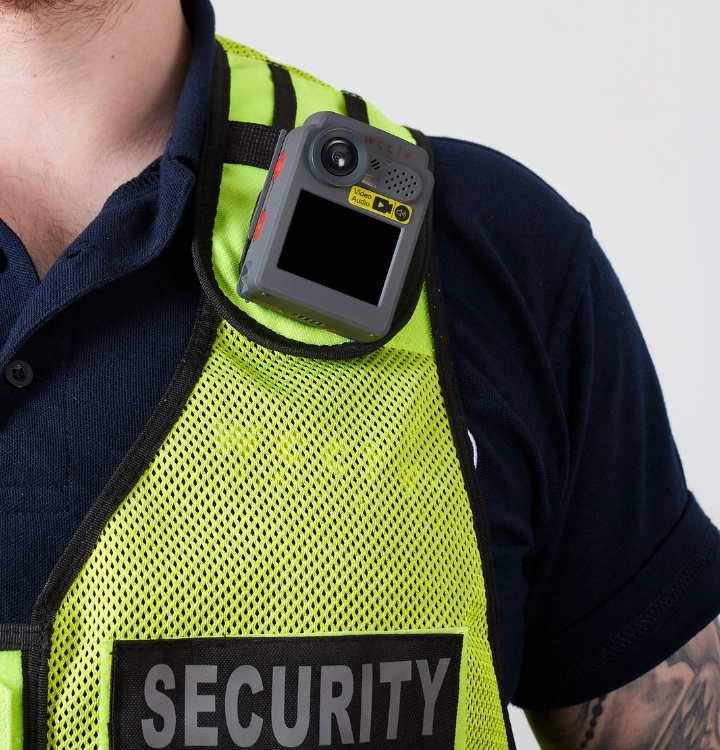
Wearable devices: Body Cameras track and record workplace accidents and/or public interactions.
-
Time Lapse Video: Condenses weeks/months of progress into a short video clip.
-
Redeployable CCTV Cameras: Cover hard-to-reach areas to prevent serious accidents.
Read more:
-
The Role of Environmental Monitoring in Meeting CDM 2015 Requirements
-
How IoT Devices Improve Both Safety and IT Overview on Construction Sites
Centralised data and automated compliance
One of the biggest pain points for health and safety managers is fragmented data. Surveillance footage in one system, safety incidents in another and air quality ESG reporting elsewhere. This disconnection means hours of manual work just to get a clear picture of what's happening on-site and submit compliance records.
Smart software and cloud-based platforms, like Stellifii, address these issues head-on. By consolidating all data analytics into a single, secure dashboard, HSE managers and team managers can access historical and real-time data from any device.
In just a few clicks, Stellifii generates audit-ready documentation up to 5X faster than legacy systems, with every incident timestamped and logged for compliance purposes (HSE, CDM, ESG, etc.).
For health and safety leaders, this is a massive step forward in how compliance should be handled. Less time on paperwork also means both you and your teams can focus on higher-priority tasks such as enhancing safety protocols or developing a strong safety culture strategy.
Related Article: How Cloud-Based Tools Are Changing Construction Admin
10 Benefits of Smart Safety Systems
Major contractors already have a future outlook on construction site safety and are making significant strides to ensure worker safety on-site by using smart safety systems. Projects combining CCTV Towers, IoT technology, PPE detection and centralised monitoring platforms report:
-
Reduced theft, vandalism, squatting and trespassing
-
Fewer workplace injuries, accidents and fatalities
-
Fewer site shutdowns and project delays
-
Improved operational efficiency
-
Higher PPE compliance rates
-
Faster audit preparation
-
Lower insurance premiums (due to proactive risk management)
-
Higher ROI (compared to traditional setups)
-
Better employee retention (as safety is visible)
-
Stronger safety workplace culture
WCCTV case studies for reference:
Future-Proof Your Construction Site the Smart Way
The rise of smart safety systems in UK construction firms isn't a future trend; it's happening now. Connected, innovative solutions are already replacing outdated legacy systems with real-time monitoring and data-driven insights.
For health and safety managers, this shift offers more control. Visibility across multiple sites without being physically present. Compliance documentation is ready when inspectors arrive, and you can have the peace of mind knowing that nothing has slipped through the cracks.
With 6 regional hubs and over 20-years of wireless monitoring expertise, we provide fully-managed surveillance site monitoring solutions that help HSE leaders stay compliant and in control.
Future-proof your construction site the smart way: the WCCTV way.