For too long, compliance has been mischaracterised in construction, seen as the department that slows things down, says no and exists as overhead the board tolerates rather than values.
That framing is wrong. If you're a compliance officer working in UK construction, you probably know it better than anyone. The work your team does every day directly protects the business from financial penalties, reputational damage, project delays and personal liability. The problem isn't the value; it's that this value isn't visible to the people who need to see it the most.
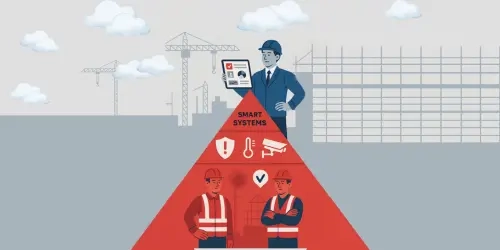
Building boardroom confidence in construction compliance is about having the right systems in place to convert raw data into strategic insights, providing outcomes the board actually cares about: reduced costs, tenders won and projects delivered on time.
But how do you show measurable business value to executive teams? That's exactly what this article covers, and more.
Overview: UK Construction Compliance
In the UK, construction compliance managers operate under some of the strictest regulations of any sector. There are many obligations to adhere to, and the Health and Safety Executive (HSE) frequently updates them, so managers need to stay up to date:
| Regulation | Regulatory requirements |
| Health and Safety at Work Act (HASAWA) 1974 | The primary legislation governing occupational health and safety in the UK. Employers must, as far as it's "reasonably practicable", protect the health, safety and welfare of all workers. |
| Construction (Design and Management) CDM Regulations 2015 | Duty holders must plan, manage and monitor all building, design and handover phases, plus conduct pre-construction risk assessments and maintain a Health and Safety File. |
| RIDDOR 2013 (Reporting of Injuries, Diseases and Dangerous Occurrences Regulations) | Serious injuries and illnesses must be reported to the HSE within strict timeframes, alongside documented monitoring and evidence. |
| Control of Substances Hazardous to Health Regulations (COSHH) | Employers must assess and control exposure to hazardous substances (e.g., silica, asbestos, dust) and provide ongoing monitoring records where Workplace Exposure Limits (WELs) may be exceeded. |
| Control of Noise at Work Regulations 2005 | Workers can't be exposed to more than 87 dB(A) over 8 hours. Monitoring, PPE provision and documented corrective action are expected. |
| Building Safety Act (2022)(Applicable to England) | Introduced in response to the Grenfell Tower tragedy, this legislation applies to "higher-risk building" procedures of at least 18 metres (or 7 storeys) tall. |
| UK General Data Protection Regulation (UK GDPR) | The responsible use, processing and storing of personal information where monitored CCTV surveillance is in place. |
| ESG and Net Zero obligations | The construction industry must reduce its Scope 1, 2 and 3 carbon emissions to align with nationwide sustainability goals. |
Managing all of this through traditional legacy systems across multiple construction projects creates the exact pressure that makes compliance feel reactive rather than strategic. And when compliance feels reactive, it's almost impossible to present it as anything else to building safety regulators, let alone the board.
Read more:
The Cost of Non-Compliance in UK Construction
Traditional monitoring methods like spreadsheets and periodic spot checks create administrative headaches that not enough compliance managers are taking about. When data is siloed in separate vendor platforms, and reports rely on foremen physically walking sites, you can never really get a full picture of what's happening on-site in real-time, no matter what vendors promise you.
Why? They create blind spots; gaps between inspections where hazards go undetected, and near-misses go unreported. It's these gaps that expose compliance managers and construction companies to financial, legal and reputational liabilities, sometimes in the most serious ways.
Penalties
HSE fines for health and safety breaches prosecuted in the Crown Court are unlimited under section 33 of HASAWA. This allows penalties up to any amount based on culpability and harm caused. On top of this, the ICO can impose fines of up to £17.5 million (or 4% annual turnover) for breaches of personal data, including failures in the secure handling of CCTV footage.
Legal exposure
Civil claims for occupational illness (e.g. siliocis, Chronic Pulmonary Obstructive Disease (COPD), cancer), injury and fatality can run into significant 6-figure sums, particularly where records can't show ongoing monitoring. If gross negligence is found, it can result in prosecution.
Reputational damage
One serious safety incident can undo years of credibility. Media coverage/industry publications of enforcement action, HSE stop notices or site shutdowns for non-compliant work can quickly spread to clients and insurers, eroding your reputation in the blink of an eye.
Project delays
HSE investigations can stop work in its tracks, pulling safety managers and site teams away from operations. The knock-on effect, such as missed milestones and budget overruns, can quickly exceed the initial fine and have a significant impact on your bottom line.
Increased insurance
UK insurers assess safety records and risk profiles before setting premiums. A single event can raise premiums by 5-15%, while a history of incidents and claims can drive costs significantly higher.
Lost tenders
Public sector clients routinely check safety performance and progress monitoring as part of procurement decisions. A poor track record and lack of compliance (or the inability to provide proactive risk management) raise immediate red flags at the tender stage, which no compliance manager wants.
No construction company wants the above. And the compliance officer who can demonstrate they've actively prevented these outcomes is the one who earns a seat at the strategic tables. Smart monitoring systems are how you can make this happen, with real-time data that aligns with relevant building regulations.
Read more: 7 Compliance Pitfalls Costing Construction Firm Millions
Best Practices for Compliance in Construction Projects
Staying compliant with UK building regulations and legal obligations while managing multiple sites and evolving project phases comes down to a handful of consistent disciplines:
-
Ensure you're familiar (and up-to-date) with various regulatory requirements like HASAWA, CDM 2015, COSHH and the Building Safety Act (England).
-
Conduct thorough, site-specific risk assessments before work begins and update them as conditions change.
-
Ensure real-time, continuous monitoring across all project phases, and keep detailed records from the planning stage right through to final handover (up to 40 years for silica dust exposure).
-
Make sure personal protective equipment (PPE) is provided, enforced and documented for every stage.
-
Integrate live environmental monitoring for air quality, noise and weather to comply with ESG and Net Zero targets.
-
Use cloud-based platforms to centralise all building information and generate audit-ready reports on demand.
-
Provide worker training on HSE regulations and PPE usage, and document everything for compliance purposes.
-
Conduct regular internal audits, tweak procedures as needed and address findings promptly (with recorded corrective action).
Most compliance managers know this all too well. What changes the picture is the technology that makes these results genuinely measurable at scale, without adding headcount or hours.
Read more: The Growing Expectation of Tech-Enabled Compliance in Construction
How Smarter Construction Compliance Builds Boardroom Confidence
Legacy systems can't keep pace with modern construction. They can record what happened, but they can't tell you what's about to happen. For boards that understand this risk, that gap matters.
Modern smart monitoring systems don't capture incidents after the fact. They anticipate problems, trigger corrective action in real-time and convert raw regulatory data into the kind of measurable value that executive teams can actually act on.
Here's how:
Smart surveillance with real-time monitoring
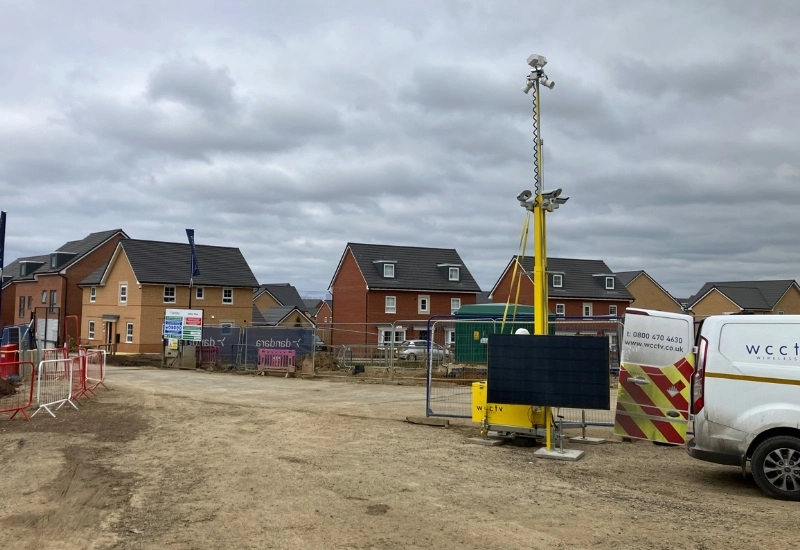
Rapid Deployment CCTV Towers and Temporary CCTV systems provide 24/7 visibility across all work zones. Standing up to 6 metres tall with near-360° PTZ (Pan-Tilt-Zoom) cameras, they monitor building sites both day and night, in all weather conditions.
Every incident is timestamped and stored, creating the continuous monitoring audit trails that regulators expect and legacy systems can't match.
Connected to professional remote monitoring at NSI Gold Accredited centres, trained operators review live footage in real-time. When a threat or safety concern is identified, they act within minutes by doing one (or more) of the following:
-
Issuing live audio voice-down challenges
-
Dispatching mobile keyholding teams
-
Contacting emergency services if/when needed
For the board, this translates directly to business value: less theft, less trespass/vandalism and fewer incidents that delay projects and inflate costs.
Read more:
IoT technology
Internet of Things (IoT) devices transmit live site data from connected systems (cameras, sensors, etc.) to unified cloud platforms via secure 4G/5G networks.
IoT-based environmental solutions integrate directly with our fully-managed CCTV Towers as plug-and-play add-ons, giving compliance and project managers the real-time data they need to make more informed decisions for the safety of their teams:
-
Air quality monitoring systems track fine particulate matter (PM1, PM2.5, PM10), CO₂, VOCs and other airborne pollutants that are harmful to workers' health, keeping you on the right side of COSHH compliance law.
-
Noise monitoring sensors monitor a wide sound (30-130 dB) and frequency (20Hz to 12.5kHz) range, helping you identify issues as they occur and take action before enforcement agencies step in.
-
Weather monitoring systems keep tabs on live atmospheric conditions (temperature, wind speed, rainfall, humidity). For instance, they send instant alerts when wind speeds exceed safe thresholds that could put crane operators' safety at risk.
When readings approach regulatory thresholds, compliance managers (and site teams) receive instant notifications so corrective action can be taken. This proactive approach sidesteps the delays often associated with manual inspections, whereby reports rely on a foreman physically checking the site.
For the board, these real-time alerts can mean all the difference between a managed risk and enforcement action.
Read more:
-
Air Quality and COSHH: Protecting Your Workforce and Avoiding Fines
-
The Role of Environmental Monitoring in Meeting CDM 2015 Requirements
Artificial intelligence (AI) systems
AI-powered video analytics, machine learning algorithms and smart software "teach" CCTV cameras to distinguish genuine threats (safety threats, PPE violations) from false alarms caused by weather or debris. Trained on historical site information, they identify patterns and flag risks before they escalate, keeping workers safe and regulatory enforcement at bay.
Here are a few examples of what AI-powered smart detection systems can do:
-
PPE monitoring and detection: Automatically identifies missing safety gear like hard hats, high-visibility vests, safety goggles and respiratory equipment during high-risk tasks.
-
Smoke and fire detection: Flags the earliest signs of smoke or fire (e.g., thin smoke trails, heat signatures) before small issues become project-stopping problems.
-
Intrusion detection: With near-pinpoint accuracy, systems scan sites for abnormal behaviour that resembles criminal activity and/or perimeter
For executive teams, this means fewer incidents, faster response times and reduced insurance claims, all of which are clear, measurable outcomes that deliver tangible business value.
Smart integrations
Another way to build boardroom confidence for construction compliance is through smart integration capabilities:
-
Automatic Number Plate Recognition (ANPR) logs every vehicle entering and leaving controlled working zones, creating verifiable audit trails with timestamped photo and video evidence. For compliance purposes, this supports CDM 2015 access control obligations and provides clear records for insurers or investigators if an incident does occur.
-
Time Lapse Video provides a condensed record of project progress, documenting how work advances across multiple stages and creating a verifiable audit trail to support compliance.
Read more: How Integrated CCTV and ANPR Keep UK Sites Secure and Compliant
Cloud consolidation
All of the above feeds into Stellifii, our cloud-based monitoring platform. From a single interface, compliance managers can see surveillance, environmental data, system diagnositics and compliance reports all in one place.
When HSE inspectors arrive unannounced, compliance teams don't need to scramble between 3 different platforms to pull up site data. Audit-ready reports generate up to 5X faster than legacy systems, with every data entry timestamped and backed by corresponding footage. This means if you want to revisit a PPE violation or noise breach from weeks before, searchable timelines allow you to do this with ease.
Did you know that you can be held equally liable if you are unable to produce continuous records of on-site monitoring? Even when monitoring has taken place, enforcement action may still follow if the detailed record-keeping that regulators expect cannot be provided.
For multi-site operations, Stellifii simplifies everything by providing complete visibility across every project from a single dashboard. For stakeholders, it provides something they don't currently have: real-time control. For compliance managers? Automated reporting elevates compliance from operational burden to strategic enabler.
Read more:
- How Cloud-Based Tools Are Changing Construction Admin
- UK Construction Compliance: How Smart Systems Are Changing Site Security
How Integrated Monitoring Translates to Measurable ROI: UK Construction
Return on investment (ROI) is the language the board speaks.
Here's how smart, unified monitoring converts compliance performance into the numbers that matter:
|
ROI |
Smart monitoring |
Traditional monitoring |
|
Cost savings |
[[YES]] |
[[NO]] |
|
Operational efficiency |
[[YES]] |
[[NO]] |
|
Tender success |
[[YES]] |
[[NO]] |
|
Reduced legal exposure |
[[YES]] |
[[NO]] |
|
Enhanced safety culture |
[[YES]] |
[[NO]] |
Cost savings
Proactive safety management delivers £3-£5 in savings for every £1 invested through avoided incidents and reduced compensation claims. Automated real-time reporting cuts admin time by 30-50%, freeing plenty of hours weekly per site manager. Lower incident rates also reduce insurance premiums as insurers reward verifiable risk management with better terms and rates.
Operational efficiency
Sites with real-time monitoring catch problems before they escalate, keeping projects on track. What's more, when workers feel protected (both physically and mentally) on-site, stress levels decrease, absenteeism falls and productivity improves, driving greater operational efficiency across the site.
Tender success
Compliant construction companies (with documented safety records) generally win more tenders. Having a strong compliance record, backed by smart analytical insights, is a competitive differentiator that manual processes simply can't supply.
Reduced legal exposure
Timestamped monitoring records and audit trails reduce the risk of civil/compensation claims and provide credible support to defend enforcement action. The difference between a documented near-miss event and an unexplained gap in records can determine the outcome of an HSE investigation.
Safety culture
When compliance is consistently enforced through automation (not sporadic spot checks), safety stops being something that happens around inspections and becomes embedded into day-to-day operations. That cultural shift reduces risk at every level, giving compliance managers the confidence to report back to the board.
Read more: The ROI of Consolidating Site Monitoring Into a Unified Platform
Build Boardroom Confidence in Construction with WCCTV
Building boardroom confidence for construction compliance is no easy feat, but it is 100% doable with a smarter monitoring approach.
For managers, demonstrating the business value of compliance to the board depends on clear, tangible proof: costs avoided, risks mitigated and projects protected.
With over 2 decades of wireless monitoring expertise, our fully-managed solutions give compliance teams real-time data and measurable outcomes that turn compliance from an operational burden to a strategic enabler.
Speak with our experts to see how integrated site monitoring can help you build the boardroom confidence you and your team deserve.