Managing traffic projects across multiple locations is incredibly difficult when visibility and control are fragmented. Different teams follow different processes, site reporting standards vary and vital information is spread across disconnected systems. Without a clear, high-level view of events across their portfolio, contractor directors battle to deliver the performance stakeholders demand.
Centralised monitoring platforms create a more consistent operational model. By consolidating site monitoring, reporting and evidence in one place, they standardise processes and strengthen records and data collection. Stronger insights into operations improve risk management, encouraging better safety, security, environmental control and programme performance.
To help leaders manage multi-site schemes confidently, our article explains how traffic management visibility gaps can affect project performance and where centralised monitoring closes gaps and improves delivery.
Understanding Traffic Management and Highways Project Visibility Gaps
Let's break down what poor visibility on multi-site traffic schemes looks like in practice:
Inconsistent work standards
A common challenge for directors overseeing multiple projects is that each team and contractor works differently. Quality, compliance, safety and performance standards vary widely if they aren't uniformly enforced and measured.
One site may follow PPE and safety equipment rules strictly, while another may be less diligent, increasing the risk of accidents and disruption. These inconsistencies, multiplied programme-wide, can significantly affect overall delivery and profit margins.
Fragmented monitoring and reporting
Blind spots emerge when sites use different monitoring methods, reporting systems and compliance tools. The lack of a unified framework sees information gathered and shared haphazardly, via emails, texts, spreadsheets and even paper logs.
Without an organised view of operations, it's difficult for leaders to make meaningful comparisons between projects and business performance metrics.
Compromised and delayed reporting
Disconnected reporting methods mean updates are often missed, late or sent after a problem occurs. If a developing issue isn't quickly shared with teams, the situation almost always worsens. Minor issues escalate into serious disruptions, increasing the risk of loss and damage.
Difficulty implementing best practices
When reporting and oversight systems aren't aligned, it's harder to identify and scale best practices across the programme. A process that improves productivity and compliance at one site may not be possible at other locations because their systems are weaker or outdated.
How Visibility Gaps Create Blind Spots on Traffic Management Projects
Let's explore 6 blind spots and inefficiencies that develop when project oversight is weak, and how they increase risk and compromise delivery.
1. Admin and operational inefficiencies
When leaders don't have a big-picture view across their portfolio, they are forced to do a lot more to feel in control. They lose valuable time and money travelling to sites to verify work standards, progress, complaints and stakeholder concerns.
When something does go wrong, investigations are complicated by conflicting accounts and inconsistent records. Time is wasted double-checking information before making important decisions or updating stakeholders.
Reporting teams must similarly piece together scattered documents, jumping between several applications with different logins and interfaces. As an indication of the inefficiencies here, research shows that 85% of employees spend up to 2 hours a day searching for the information relevant to their roles. This is clearly not a productive way to work.
Read more:
2. Higher incident and accident rates
Safety and security best practices recommend catching trouble early and preventing it from escalating.
However, active prevention depends on effective visibility to recognise early warning signs. Without it, risk management is largely reactive, merely reporting on injuries and theft/damage after the fact.
When directors don't have eyes and ears on the ground across all traffic management zones, they miss critical red flags: crews working in unsafe weather conditions, a small quantity of explosive material gone missing or temporary traffic management arrangements to support bus and cycle lanes are not implemented.
Any one of these can escalate into a bigger problem, endangering workers and the public, derailing the project and exposing the company to risk and liability.
Read more:
3. Compliance failures
Maintaining compliance with the various health and safety, environmental and traffic regulations governing roadworks is an ongoing challenge for project leaders.
Until safety protocols are firmly embedded into everyday operations, compliance violations are an ever-present risk. For example, crews not wearing mandatory PPE on a temporary traffic scheme may put workers at risk of exposure to excessive noise and dust. This can result in breaches of the Control of Substances Hazardous to Health Regulations (COSHH) and the Control of Noise at Work Regulations 2005.
Compliance with Chapter 8 is also mandatory for works on UK roads; part of the Traffic Signs Manual and provides guidelines for roadworks and temporary traffic management schemes. This includes design and operational advice (warning signs, barriers and appropriate signage directing vehicles and pedestrians away from work areas) to ensure safety while limiting traffic congestion and disruption.
Failure to comply with health and safety regulations can result in penalties, project shutdowns or even prosecution for major incidents. Environmental transgressions are also prosecuted, with millions of pounds in penalties demanded from offenders in 2024.
Read more:
- 7 Compliance Pitfalls Cost Construction Firms Millions
- Common Compliance Failures Within Construction and What We Can Learn
4. Security costs
Security blind spots expose highways/traffic projects to a range of criminal and anti-social behaviours, from opportunistic theft to organised crime, asset damage, trespassing and vandalism. Road work sites that aren't actively monitored and protected become easy targets for these criminals and vandals.
Without visibility into after-hours events, perimeter fence tampering or suspicious loitering after dark are easily missed. That is, until the perimeter is breached and thousands of pounds in equipment vanish.
When plant, materials and metals are stolen, it can be hugely costly and disruptive. Workflows are sometimes set back by days as new items are sourced and insurance claims processed.
Read more:
5. Delays, disruptions and claims
Missed safety and compliance risks can significantly disrupt and delay projects and increase costs.
Accidents and compliance failures often prompt investigations, increased scrutiny and expensive remedial requirements. When quality concerns, defects or material issues aren't caught in time, critical tasks may be completed to unacceptable standards, requiring rework that further delays schedules.
Such delays and disruptions trigger several claims: contractual penalties for missed deadlines, personal injury claims, regulatory penalties and enforced rework. These unplanned demands can cripple performance and dent profits, keeping leaders from delivering projects on time and within budget.
Read more:
6. Reputational damage
When a serious incident occurs on a project, numerous parties may be affected. These include owners, clients, traffic authorities, drivers, local communities, funders and insurers.
Affected stakeholders expect answers about what happened and how the situation will be resolved or settled. When leaders have to piece details from different systems and second-hand reports, the response might be delayed and unconvincing.
Ineffective stakeholder communications and ongoing negative publicity around projects will harm your reputation, as stakeholders start to question your competence and professionalism.
On a company level, if a contractor's activities cause preventable injuries and property damage, its reputation is on the line. A track record of poor safety management and weak operational performance will affect the firm's ability to bid successfully for future contracts.
How Smart Monitoring Solutions Close Project Visibility Gaps
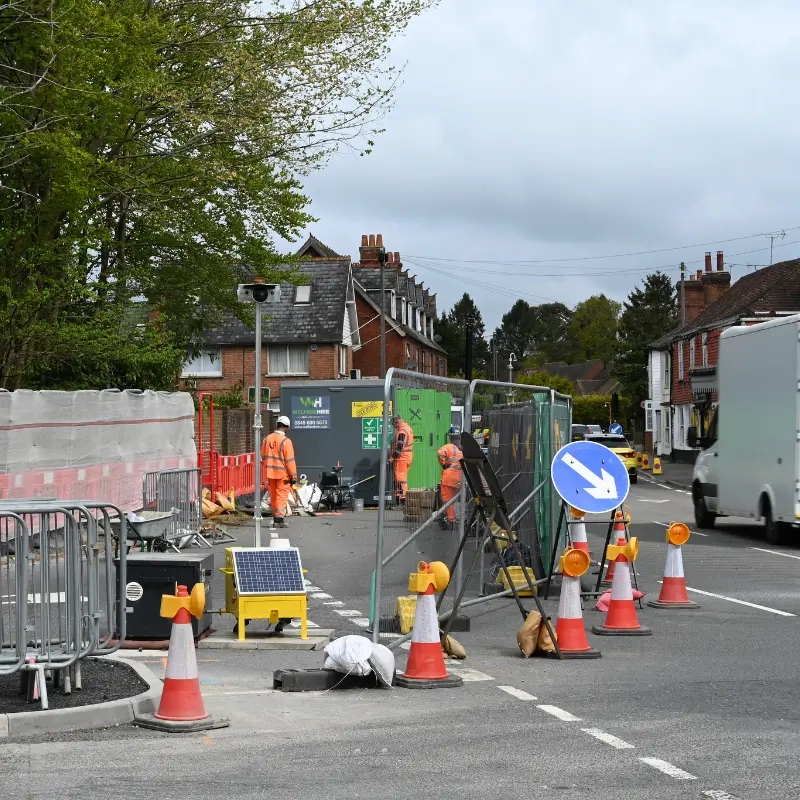
Our flexible Traffic Management CCTV Towers are designed to help highways professionals oversee multi-location traffic schemes with confidence. These trusted platforms are commonly deployed to monitor work alongside live carriageways, temporary road closures, diverted traffic flows, community events, emergency street works and similar temporary situations.
Our Traffic and CCTV Towers feature wireless connectivity and PTZ cameras that pan, tilt and zoom without losing high-definition clarity. Deployable within 20 minutes for basic setups, they offer complete visibility across your portfolio, day and night.
These mobile, solar-powered units operate without hardwiring, Wi-Fi or permanent infrastructure, making them ideal for traffic management interventions that move with the project. NDAA-compliant cameras link into our cloud-based management platform, enabling remote monitoring of site conditions and events from any connected device.
- Our specialist Mini CCTV Towers can be installed by a single person and easily repositioned without technical support. These compact units are well suited to monitor activities close to the ground, as well as PPE monitoring on temporary roadwork sites.
- CCTV Towers stand up to 6 metres tall and deliver wider-area video coverage that can support project security, fire detection and environmental monitoring.
Active oversight across every location gives you the visibility needed to catch issues early, protecting road users and the general public, while keeping performance on target. Our cloud platform can also connect a suite of AI-powered management tools. These include security and safety monitoring and environmental tracking to provide multi-functional reporting, AI alerts and project oversight in one place.
Read more:
Security services that support operational performance
Our CCTV Towers act as a deterrent to crime and vandalism, and can also be enhanced with our AI-powered Intrusion Detection Systems. The artificial intelligence is trained to spot security threats, activate immediate deterrents and alert control centre professionals.
Operators in NSI Gold-Accredited monitoring centres check alerts and issue live audio warnings, deterring up to 90% of criminals and trespassers. For additional intervention, you can select our Mobile Keyholding Response, which sends a security professional to the site.
These security solutions protect assets and equipment 24/7, limiting crime-related work disruptions and loss. The cloud platform stores accurate, digital records to support insurance claims and investigations.
Read more:
Safety and traffic management solutions to keep projects on track
CCTV enhanced by smart detection systems lets you remotely review alerts and video footage to ensure proper safety protocols across all monitored sites.
PPE Monitoring and Detection Systems recognise when crews are not using the required PPE. Alerts help contractors reinforce protective gear use to reduce injuries, delays, claims and penalties.
Smoke and Fire Detection Systems trigger alerts at early indications of smoke and fire. AI video detection filters out false alarms and activates warnings more quickly than standard fire alarms, especially in open spaces. Quick notifications enable a rapid response to prevent fire dangers from jeopardising schedules and targets.
To bolster access controls, CCTV supported by Automatic Number Plate Recognition (ANPR) records all vehicles entering and exiting the construction site or traffic zone. ANPR can flag unauthorised vehicles and speed limit breaches, reducing traffic incursions and dangerous driving.
Beyond strengthening PPE compliance, access control, fire prevention and incident reporting, these systems collate vital data and visual evidence to assist reviews and investigations.
Environmental and weather monitoring for safer roads
Environmental monitoring sensors measure noise and airborne pollutants, and also track weather conditions that could impact sites.
Noise Monitoring Sensors are IoT devices that record workplace sound over ranges of 30-130 dB and 20Hz to 12.5kHz. The system notifies managers when noise levels violate preset thresholds, preventing harmful exposures, complaints and regulatory interventions.
Air Quality Sensors continuously monitor dust, TVOCs, CO, CO₂ and particulate matter against allowed limits. Precise monitoring and control help traffic management teams mitigate airborne hazards, keeping the roads safe and projects moving.
Weather Monitoring Sensors provide accurate wind, rainfall, humidity and temperature updates. Location-specific climate data, more accurate than general forecasts, enables managers to modify schedules and plan work around weather events, limiting risks and downtime.
Employing environmental monitoring to control eco and climate risks helps you deliver more sustainable, higher-performing projects.
One platform for complete project oversight
Our AES-256 end-to-end encrypted cloud-based platform consolidates multiple video feeds and can integrate a range of AI-enabled compliance, safety and environmental monitoring tools for centralised project oversight.
The dedicated platform provides a unified overview of project conditions and emerging risks across your entire portfolio. Smart dashboards transform project data from up to 81 cameras into big-picture intelligence and actionable insights to help you make evidence-based decisions without being physically present.
Custom software and cloud technology let you review and assess every location you're monitoring from your phone or laptop at any time. With live and recorded footage, alerts and reporting available in one platform, teams have consistent visibility into all operations. This allows managers to proactively manage risks and assess performance at scale.
Boost Traffic Management Visibility and Performance with Smart Monitoring
For directors managing multiple highways and traffic projects, improving visibility into operations is essential. Clear visibility enables effective decision-making, reduces risk and helps leaders maintain confident control over performance.
Centralised monitoring makes this possible, bringing site information, CCTV footage, alerts, reporting and defensible evidence together into our cloud-based management platform. This creates consistent processes and oversight while eliminating vendor sprawl.
Contact our team today to explore integrated monitoring solutions for a fully informed view of operations, and elevate business performance and governance.